Hugo homes built between 1950 and 2002 carry hardware that struggles once Minnesota cold sets in. We fix the springs, openers, and tracks failing on this side of town.
Most of Hugo's housing went up between 1950 and 2002, with the bulk of it dating to the 1980s and 90s across the area's named neighborhoods. That means a lot of doors and openers here are original or close to it - thirty, forty years old on the torsion spring, the same age on the rollers, and long past the point where the factory lubricant does anything useful. Cold is the other half of it. Hugo sits in a severe cold climate band, and steel contracts hard in a January cold snap. A spring that's been carrying a double door for three decades loses temper faster once it's cycling through freeze-thaw every winter. Same story with nylon rollers gone brittle, and with openers whose gear sets were never rated for the temperature swing they've been living in. We see failures cluster in two ways: sudden spring breaks after a cold night, and slow opener death from a motor working harder than it should in the cold to lift a door that's gotten heavier with age and worn hardware. Neither is really about bad luck. It's the age of the housing stock meeting a Minnesota winter, year after year, until something gives.
What You Are Seeing
A loud bang from the garage overnight, followed by a door that won't budge or feels twice as heavy when you lift it by hand - that's a broken torsion spring, and it's the single most common call we get from this side of town given how much of the housing here is original-era. If the door lurches, shudders, or comes off track partway up, look at the rollers first; on a house from the 1980s stock that's common across Hugo, those rollers have never been replaced. An opener that runs but the door doesn't move usually means a stripped gear or a worn drive component, more likely once a unit's put in fifteen-plus winters. And if the door reverses right after it touches the floor, or won't close all the way, that's often a sensor knocked out of alignment or ice buildup on the track - something we see spike here in the coldest stretches of the season. None of these are guesswork from across the driveway. What's actually broken determines the fix, and misreading a spring problem as an opener problem (or the other way around) wastes a service call.
How Long It Takes
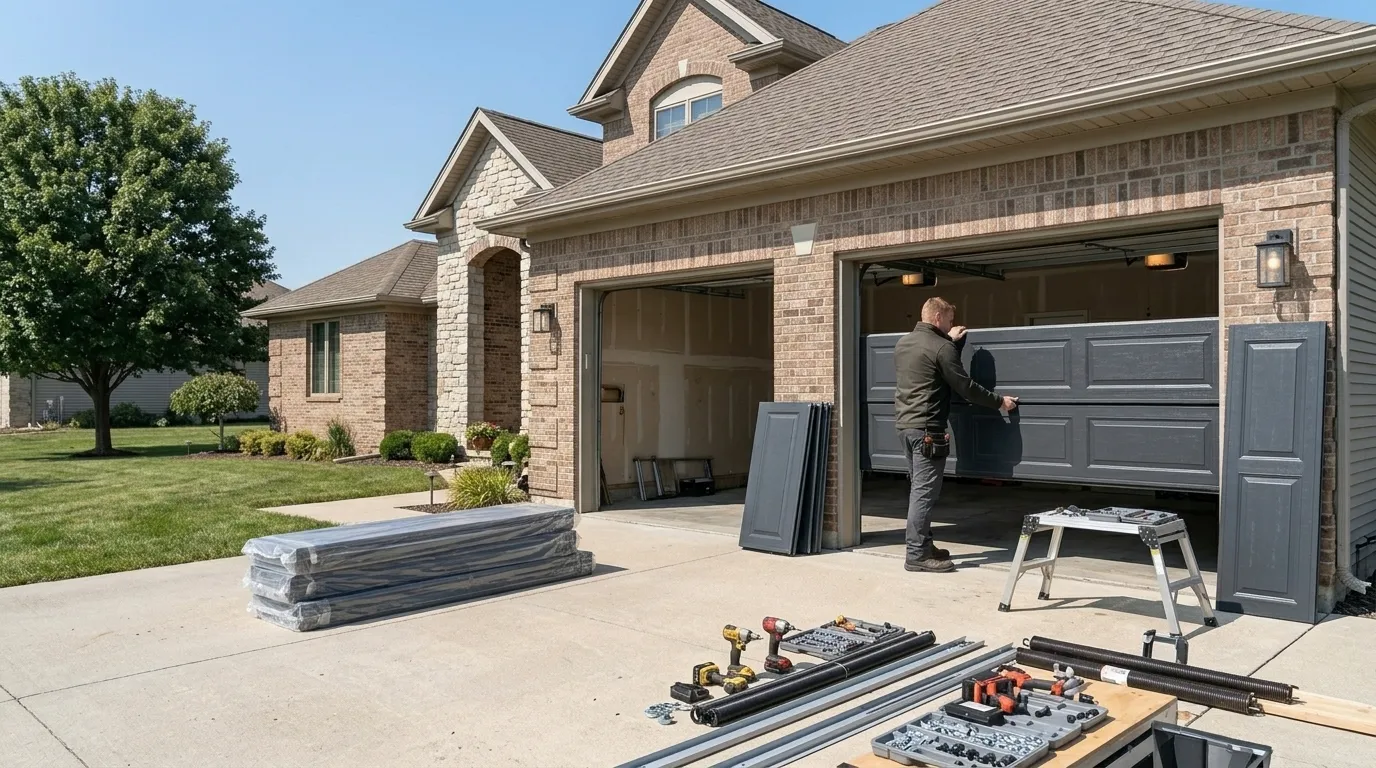
A straightforward torsion spring replacement or roller swap is usually a same-visit job - we bring the parts most Hugo-era doors need because we know what's out there. Opener repairs run similar if it's a gear, sensor, or logic board issue we can diagnose on site. Where it takes longer is when a door built in the 1950s through early 2000s has hardware nobody stocks off the shelf anymore - older track brackets or a discontinued panel style. That's the honest limitation: if your door needs a part that's been out of production for twenty years, we may need to order it, and that can push a repair out several days instead of finishing same-day. We'll tell you upfront if that's the situation rather than string out a visit pretending otherwise. Cold weather itself doesn't usually add time to the job - we work in it - but it does mean we're often booked heavier right after a hard freeze, when a lot of aging springs give out within the same week.
What the Fix Involves
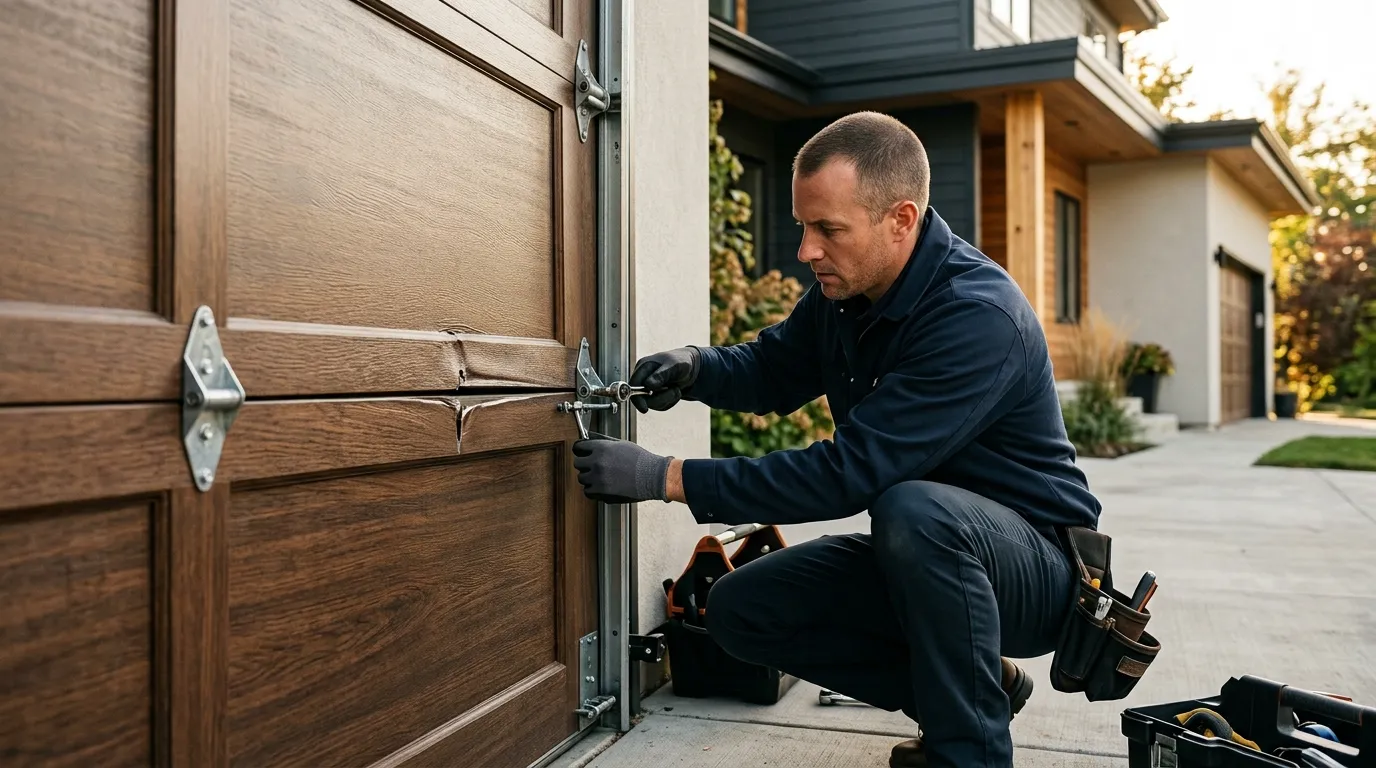
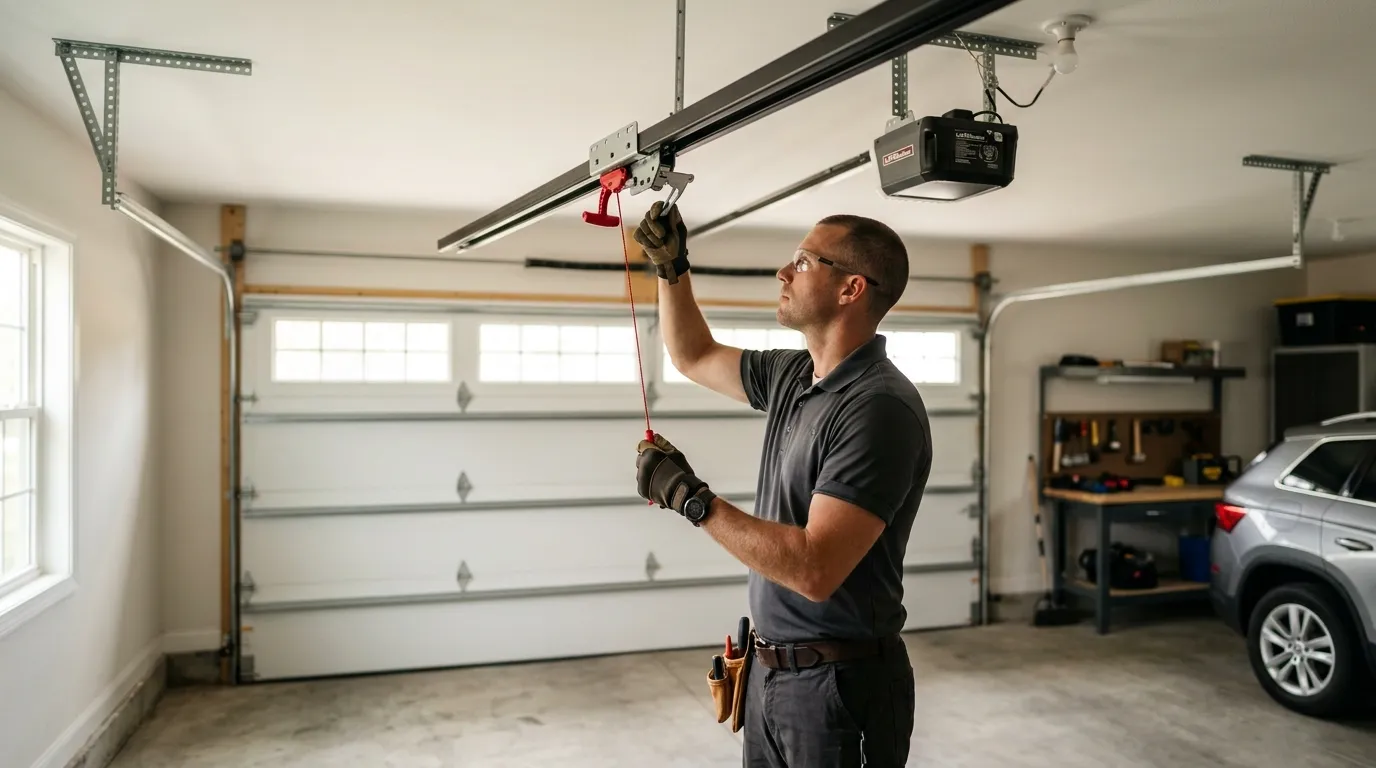
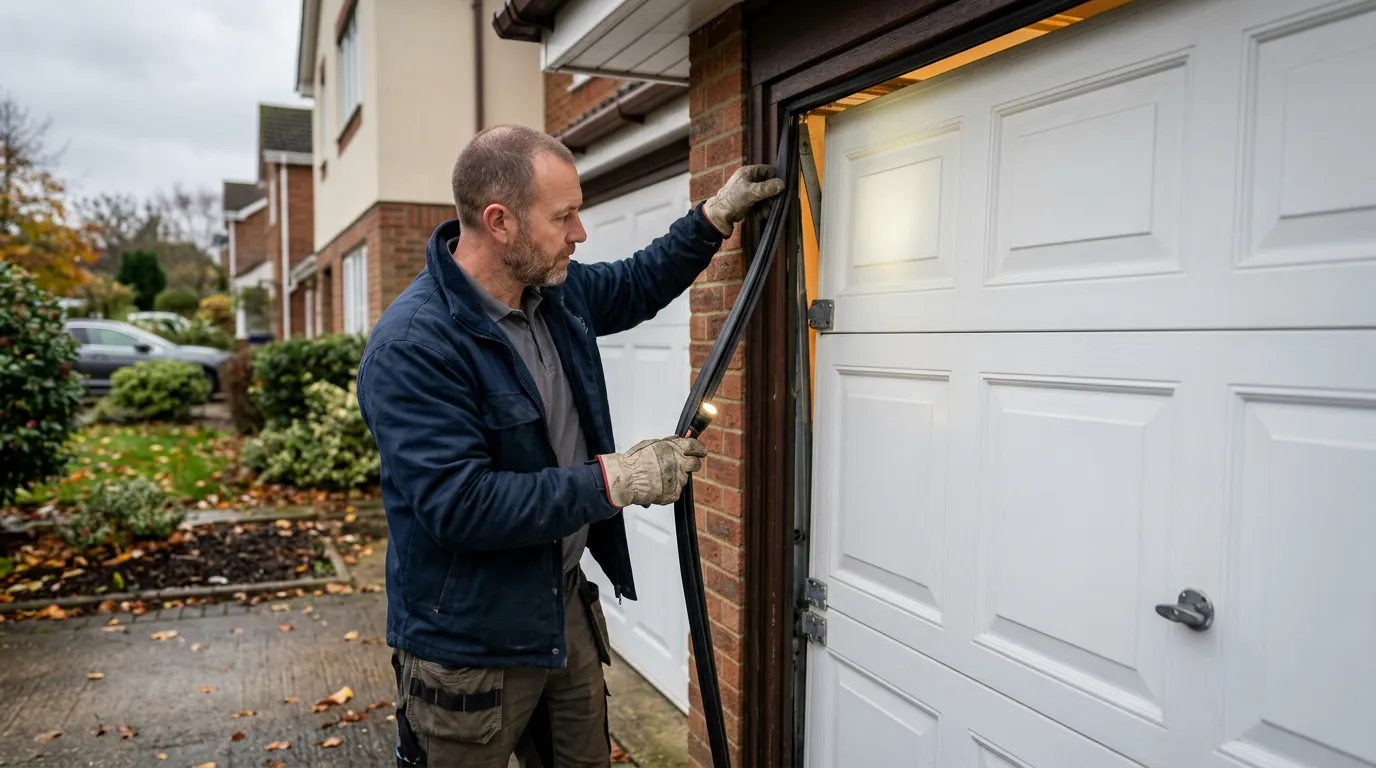
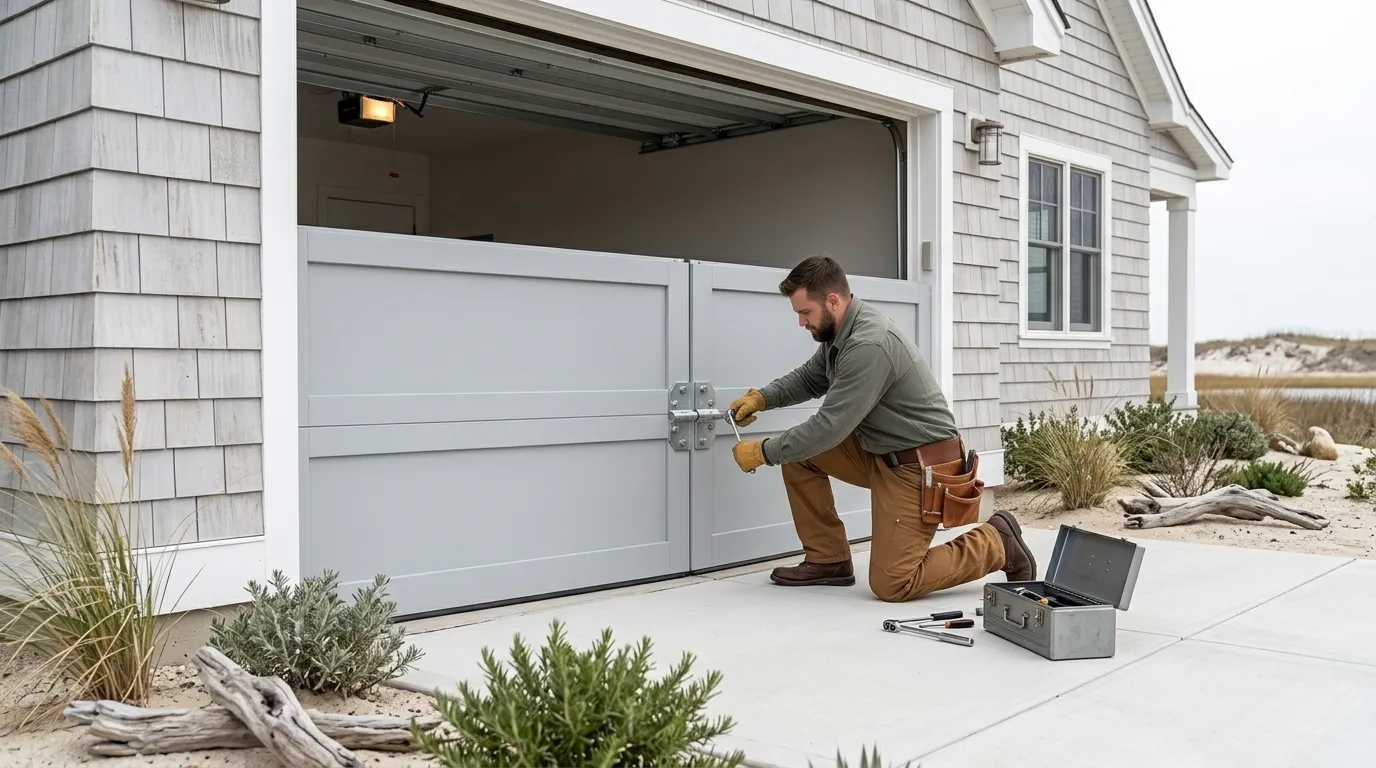
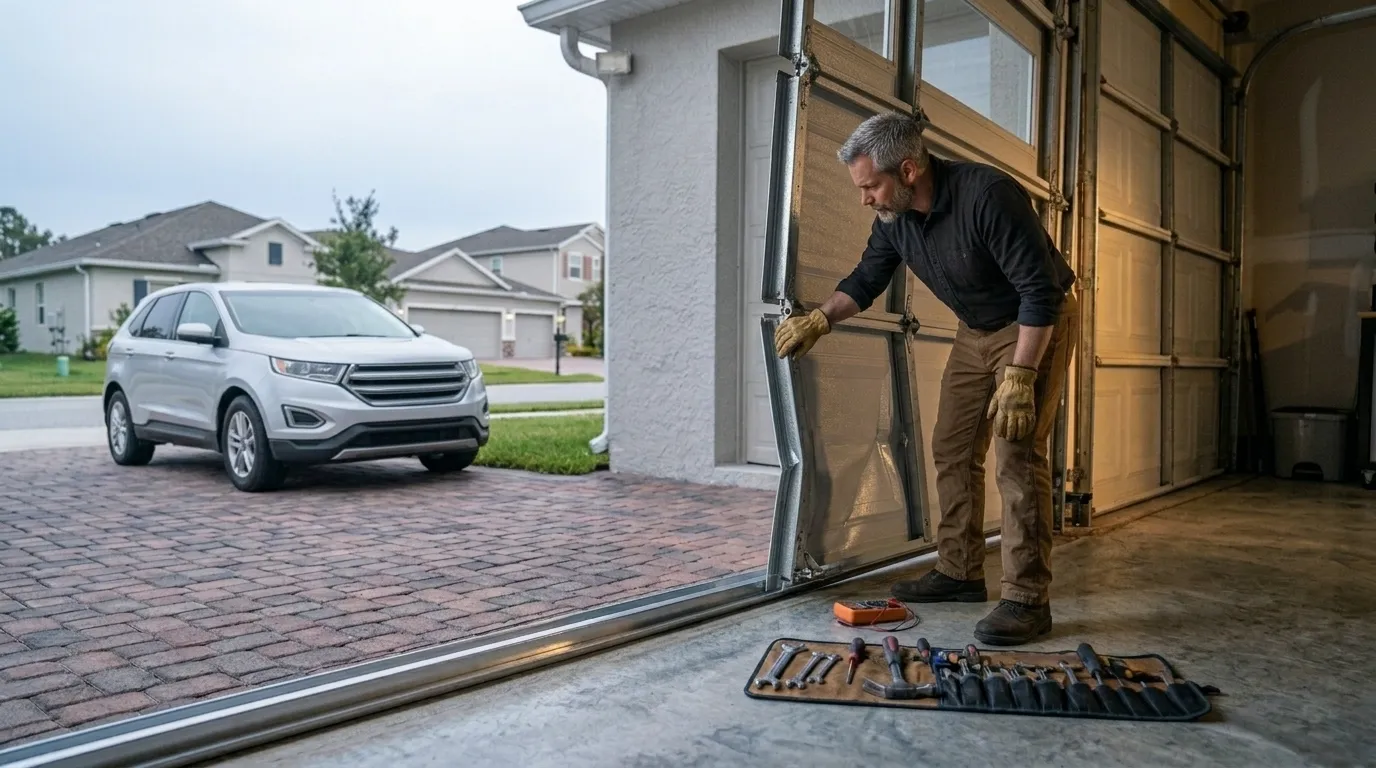
For a broken spring, we match the wire size and wind to what the door actually weighs now, not what a decades-old spec sheet says, because doors from the 1980s and 90s often have added insulation or replacement panels that changed the load. For rollers and hinges, we replace in sets rather than one at a time - on a door that old, if one roller failed from age and cold, the rest aren't far behind. Opener repair means testing the logic board, the sensors, and the drive gear separately before replacing anything, since a bad sensor and a bad gear present almost the same symptom to someone watching from the kitchen. Track and cable work gets checked for square and tension before we call it done, because a track knocked slightly out of alignment by a cold-weather slam is an easy thing to miss and an easy thing to have come back on you in a month. We're straightforward if replacement makes more sense than repair - on a door built before 1980 with hardware failing across the board, patching one part often isn't worth the labor versus putting in a new system suited to the age of the house.
How it works
From “it’s stuck” to “it’s fixed”
1
Tell us what’s wrong
Describe the symptom - won’t open, loud bang, opener runs but the door won’t move.
2
On-site diagnosis
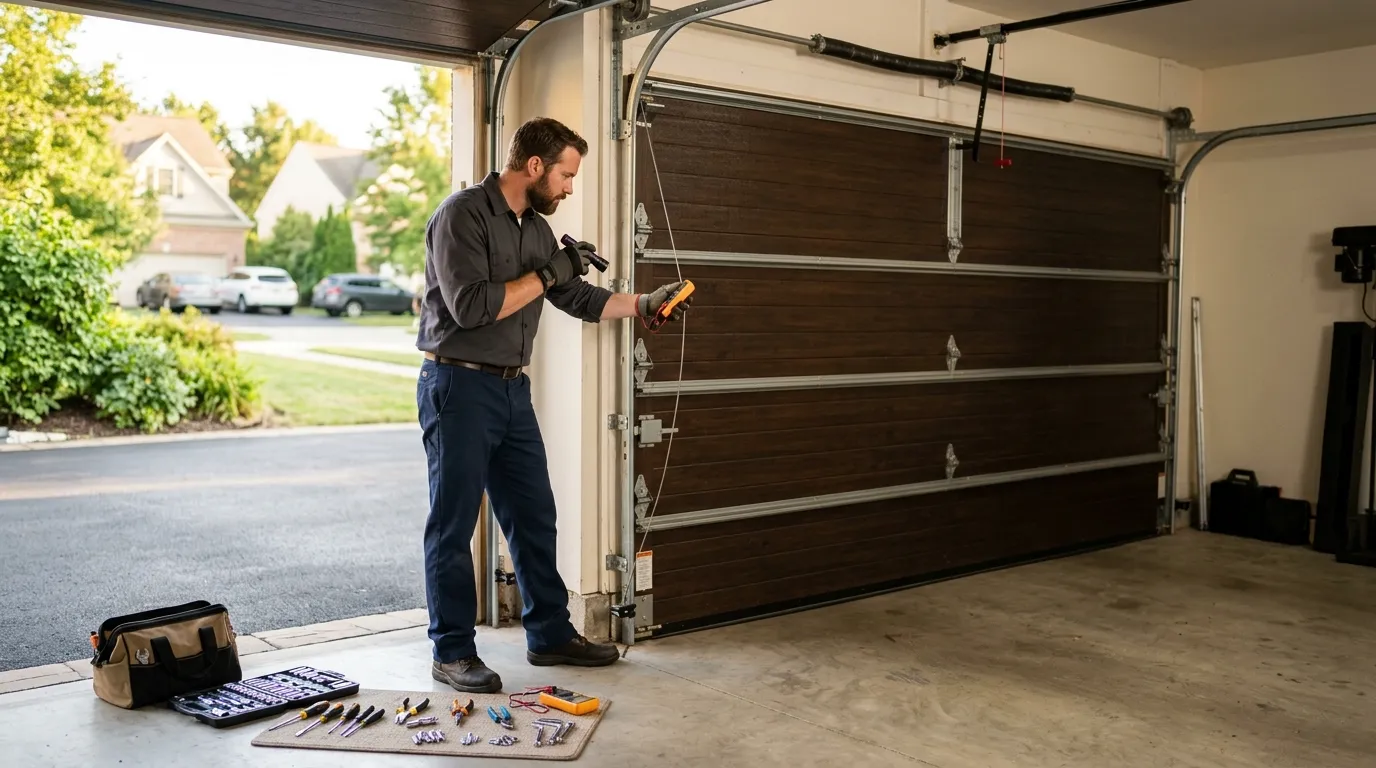
A technician tests the door under power and by hand and finds what actually failed.
3
Clear, up-front plan
You get the fix that’s needed and what drives the cost - before any work starts.
4
Repaired & tested
The repair is done, the door is set true and tested, and the work area left clean.
Serving Hugo, MN - tell us what your door’s doing and we’ll take it from there.
Why do garage door springs break more in winter in Hugo?
Steel contracts in the cold, and a spring nearing the end of its life loses temper faster once it's cycling through repeated freeze-thaw. Hugo sits in a severe cold climate band, and a lot of the housing stock here is original from the 1980s and 90s, so aging springs and hard cold hit at the same time most winters.
My house was built in the 1990s - is the opener original?
It's possible. A lot of Hugo's housing dates from the 1980s through the 90s, and openers from that era often run gear sets and motors that weren't built for the temperature swings they've had to handle for decades. If yours has never been replaced, worn gears or a tired drive motor are a common cause of failure.
Can you always fix an older door instead of replacing it?
Not always. If your door is from the 1950s through early 2000s and the hardware failing is discontinued, we may need to order parts, which takes longer, or recommend replacement instead of patching a system where most of the components are near the end of their life together.
Ready to get your garage door sorted?
Tell us what it’s doing and where you are in Hugo - we’ll take it from there.