Most houses in Hugo went up between 1950 and 2002, with the median build year sitting around 1980. That matters more than people think. A door installed in the 80s or 90s was built for a lower bar than what's asked of a door today, and it's spent every winter since fighting a cold-severe climate. Steel skins thin out, insulation (if there's any at all) compresses, and the seals at the bottom and sides give up their flex long before the panel itself fails outright.
Across the wider service area, the same pattern holds. From Dellwood four miles off to Afton twenty miles out, the 28 communities in this stretch of Washington and Ramsey County lean heavily 1980s and 90s construction. That means a lot of original hardware still on original doors, and a lot of owners who've never had a reason to think about the door until it stops working.
Cold-severe conditions don't just crack old rubber seals. They stiffen lubricant on tracks and rollers, make torsion springs more likely to snap on a cold morning pull, and turn a slightly bent track into a door that won't move at all. None of this is dramatic. It's just wear, compounded by decades of winters.
What to Check
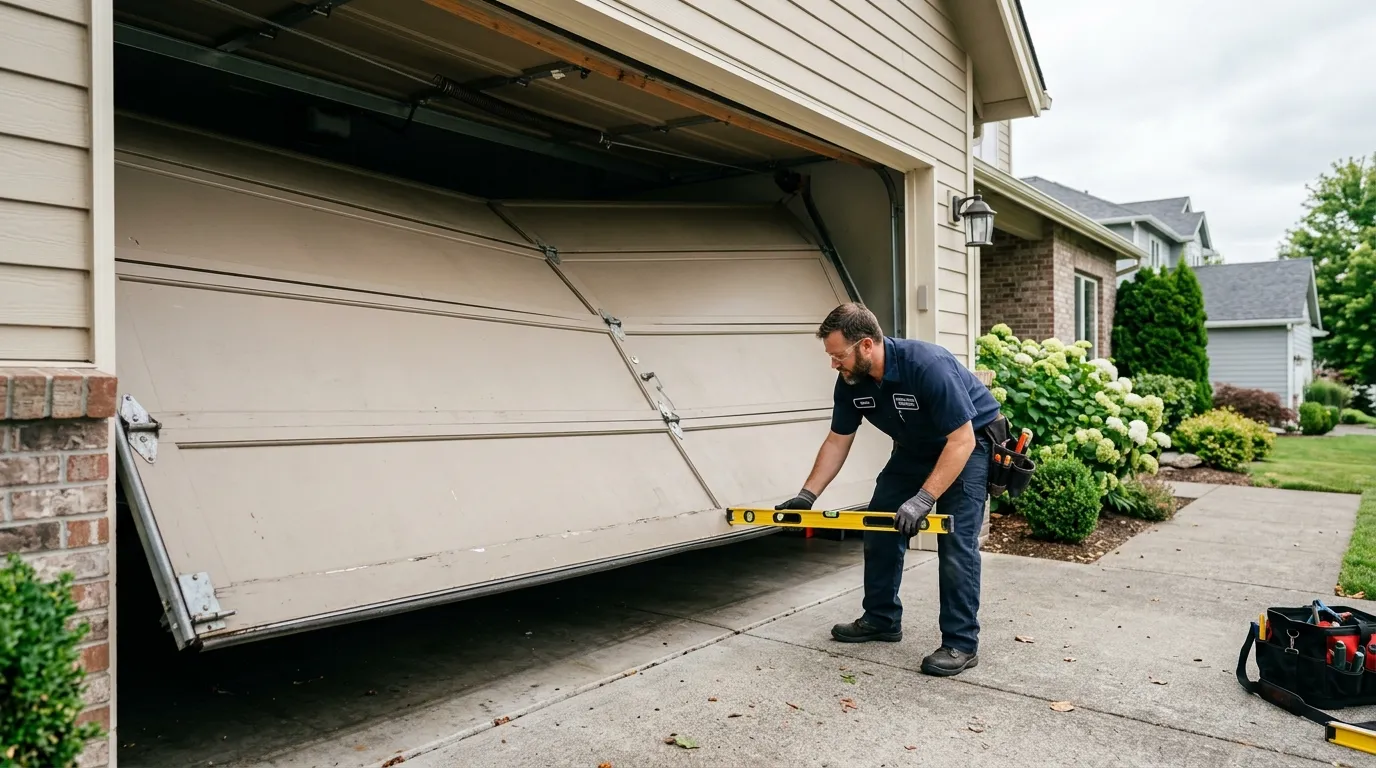
Start with the panels. Surface rust or a small dent doesn't mean much. A panel that flexes when you push on it, or one where the rust has gone through to daylight, is a different story - that's structural, not cosmetic.
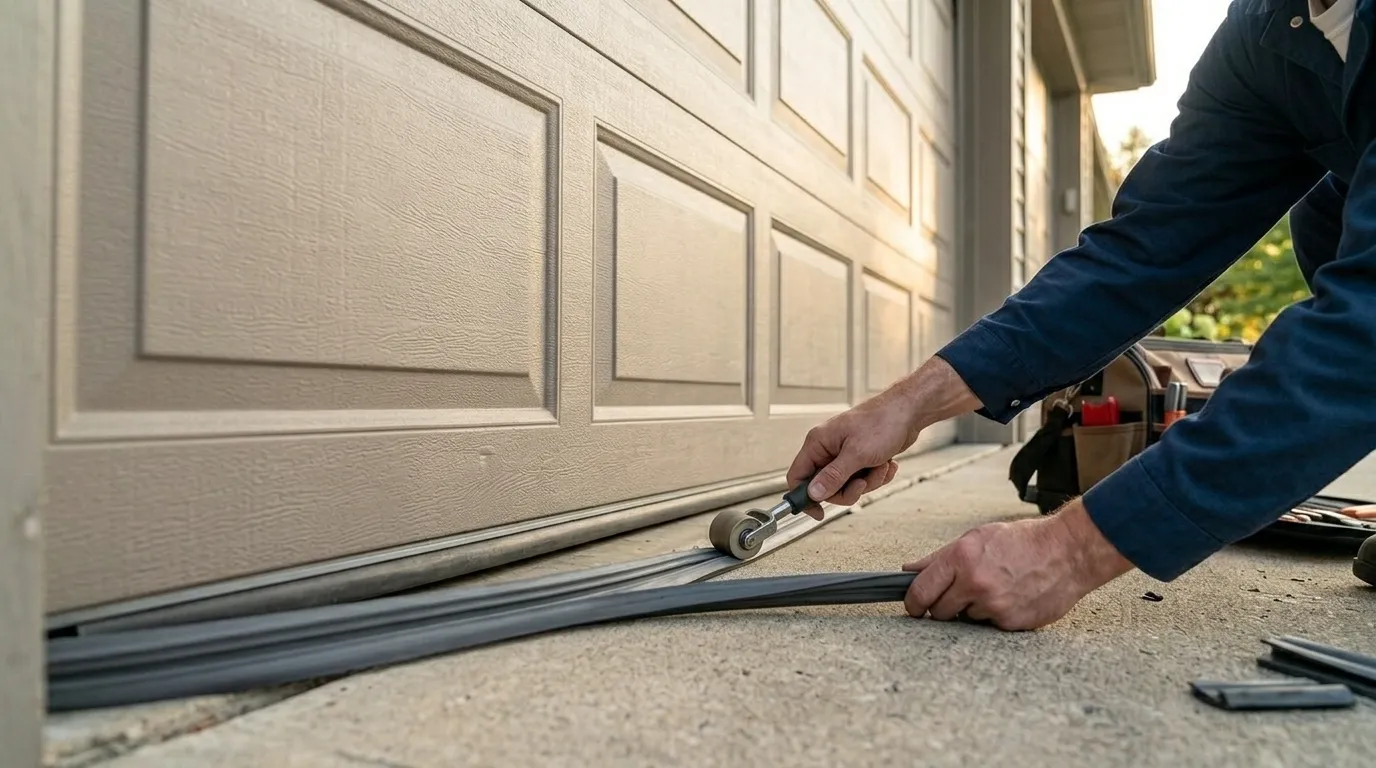
Check the bottom seal. On a door from the 1980s or 90s, this has usually been replaced at least once already if the owner's stayed on top of it. If it's original, it's brittle, and brittle seals let cold air and meltwater into the garage all winter.
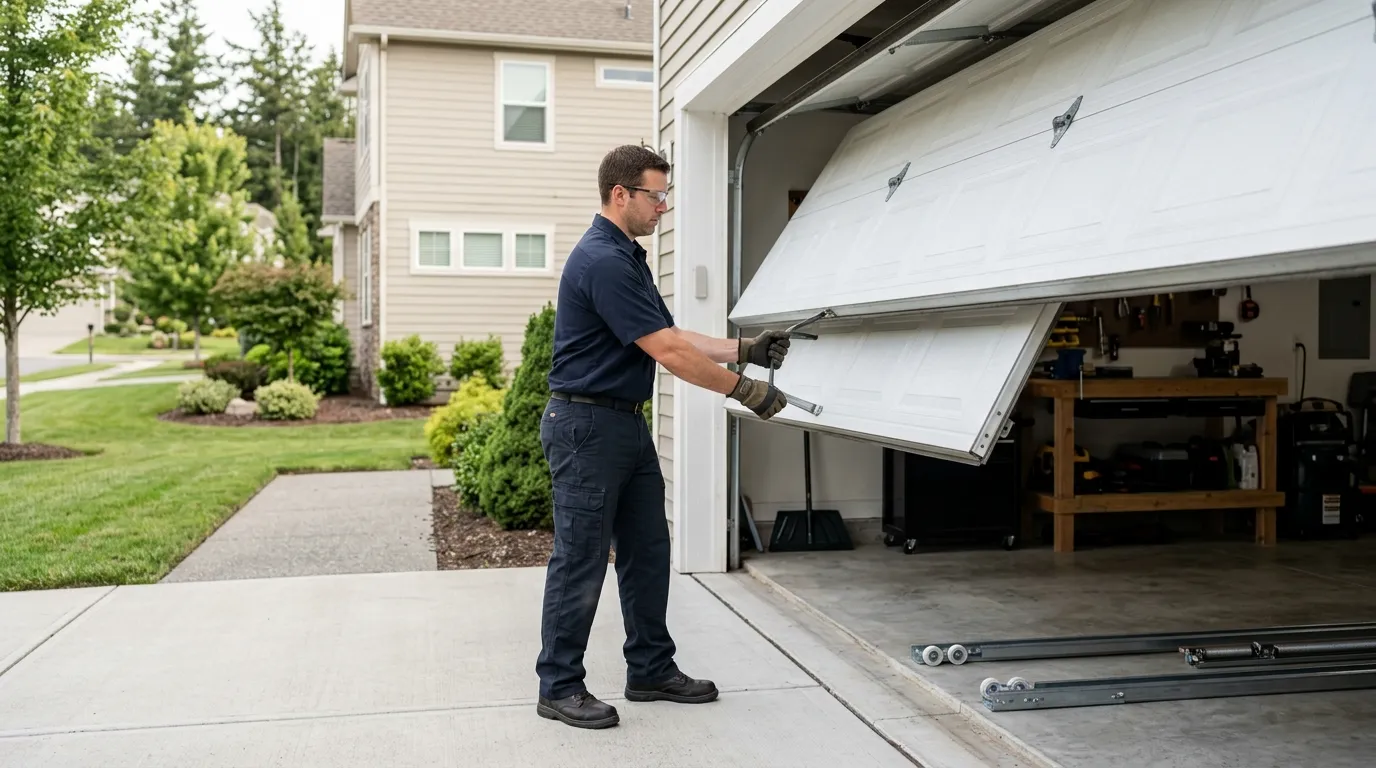
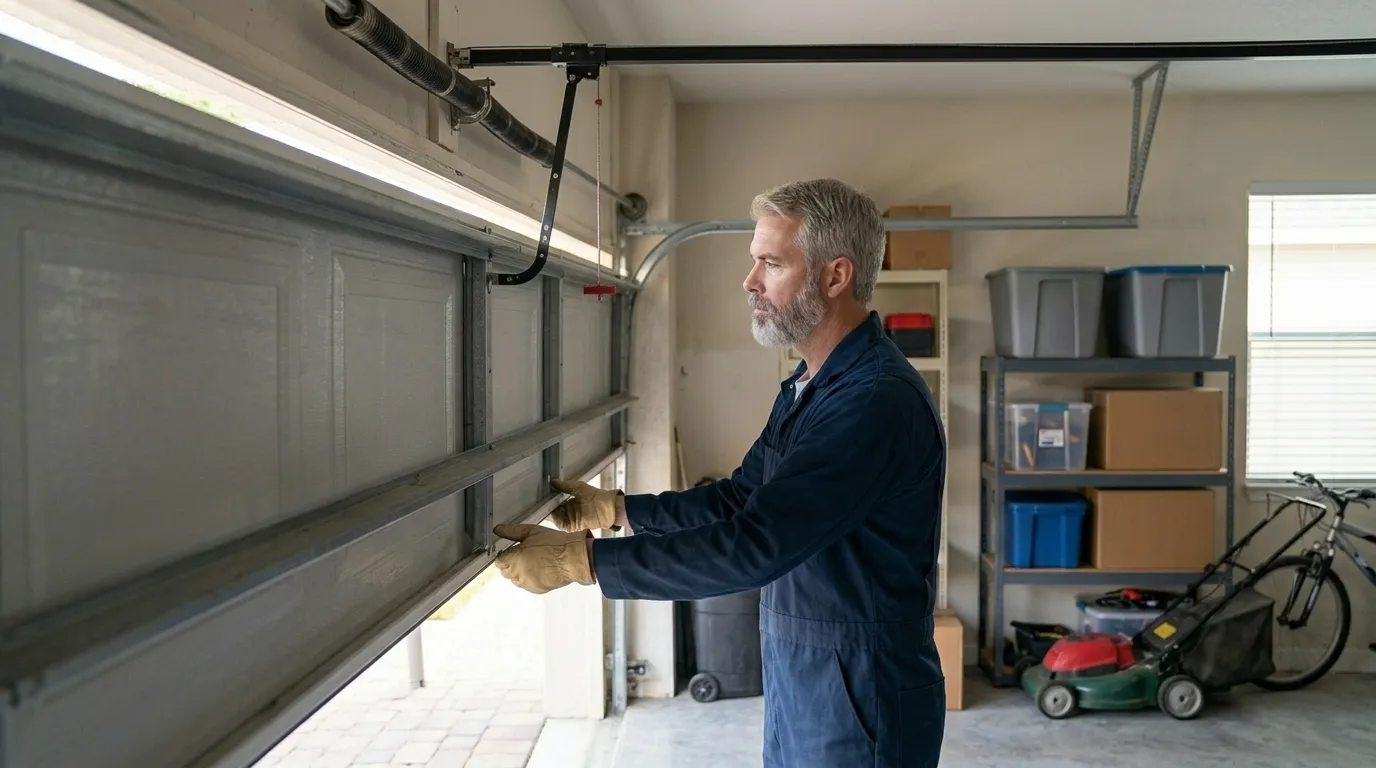
Look at the torsion spring. Count the coils, look for a gap or a visible separation - a broken spring is obvious once you know what you're looking at. If the door won't lift by hand with the opener disconnected, or it lifts unevenly, the spring or the cables are suspect.
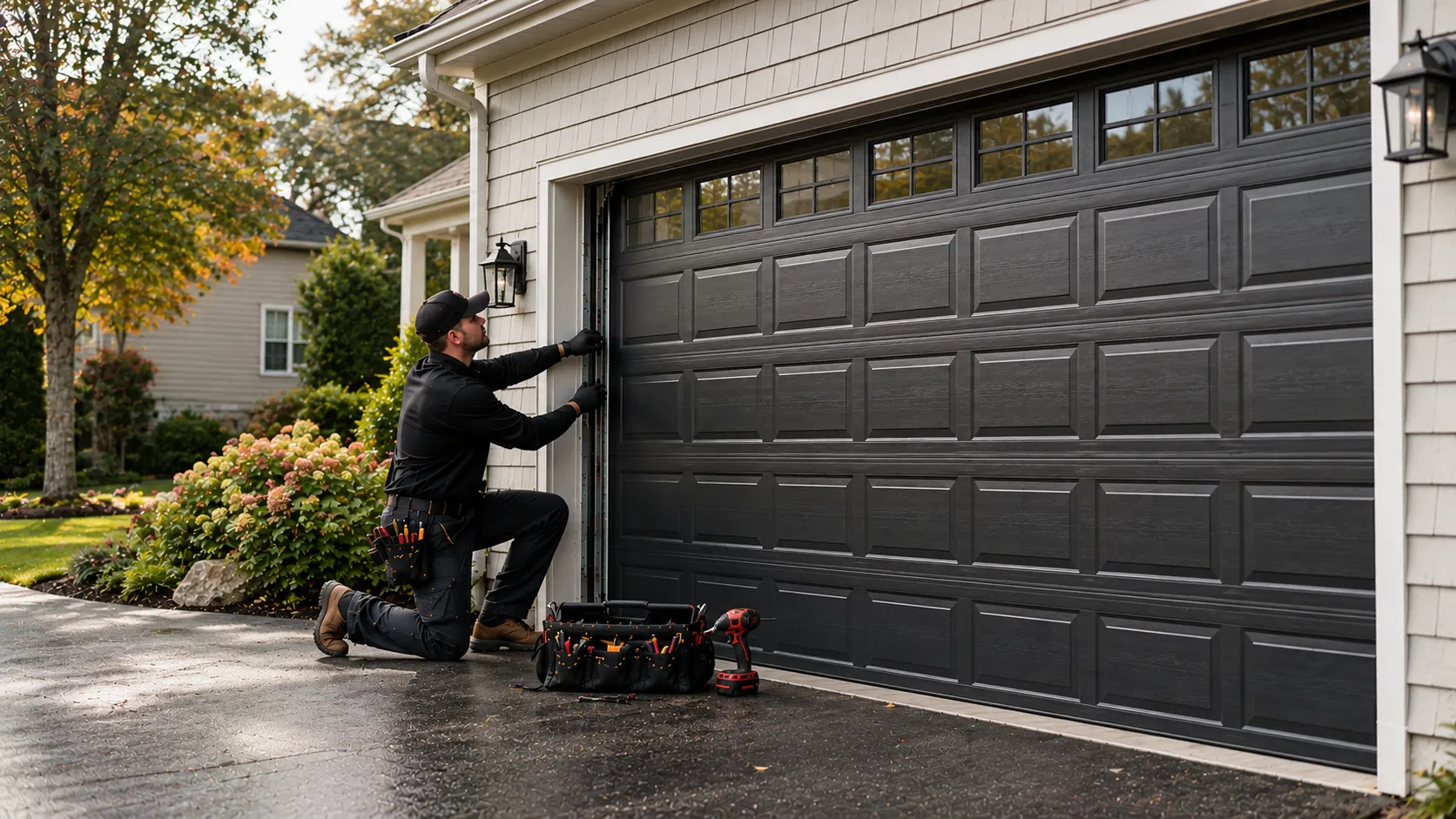
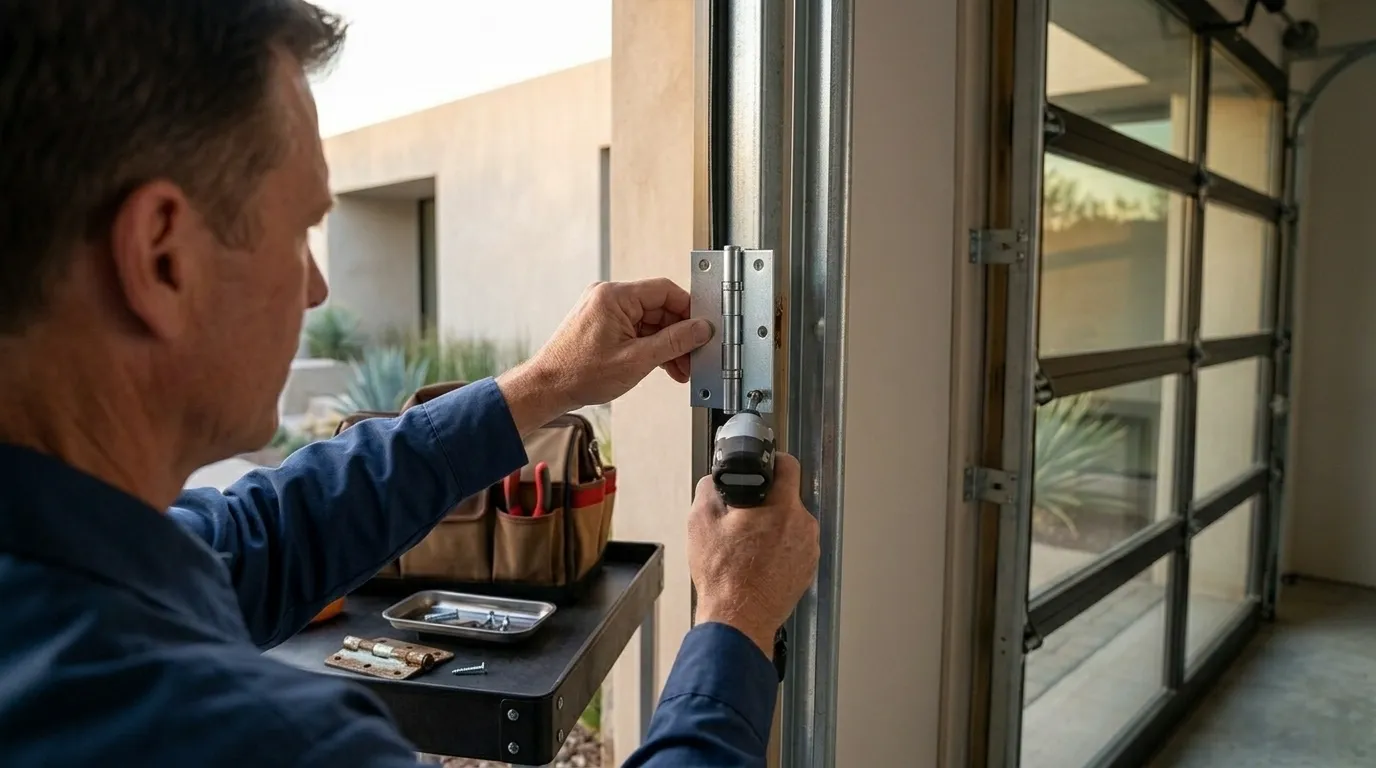
Run a hand along the tracks. Rust pitting, dents, or gaps at the joints all show up more on doors that have sat through 30-plus Minnesota winters without much attention. And check the opener itself - if it's original to a house built in the 80s, the motor and the safety reversal sensors are both well past the point where a manufacturer would call them reliable.
The Problem
The honest answer is that most of what breaks on an older Hugo door is fixable on its own - a new spring, a new opener, new rollers, a new bottom seal. None of those jobs mean the door needs replacing. Where it gets harder is when two or three of those things go at once, which happens more often on a door original to a 1980s build than people expect, because everything on it is aging at the same rate.
The panels are the real dividing line. Steel panel sections from that era weren't built with the insulation or the rust protection that current doors carry, and once a panel is structurally compromised - not just dented, but bent at the frame or rusted through - patching it usually costs close to what a new section costs, and a new section on an old door often doesn't match anyway. At that point you're not fixing a door, you're maintaining a mismatch.
Our limitation here: we don't try to force a repair that's going to fail again in a year just to avoid a bigger conversation. If a door's frame is bent or the panels are shot, we'll tell you that instead of billing you twice.
What It Costs
We're not going to put a number here that doesn't hold up house to house, because it doesn't - a spring job on a single door is a different bill than an opener and a full panel section, and what a job actually costs depends on what's actually wrong. What we can tell you is how to think about the decision.
With a median household income of $100,759 across the service area and 38,505 owner-occupied houses, most people fixing up a Hugo house from this era can weigh full replacement seriously rather than defaulting to whatever's cheapest today. That's worth knowing before you commit to a repair on a 40-year-old door that's going to need another repair next winter.
The rule of thumb we'd give any neighbor: if the fix is a single component - spring, opener, seal, a few rollers - it's almost always worth doing. If you're looking at panel replacement plus track work plus an opener that's already flaky, get the replacement quote before you approve the repair, because on a door this old the two numbers are often closer than people expect.
How it works
From “it’s stuck” to “it’s fixed”
1
Tell us what’s wrong
Describe the symptom - won’t open, loud bang, opener runs but the door won’t move.
2
On-site diagnosis
A technician tests the door under power and by hand and finds what actually failed.
3
Clear, up-front plan
You get the fix that’s needed and what drives the cost - before any work starts.
4
Repaired & tested
The repair is done, the door is set true and tested, and the work area left clean.
Serving Hugo, MN - tell us what your door’s doing and we’ll take it from there.
My garage door is original to a house built in the 1980s. Is it too old to repair?
Not automatically. Torsion springs, rollers, openers, and seals are commonly replaced parts and don't mean the whole door is done. What matters is the panel condition and the track - if those are sound, a repair usually makes sense even on an 80s or 90s door.
Why does my door act up more in winter?
Hugo sits in a cold-severe climate band, and cold stiffens lubricant, shrinks metal slightly, and makes brittle old seals crack. A spring under tension is also more likely to snap in cold weather. None of that means the door is failing - it means winter is exposing wear that was already there.
Is it worth replacing an old panel instead of the whole door?
Sometimes, if the rest of the door is sound and the manufacturer's section is still close to a match. But on a door old enough to be original to a 1950-2002 build, an exact panel match often isn't available, and patching one section can end up costing close to what full replacement runs.
Do you work outside Hugo itself?
Yes, we cover the surrounding area including Dellwood, Centerville, Grant, and the other communities within roughly 20 miles of Hugo.
Ready to get your garage door sorted?
Tell us what it’s doing and where you are in Hugo - we’ll take it from there.