Hugo homes built mostly between 1950 and 2002 carry torsion springs rated for a climate that gets genuinely cold. Here's what fails, why, and what to check first.
Hugo sits in a climate band that federal data classes as severe cold, and that matters more to a garage door spring than most homeowners realize. Steel contracts as temperatures drop, and a torsion spring that's already fatigued from years of cycling loses flexibility right when it needs it most. The housing stock through this area was mostly built between 1950 and 2002, with the median landing around 1980, and a lot of that construction across the 28 named neighborhoods in the service area still runs original or first-replacement spring setups from that era. Those springs weren't engineered with today's higher-cycle steel. A door that's opened and closed twice a day for four decades, sitting in a garage that swings from 60 degrees to well below freezing overnight, is a door with a spring under more stress than a comparable one in a mild climate. Cold doesn't cause the break by itself - it's the last straw on a spring that's been losing tension for years. This is why the failure pattern here clusters in January and February, and why it hits 1980s and 90s builds harder than newer construction with updated hardware.
What to Check
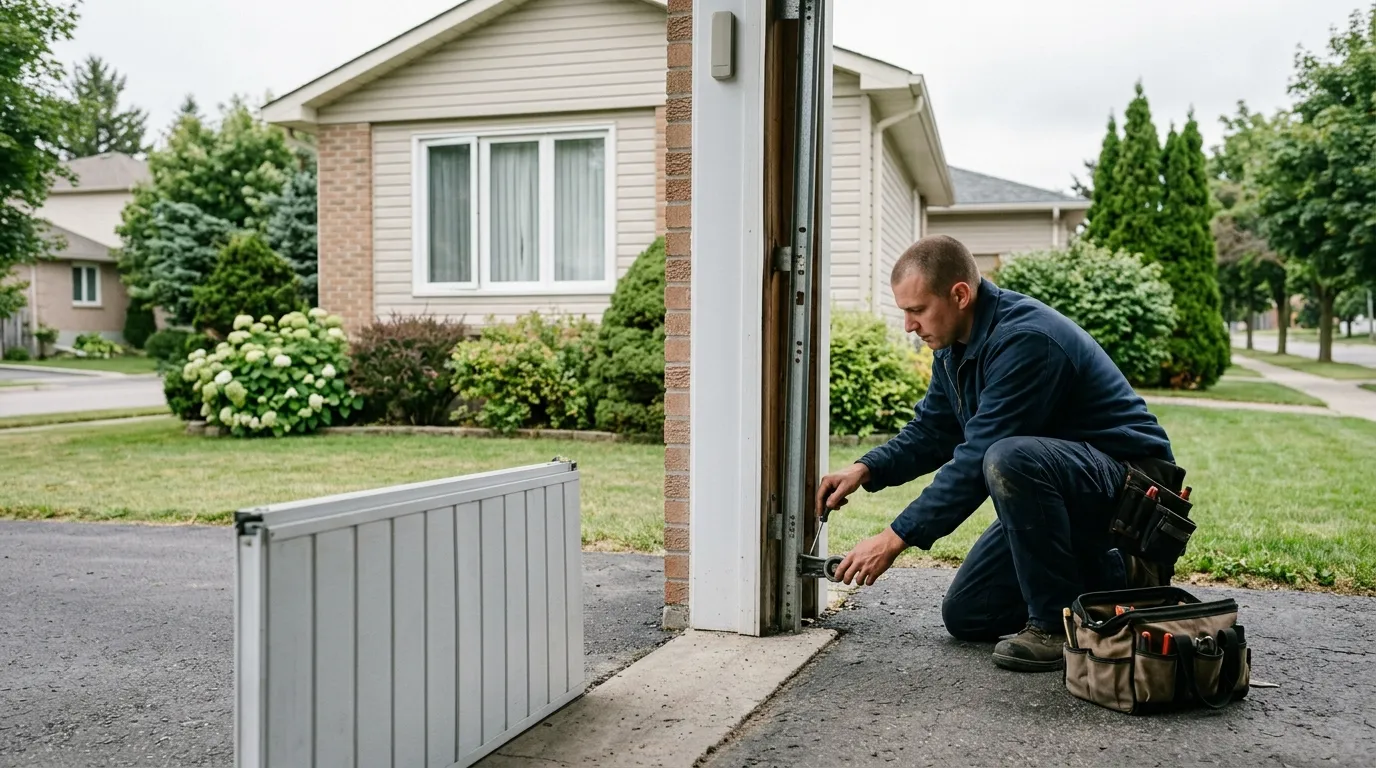
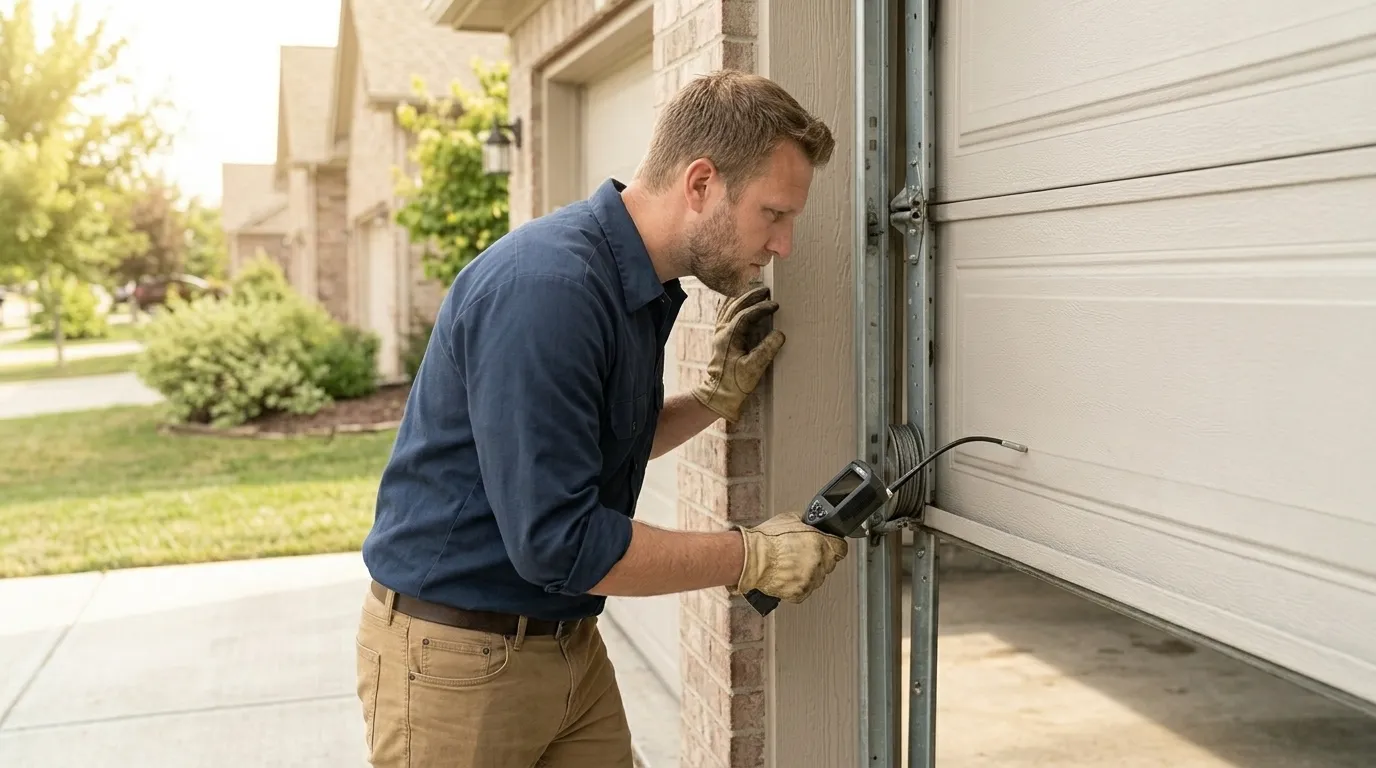
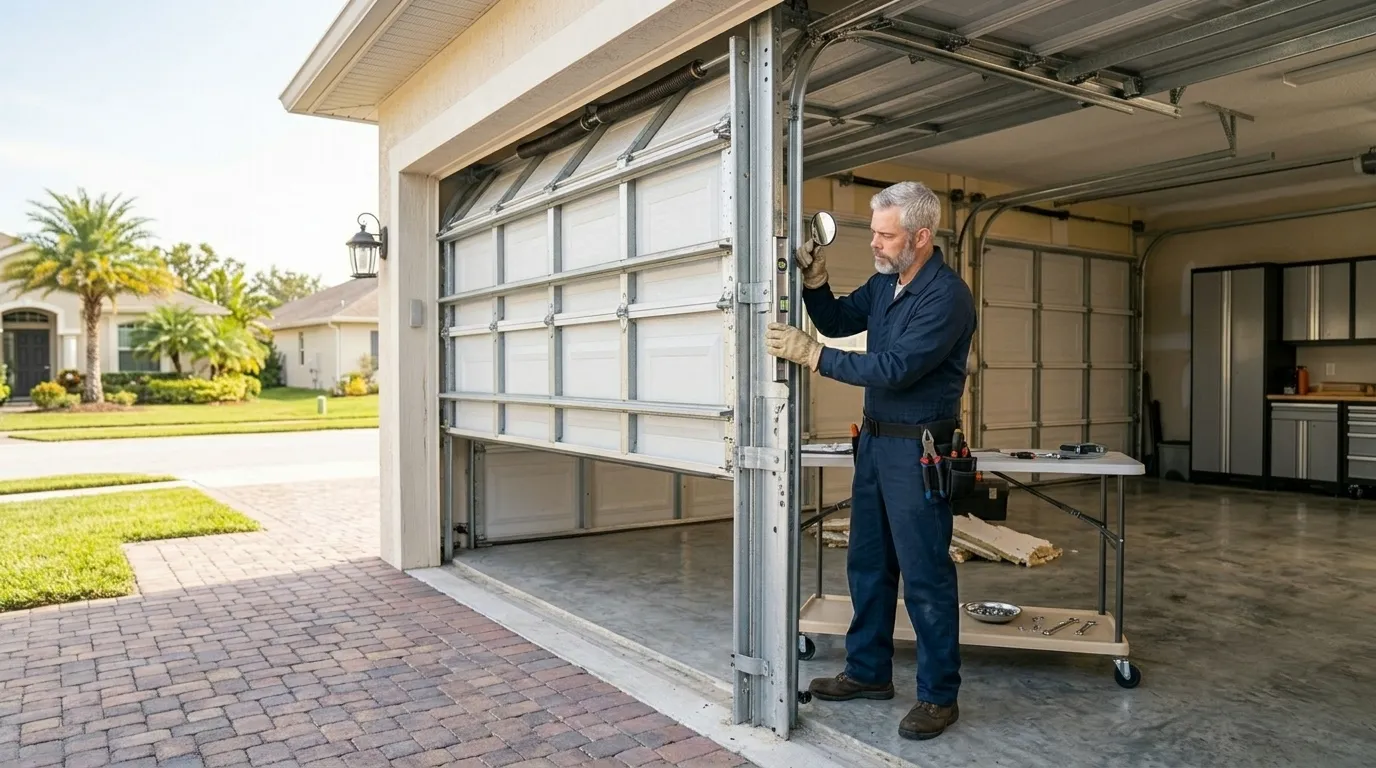
Start by looking at the spring itself - the coil sits above the door, usually one or two torsion springs on a bar. A gap in the coil, even a small one, means it's already cracked and running on borrowed time. Next, listen for the door: a loud bang from the garage on a cold morning is very often the spring letting go, not something wrong with the opener. Check the cables on either side of the door for slack - a broken spring often shows up as a cable that's gone loose because there's no more tension holding it taut. If your house falls in that 1950-2002 build range common across Hugo, also check whether the spring looks original - dull, unpainted, no visible model markings - because those units are past due regardless of whether they've broken yet. Don't try to lift a door manually to test it once you suspect a broken spring; without tension, a double door can weigh well over a hundred pounds and there's nothing holding it up but the tracks.
The Problem
A torsion spring stores energy by twisting under load, and cold steel is more brittle steel - it has less give before it fractures. When a spring that's already fatigued from thousands of cycles hits a hard cold snap, the metal can crack rather than flex, and it lets go all at once. That's the bang homeowners hear. Once it's broken, the door has no counterbalance: the opener will strain and can burn out trying to lift a door it was never built to lift alone, and the tracks or cables can take damage from the sudden shift in load. This isn't a problem you can defer safely. A garage door with a broken spring isn't just inconvenient, it's a several-hundred-pound panel held up by an opener motor and gravity. Given how much of the housing here dates to the 1980s and 90s, this is one of the most common cold-weather calls in the area, and it's rarely a surprise failure - it's the end of a slow fatigue process that cold weather finishes off.
What It Costs
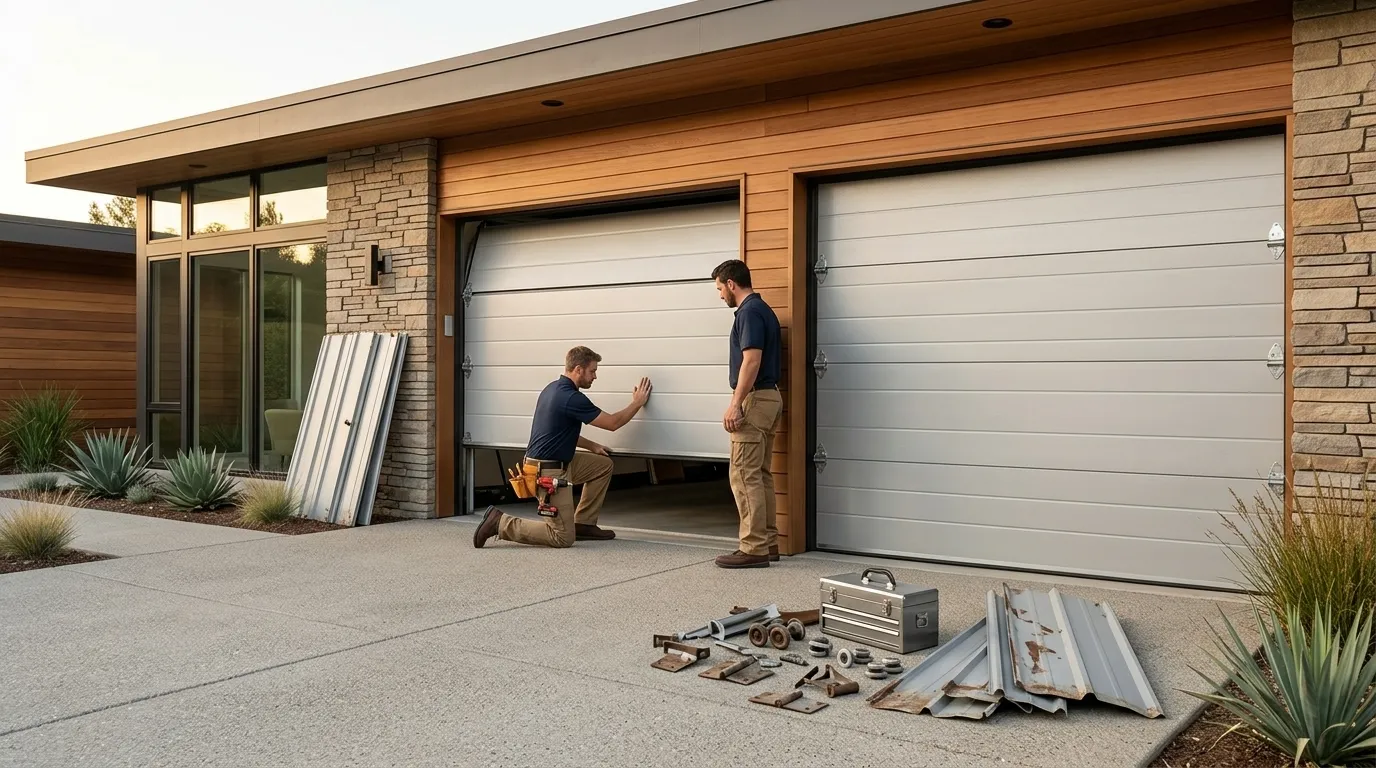
We don't have a set price to quote here, and we're not going to make one up. Spring replacement cost depends on whether it's one spring or two, the size and weight of the door, and whether the cables or drums took damage when it broke - that's true anywhere, but it matters more on older doors where a break can also reveal worn rollers or a track that's slightly out of alignment. What we can tell you: median household income across the service area sits around $100,759, and most calls we get after a cold-weather break are for straightforward torsion spring swaps on doors that are otherwise sound. If your door is original to a house built decades ago, replacing just the spring sometimes isn't the full fix - but we won't know that until we look at it, and we're not going to sell you a spring if the opener or track is what's actually failing.
How it works
From “it’s stuck” to “it’s fixed”
1
Tell us what’s wrong
Describe the symptom - won’t open, loud bang, opener runs but the door won’t move.
2
On-site diagnosis
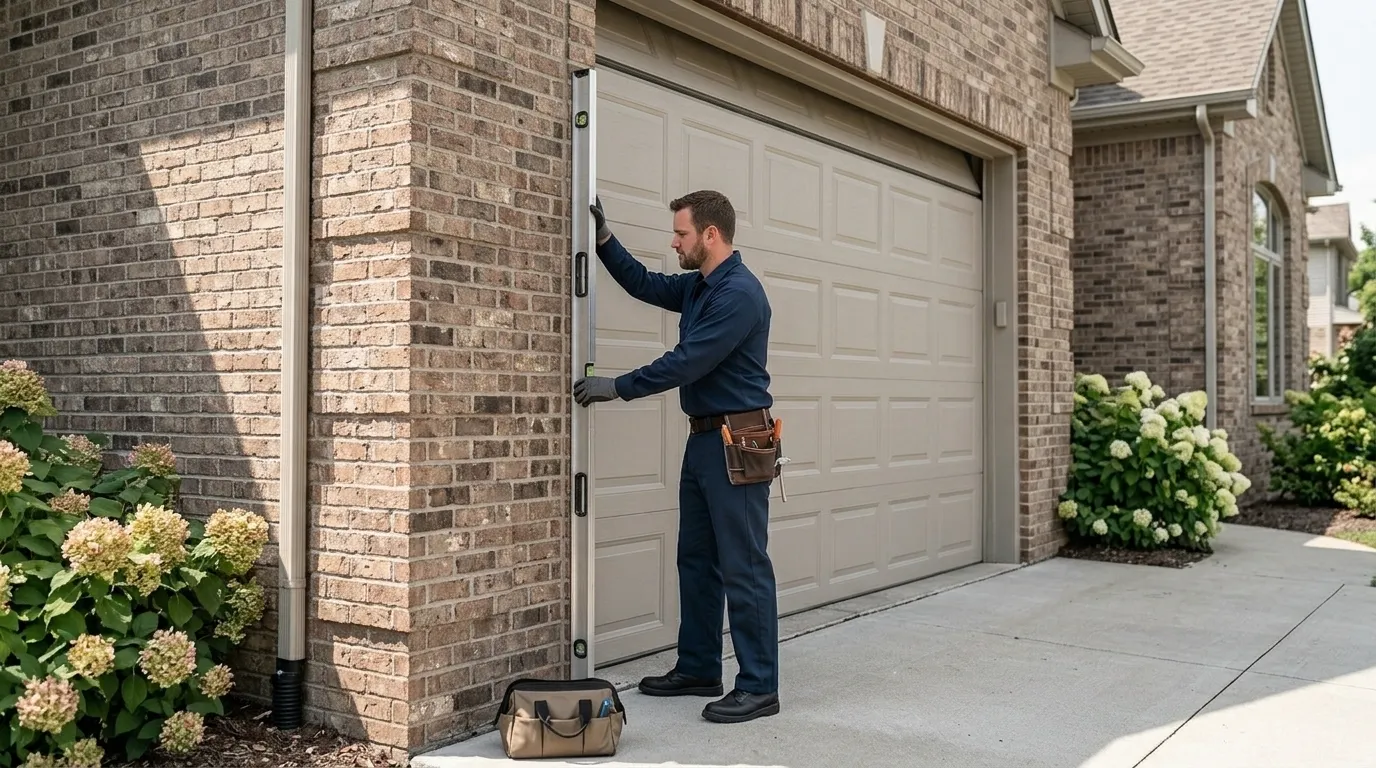
A technician tests the door under power and by hand and finds what actually failed.
3
Clear, up-front plan
You get the fix that’s needed and what drives the cost - before any work starts.
4
Repaired & tested
The repair is done, the door is set true and tested, and the work area left clean.
Serving Hugo, MN - tell us what your door’s doing and we’ll take it from there.
Why do springs break more in cold weather in Hugo?
Cold makes steel less flexible, and a spring that's already fatigued from years of use has less margin before it cracks. Hugo sits in a climate band classed as severe cold, and a lot of the local housing dates to the 1980s and 90s, so the springs installed then are hitting the end of their life right as winter puts extra stress on them.
Can I open my garage door if the spring is broken?
Not safely by hand. Without the spring's tension, the door has no counterbalance, and a double door can weigh well over a hundred pounds. Leave it closed and call for a replacement rather than forcing the opener or lifting manually.
Is a broken spring always tied to the age of the house?
Not always, but it correlates strongly here. Homes built in the common 1950-2002 range across this area often still run original or early-replacement torsion springs, and those units are more likely to be near or past their cycle life when a cold snap hits.
How do I know if it's the spring and not the opener?
A loud bang from the garage, a door that won't budge even with the opener engaged, and slack cables on either side are the classic signs of a broken spring rather than an opener problem. The opener motor can also get damaged trying to lift a door with no spring tension.
Ready to get your garage door sorted?
Tell us what it’s doing and where you are in Hugo - we’ll take it from there.