Hugo homes built 1950-2002 pair aging track brackets with severe cold swings. Here's why doors jump track here and what actually needs checking before a repair.
Hugo sits in a severe cold climate band, and that matters more for track alignment than most homeowners expect. Steel track brackets are lag-bolted into the framing, and framing moves. When temperatures swing hard through a Minnesota winter, the wood behind those brackets contracts and expands, and the fasteners holding the track to the jamb loosen a fraction of a turn at a time. You don't notice it in July. You notice it in January when the door starts binding on one side or a roller pops the lip of the track on the first cold snap.
Housing stock here runs 1950 through 2002, with most of it going up in the 1980s and 90s. That generation of construction used lighter-gauge track brackets than what gets installed today, and after two or three decades of freeze-thaw cycling, a lot of those brackets are carrying more play than they were built for. Add snow and ice that finds its way into the track from a door left cracked open for the dog, or from meltwater refreezing along the bottom roller path, and you've got the two conditions that cause most off-track calls in this area: loosened hardware plus ice in the channel.
What to Check
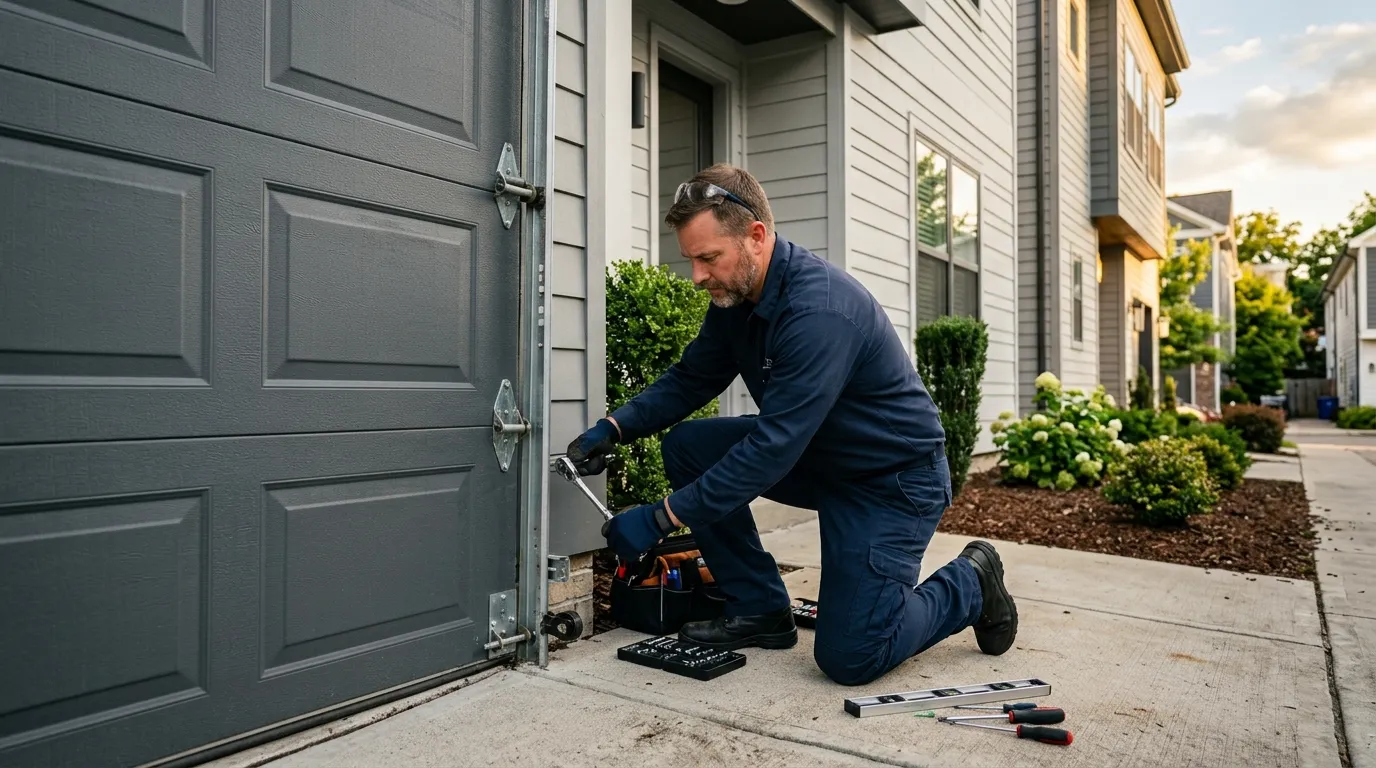
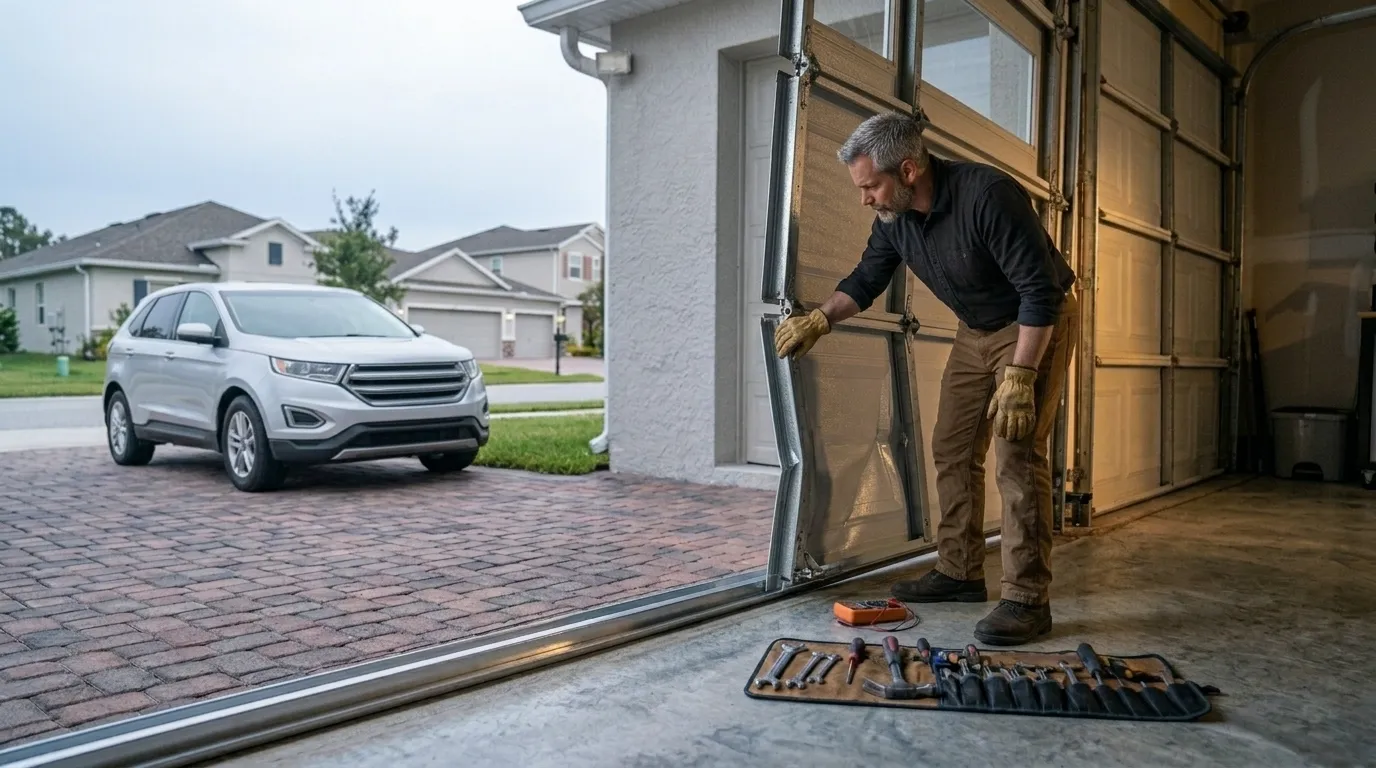
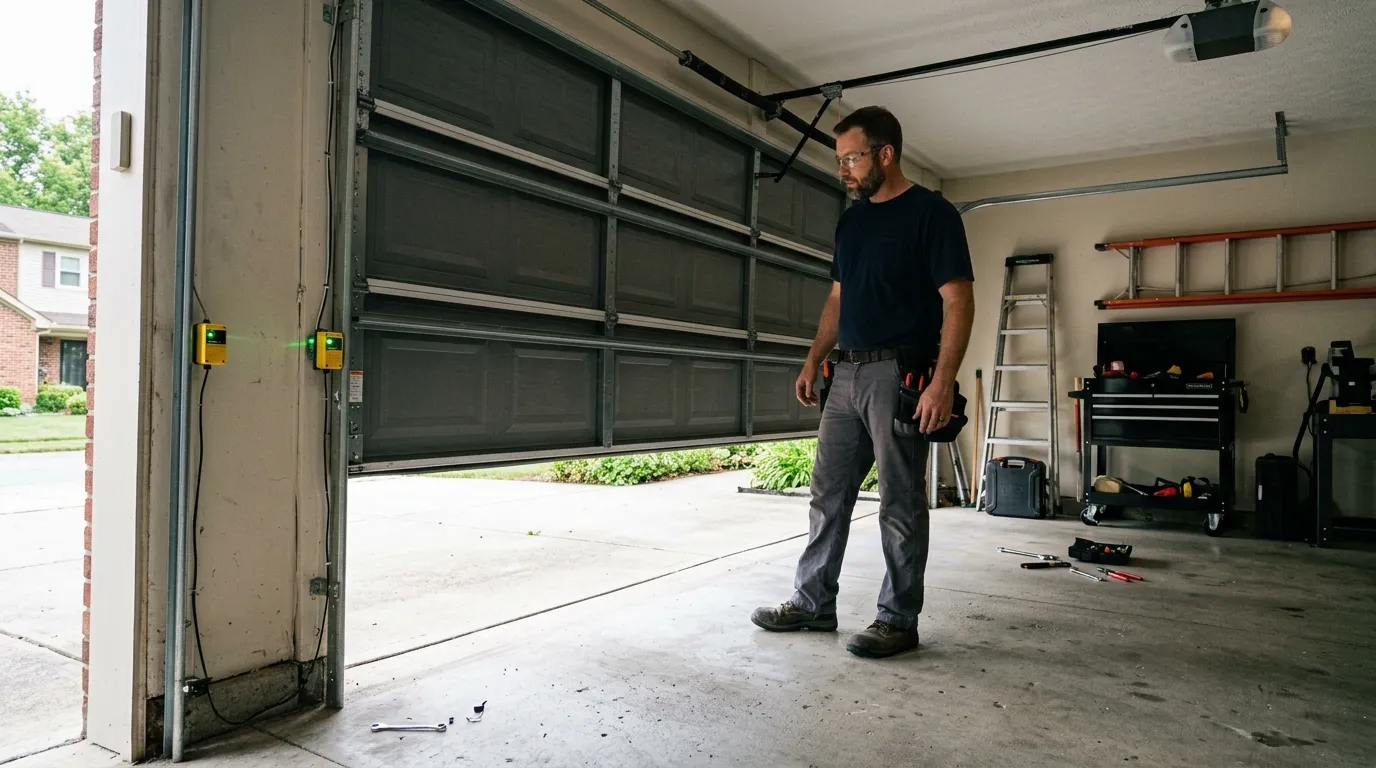
Before you call anyone, look at three things. First, the vertical tracks on both sides of the door - stand back and sight down each one from top to bottom. If one bows outward more than the other, that's your problem side. Second, check the lag bolts at each bracket along the track. On a house from the 1980s or 90s, it's common to find brackets that spin freely by hand; that slack is enough to let a roller walk out of the channel on a cold morning when the steel is stiffer and less forgiving.
Third, look for ice or packed snow inside the track itself, especially near the bottom few feet. In this climate, meltwater from snow on the door slab runs down and refreezes overnight, and a roller hitting a chunk of ice at speed is a common way a door jumps track on a cold morning rather than a mild one.
What you shouldn't do is force the door up or down once it's visibly off track. That bends the roller stem or cracks a panel, and turns a bracket tightening job into a track replacement.
The Problem
The underlying issue in most of these calls isn't a single dramatic failure - it's cumulative. A house built in the 1980s or 90s has had thirty-plus winters of expansion and contraction working on the same set of lag bolts. Add a rollers-and-track system that was never upgraded, and you get a door that's slowly drifting out of square with itself. One side's brackets loosen faster than the other, usually the side that gets more direct sun or more wind-driven snow, and the track twists a few degrees out of parallel.
Once the tracks aren't parallel, the door doesn't ride evenly - it favors one side, and a roller eventually catches the edge of the rail and pops free. That's the moment a homeowner sees as sudden, but the setup for it took years. This is also where an honest limitation matters: if the track itself is bent rather than just loose, straightening it rarely holds for long in this climate. A bent track under repeated cold-stress cycling tends to re-bow, and replacement is usually the better call than trying to save it.
What It Costs
We don't post a flat number here because the range depends on whether this is a bracket-tightening and realignment job or a bent track that needs replacing, and that difference is significant. What we can tell you is what drives the decision: age of the track, whether one or both sides are affected, and whether the rollers themselves have worn enough to need replacing at the same time.
Across the area we serve - homes in Dellwood, Centerville, Grant, Mahtomedi, and the other communities within about 20 miles of Hugo - we're mostly working on housing from that same 1950-2002 build window, so the underlying hardware issues tend to look similar from one job to the next even when the fix doesn't. Get a look at your specific setup before assuming the worst; a loose bracket and a bent track cost very different amounts to put right, and there's no way to tell which one you have without eyes on it.
How it works
From “it’s stuck” to “it’s fixed”
1
Tell us what’s wrong
Describe the symptom - won’t open, loud bang, opener runs but the door won’t move.
2
On-site diagnosis
A technician tests the door under power and by hand and finds what actually failed.
3
Clear, up-front plan
You get the fix that’s needed and what drives the cost - before any work starts.
4
Repaired & tested
The repair is done, the door is set true and tested, and the work area left clean.
Serving Hugo, MN - tell us what your door’s doing and we’ll take it from there.
Why does my garage door only go off track in winter?
Cold makes both the framing and the steel track behave differently. Wood framing contracts in the cold, loosening the lag bolts holding your track brackets, and stiffer steel is less forgiving when a roller hits ice or a slightly misaligned rail. Houses in this area built in the 1980s and 90s are especially prone to this because the brackets have had decades of freeze-thaw cycling to work loose.
Can I push the door back onto the track myself?
Don't force it. Forcing a door back onto a track once it's derailed usually bends the roller stem or cracks the bottom panel, turning a simple bracket-tightening visit into a full track replacement. Leave the door where it is and call for someone to look at it before moving it further.
Is a bent track worth repairing or should I replace it?
A track that's bent rather than just loose rarely holds a straightening job for long once it goes through more freeze-thaw cycles. In most cases here, replacing the section is the more lasting fix. A loose-bracket issue, on the other hand, is often a straightforward tightening and realignment.
Ready to get your garage door sorted?
Tell us what it’s doing and where you are in Hugo - we’ll take it from there.