We run out of Hugo, and Lindstrom sits 16 miles down the road. That drive means we don't promise same-day emergency service the way a shop based in town could. If your spring lets go at 6pm on a Friday, say so when you call, but plan on us fitting you in rather than showing up in twenty minutes.
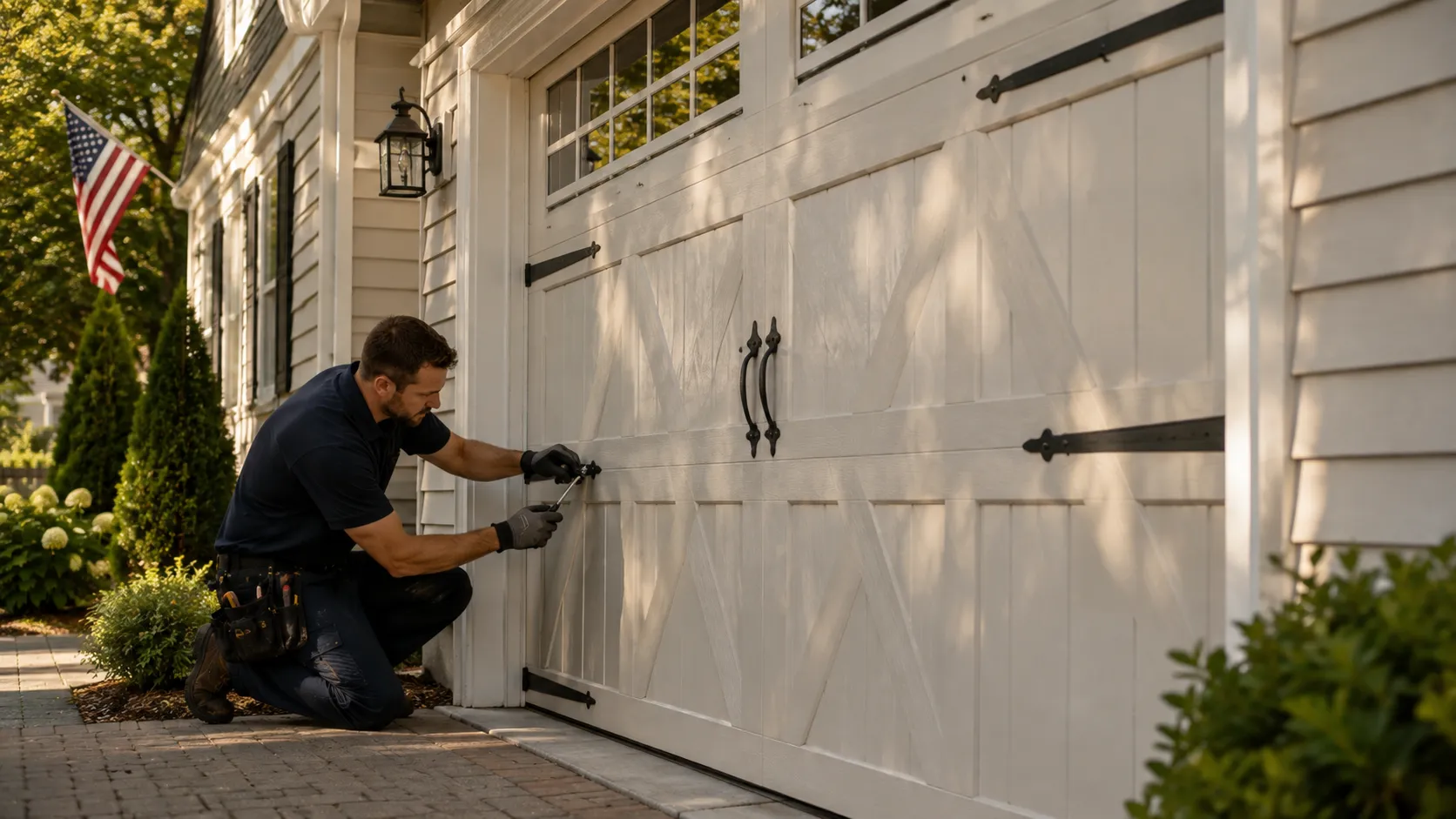
We also won't chase parts for doors that predate anything common in this area. If you've got an older door with obsolete hardware nobody stocks, we'll tell you straight that replacement makes more sense than hunting for a part that costs more than the door. And we don't do cosmetic wood refinishing or paint work - we fix and replace hardware and panels, not restore finishes.
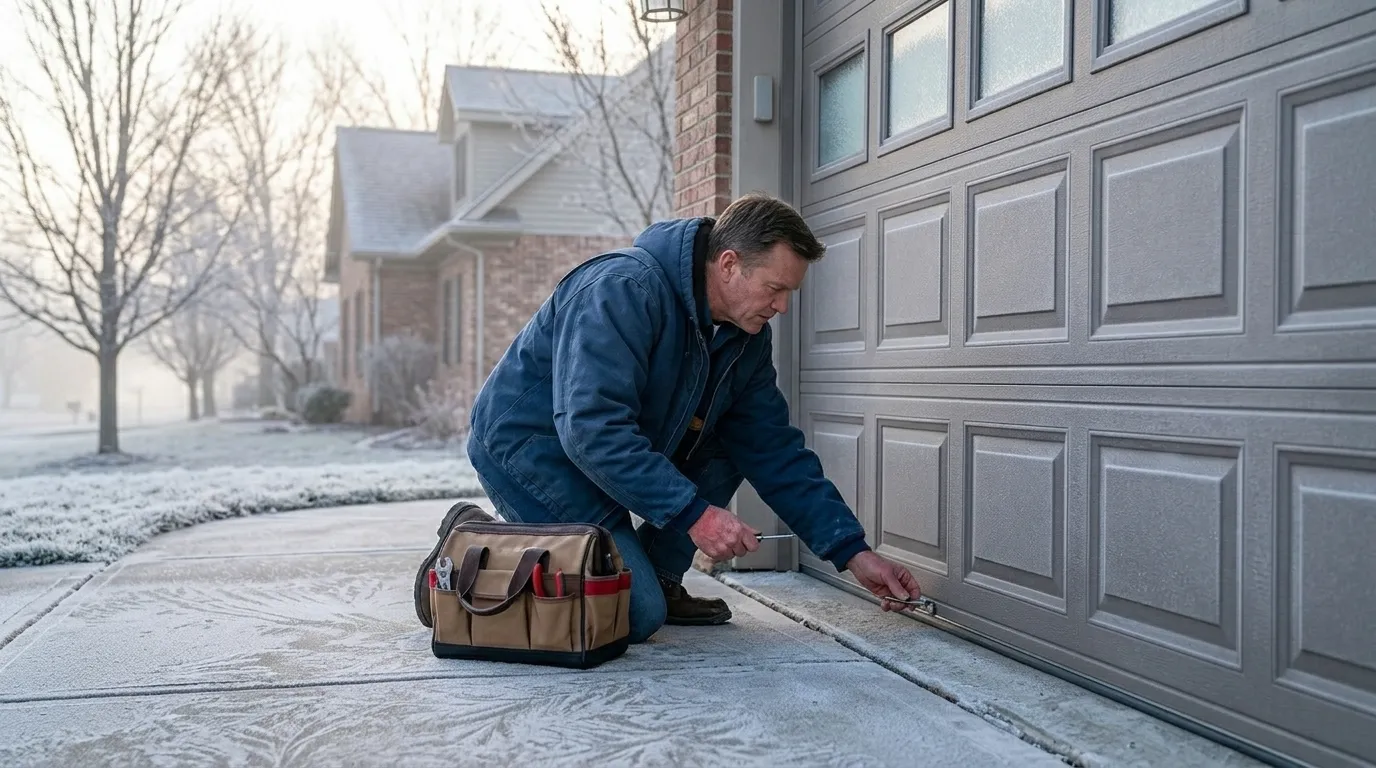
One more limit worth naming up front: winter cold changes what we can safely do on-site. Lubricant behaves differently below zero, and some adjustments we'd normally do outside get pushed to daylight or a warmer stretch if conditions are bad enough to make the work unsafe or unreliable.
What Neighbours Usually Call About
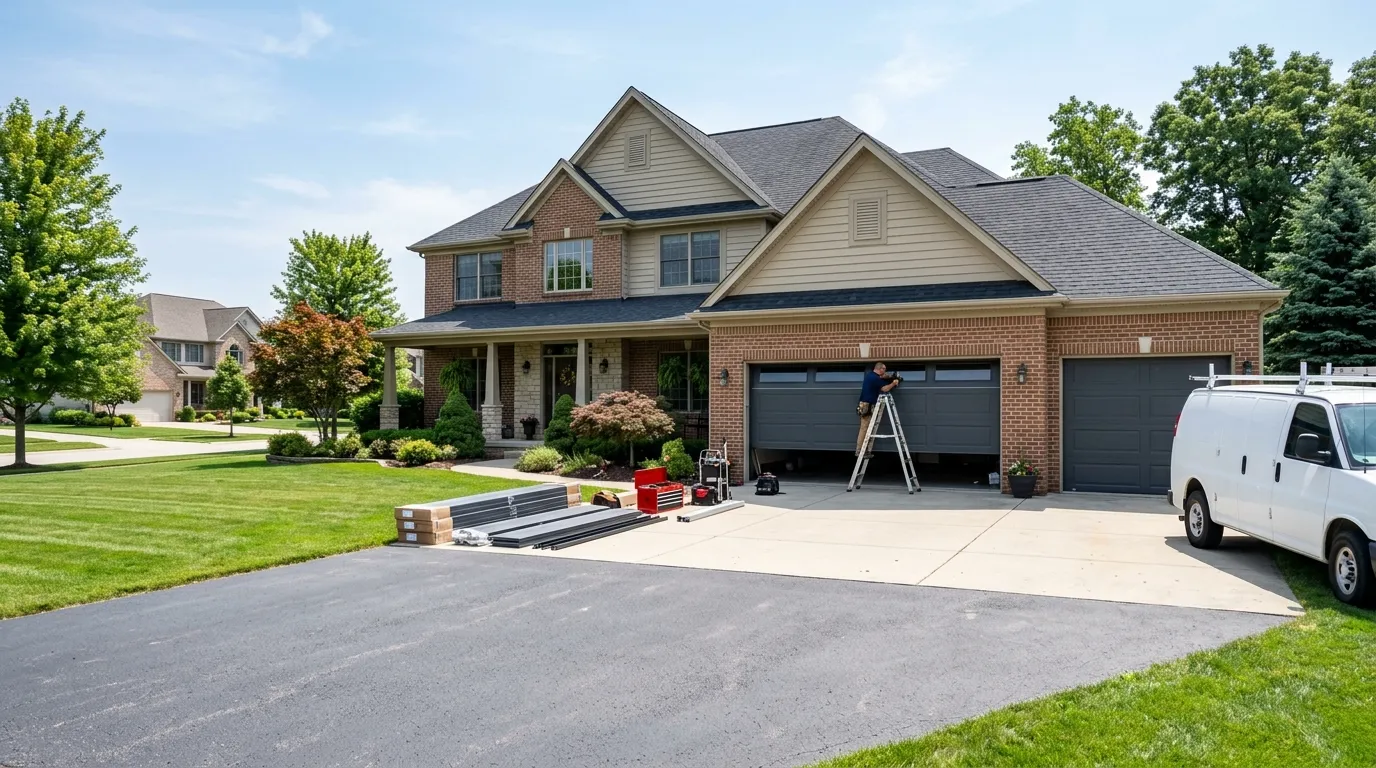
Lindstrom's housing runs newer than a lot of what we see closer to Hugo - median build year here is around 1993, a good decade past the broader area's 1980 median. That later construction means fewer of the ancient single-panel doors on painted steel track and more of the sectional doors with extension or torsion springs that became standard through the 90s.
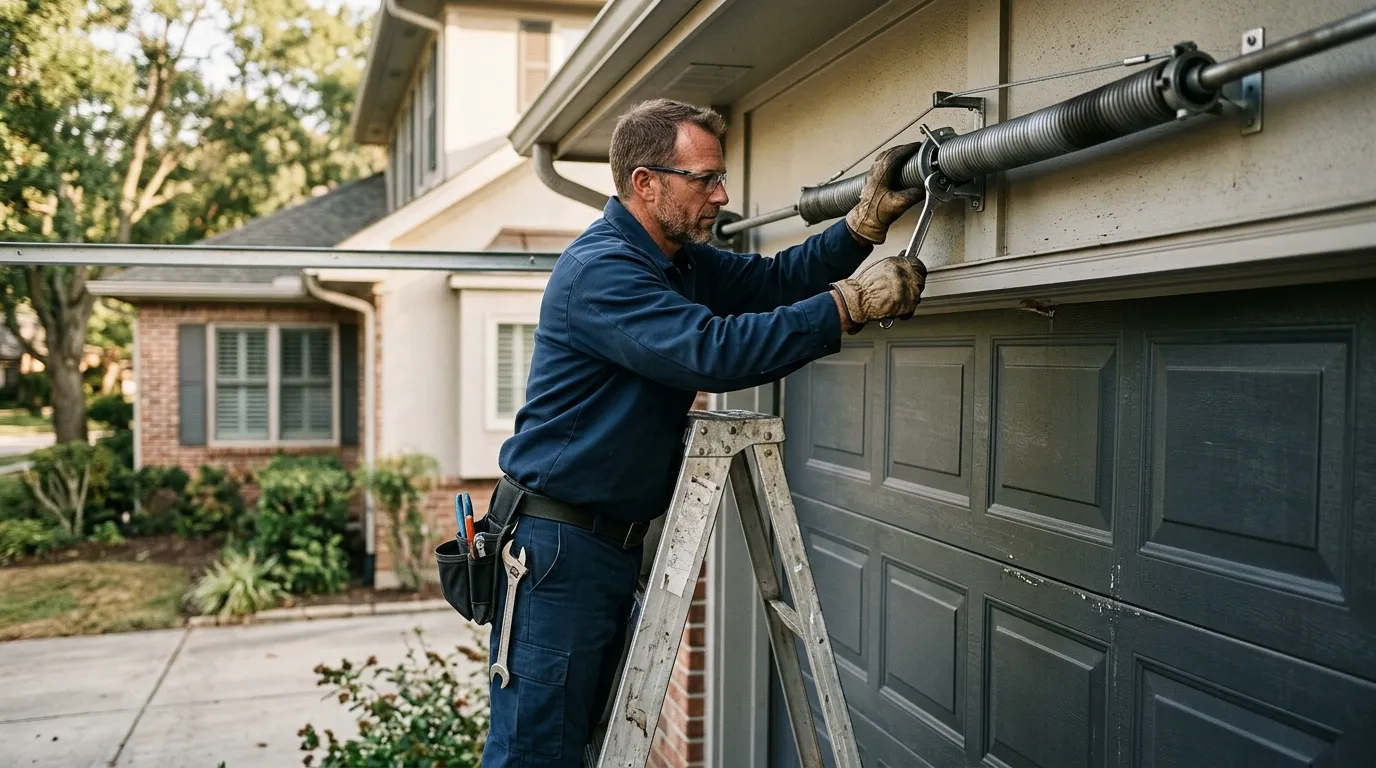
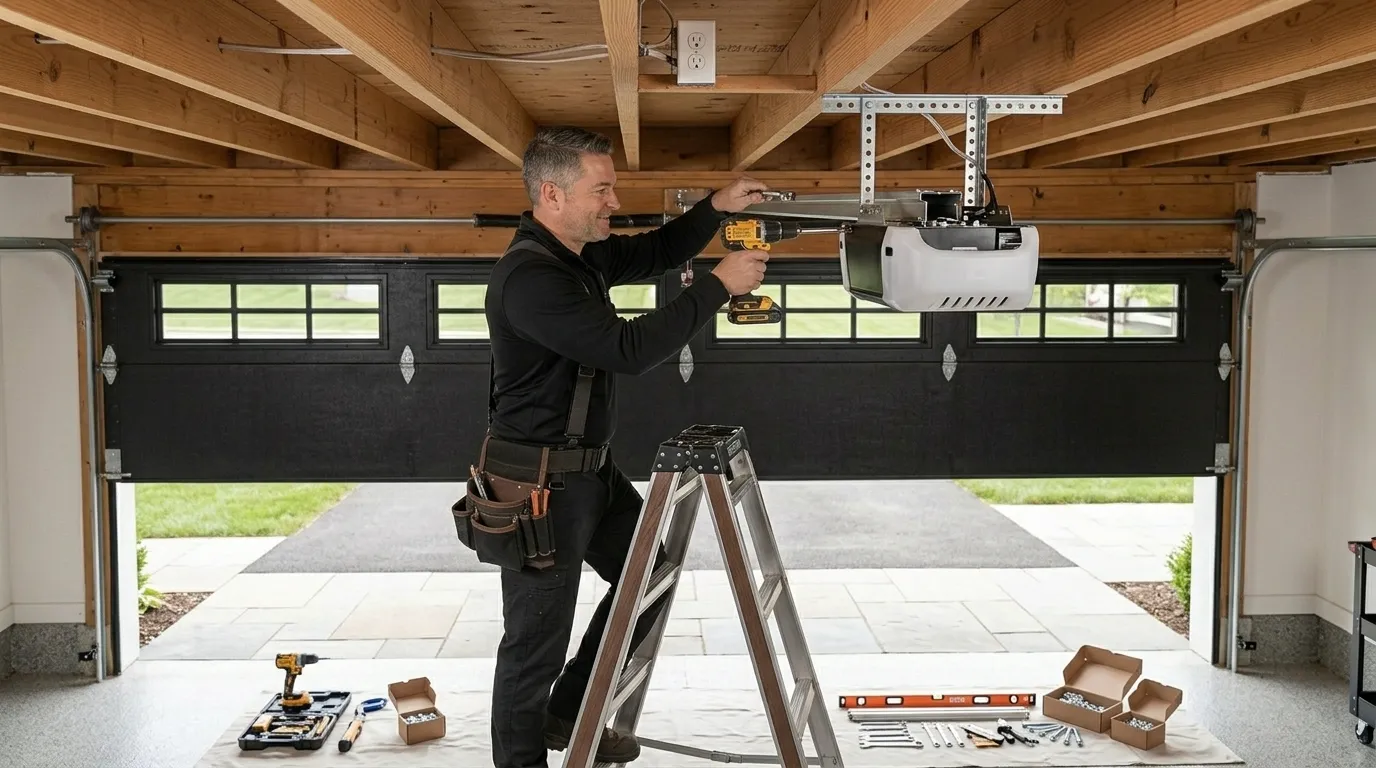
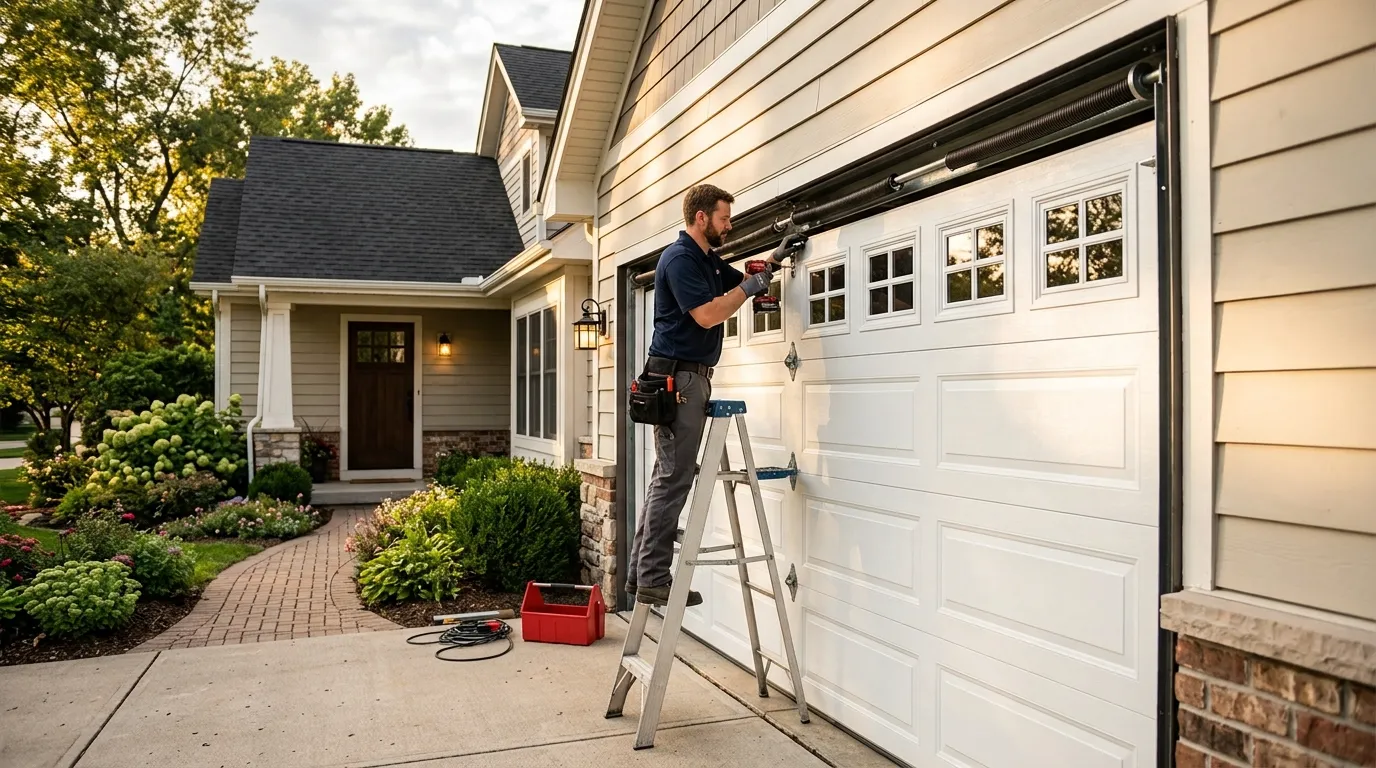
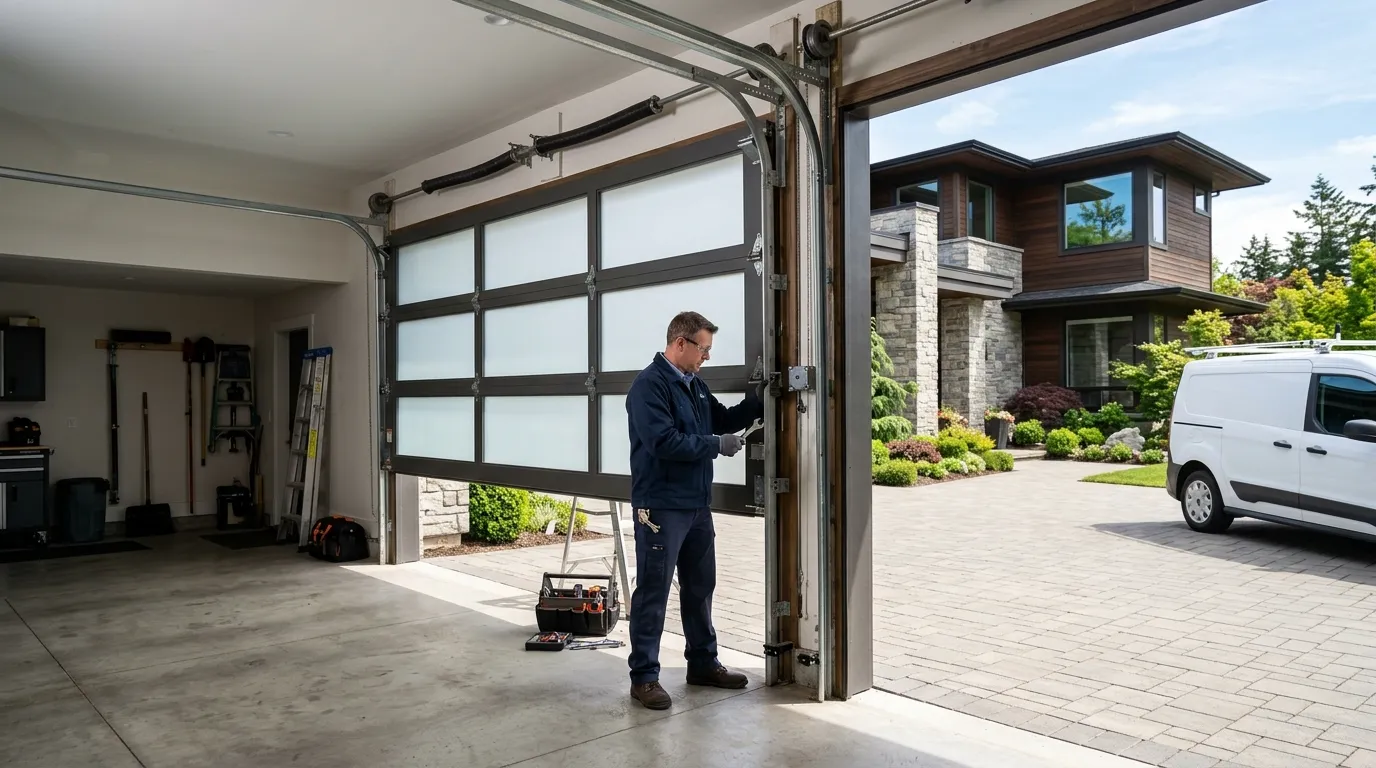
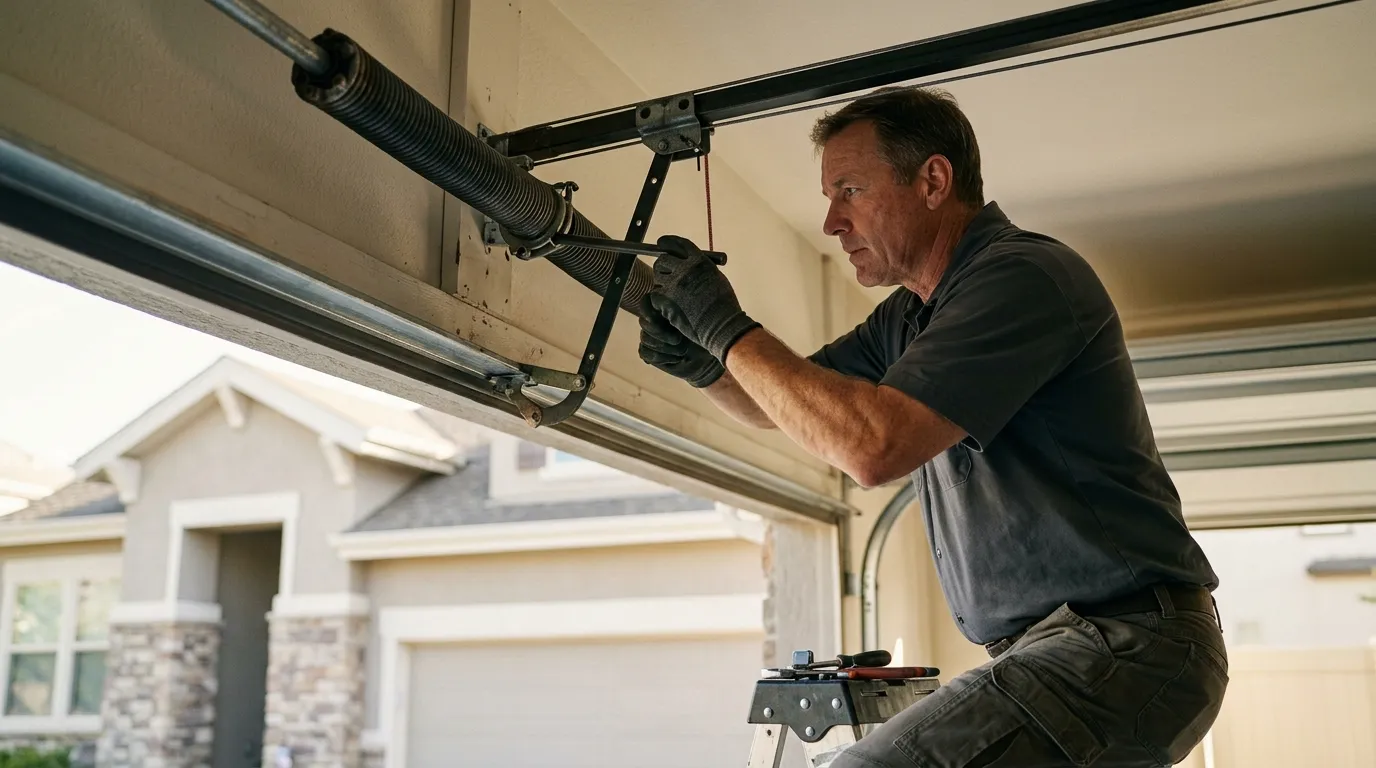
What we hear about most: torsion springs that have simply worn out after 20-plus years of cycles, openers original to the house finally giving up, and rollers that have gone from nylon to metal-on-metal noisy. Cable fraying on the drum side shows up too, especially on doors that never got a spring balance check.
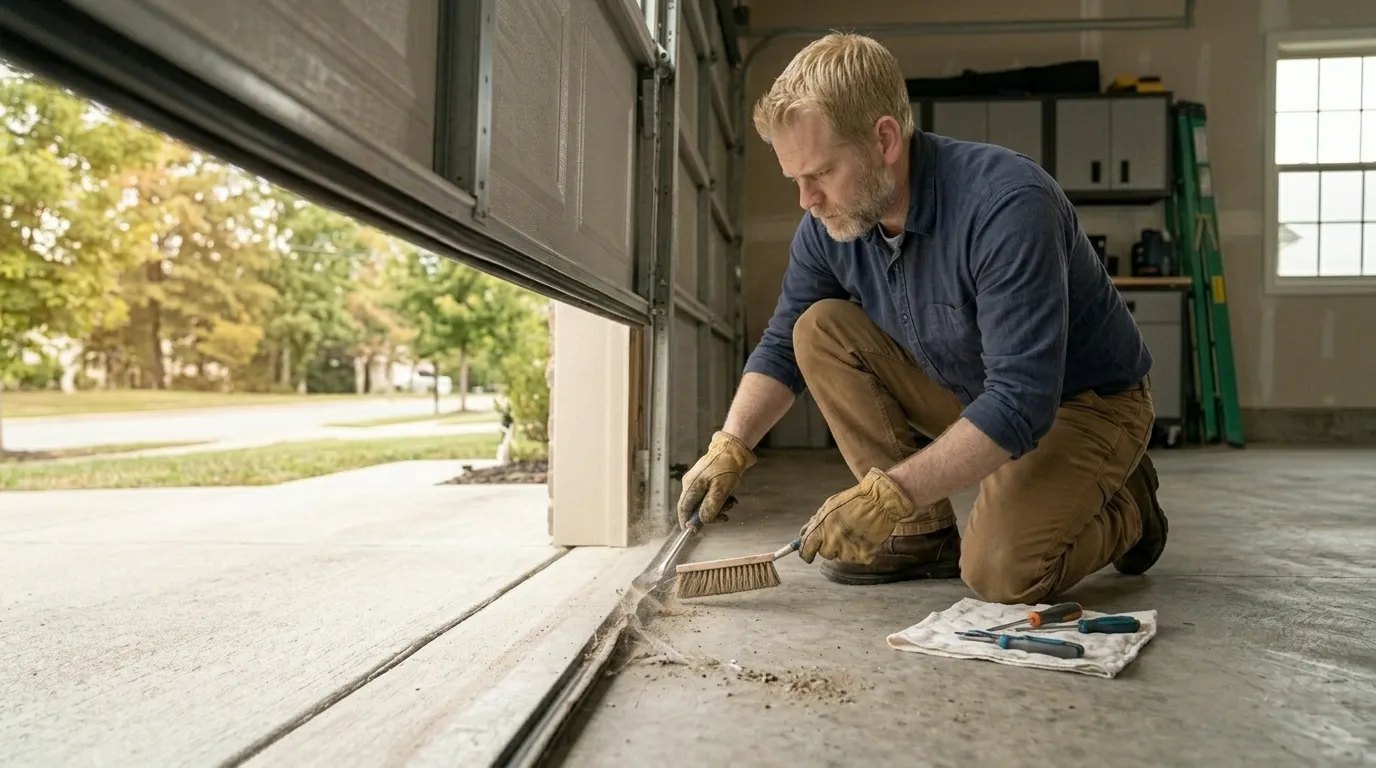
Cold is the other constant call driver. A door balanced fine in July can bind, stick, or refuse to open at all once the slab contracts and grease stiffens in a Minnesota winter. That's less about age and more about the season - but it hits 1990s doors just as hard as older ones.
This Area's Housing
With roughly 1,793 households and a median income near $99,844, Lindstrom sits in the same general income band as much of the wider service area, but its housing stock tells a different story. Where the broader 28-community area spans construction from 1950 through 2002 with a median around 1980, Lindstrom's own median build year lands closer to 1993.
That matters because a house built in 1993 came with garage door hardware that reflects early-90s manufacturing: steel sectional doors, torsion or extension springs sized to that era's door weights, and openers that are chain or belt drive rather than the older screw-drive units common on 1970s houses. Thirty years on, those original springs and openers are hitting or past their expected service life at roughly the same time across a lot of houses in town - not staggered the way you'd see in a neighborhood with mixed construction decades.
What That Means for Doors
Because so much of Lindstrom went up around the same time, a lot of homeowners are going to hit the same failure points within a few years of each other: original torsion springs rated for maybe 10,000 cycles finally snapping, openers from the same manufacturing run losing their circuit boards, and rollers that have simply worn past their tolerance.
The cold band this area sits in adds a second layer on top of age. Steel contracts, seals harden, and openers that are already marginal on power will stall in January when they'd have limped along in July. If your door is original to a house built in the early-to-mid 90s, a spring that's been fine for years can go without warning on the first hard cold snap of the season - that combination of age and temperature swing is the pattern we plan for on winter calls out this way.
If your door is newer than the house - say it was replaced in the last decade - none of this applies to you the same way, and a call is worth making before assuming the worst.
How it works
From “it’s stuck” to “it’s fixed”
1
Tell us what’s wrong
Describe the symptom - won’t open, loud bang, opener runs but the door won’t move.
2
On-site diagnosis
A technician tests the door under power and by hand and finds what actually failed.
3
Clear, up-front plan
You get the fix that’s needed and what drives the cost - before any work starts.
4
Repaired & tested
The repair is done, the door is set true and tested, and the work area left clean.
Serving Hugo, MN - tell us what your door’s doing and we’ll take it from there.
How far out is Lindstrom from your shop, and does that affect scheduling?
Lindstrom is about 16 miles from our base in Hugo. We don't keep a crew stationed out there, so while we do serve the area, we schedule around the drive rather than offering the same turnaround we'd give a job five minutes from the shop. Mention urgency when you call and we'll work out the soonest realistic slot.
My house was built in the early 90s - is my original opener too old?
Not necessarily, but it's worth a look. Openers from that era are past typical service life, and if yours has never been replaced, failure isn't unusual. We'd rather check the drive system and give you a straight answer than guess over the phone.
Why does my door only stick in winter?
Cold makes steel contract slightly and stiffens lubricant and seals, so a door that's balanced fine in summer can bind or resist opening once temperatures drop hard. It's common on doors of any age in this climate, and it doesn't always mean something is broken - sometimes it just means a seasonal adjustment or fresh lubricant.
Do you replace doors or just repair them?
Both, depending on what makes sense. If hardware is obsolete or a repair would cost close to what a new door runs, we'll say so rather than patch something that's not worth patching. We don't do cosmetic refinishing work, just the functional side - panels, springs, openers, track, and hardware.
Ready to get your garage door sorted?
Tell us what it’s doing and where you are in Hugo - we’ll take it from there.