Garage Door Installation Built for Hugo's Housing Stock and Winters
New garage door installation in Hugo, MN, built for homes from the 1950-2002 boom and the region's severe cold winters. Straight talk on cost, fit, and timing.
Most of the housing around Hugo went up between 1950 and 2002, with the bulk of it dating to the 1980s and 90s across the area's named subdivisions. That means a lot of garage doors on this side of town are original or close to it - single-layer steel panels, older track hardware, and openers that predate today's safety sensor standards. None of that was built with a severe cold climate in mind the way current doors are.
Cold is the real driver of replacement calls here. Repeated freeze-thaw cycling works steel panels loose at the seams, hardens weatherstripping until it cracks, and puts extra load on springs that have to work harder to lift a door that's stiff with cold. A door that's fine in October can bind, sag, or refuse to seal by February. Homes built in that 1980-median era are hitting the point where the door itself, not just the opener or springs, is the weak link.
We're not saying every old door needs to go. But when a panel is bowed, the insulation is gone, or the bottom seal won't hold a seal against the cold anymore, patching it stops making sense and installing a new door built for this climate starts to.
What You Are Seeing
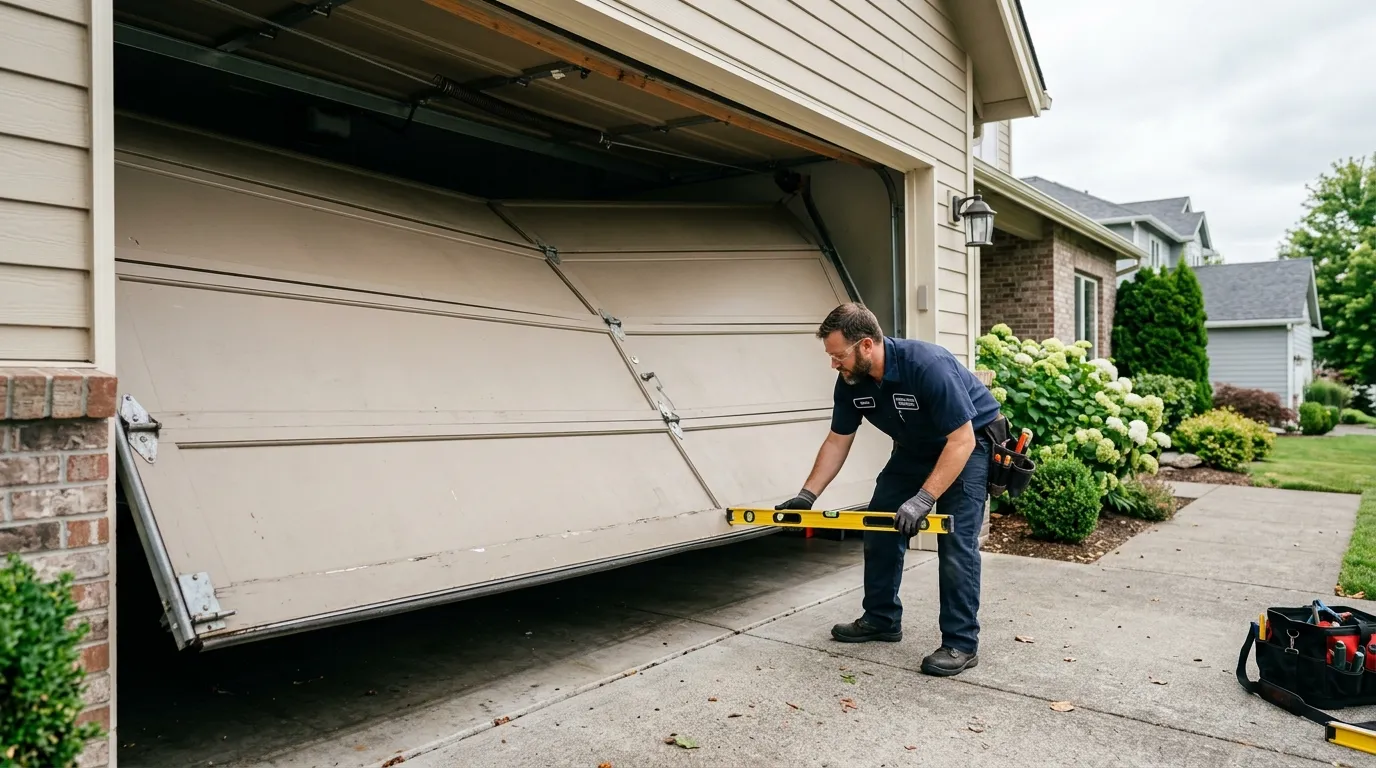
The signs show up as small annoyances before they become a real problem. A door that used to close flush now leaves a gap you can see daylight through, especially at the bottom corners - that's the seal and sometimes the panel itself giving up after enough freeze-thaw cycles. You might notice the opener straining harder than it used to, or the door shuddering on the way up, which usually means the door has gotten heavier as insulation breaks down or panels warp slightly out of true.
On older doors from the 1980s and 90s stock common around Hugo, you'll often see rust starting at the bottom panel where snowmelt sits, or hinges that have stretched their screw holes from years of a door working against cold-stiffened hardware. Some owners notice their energy bills creeping up and trace it back to a garage door that's no longer sealing the way it did new.
None of these are emergencies by themselves. But taken together, they're usually a sign the door has reached the end of what a repair can fix economically, and it's worth talking about a full replacement instead of another round of patch jobs.
How Long It Takes
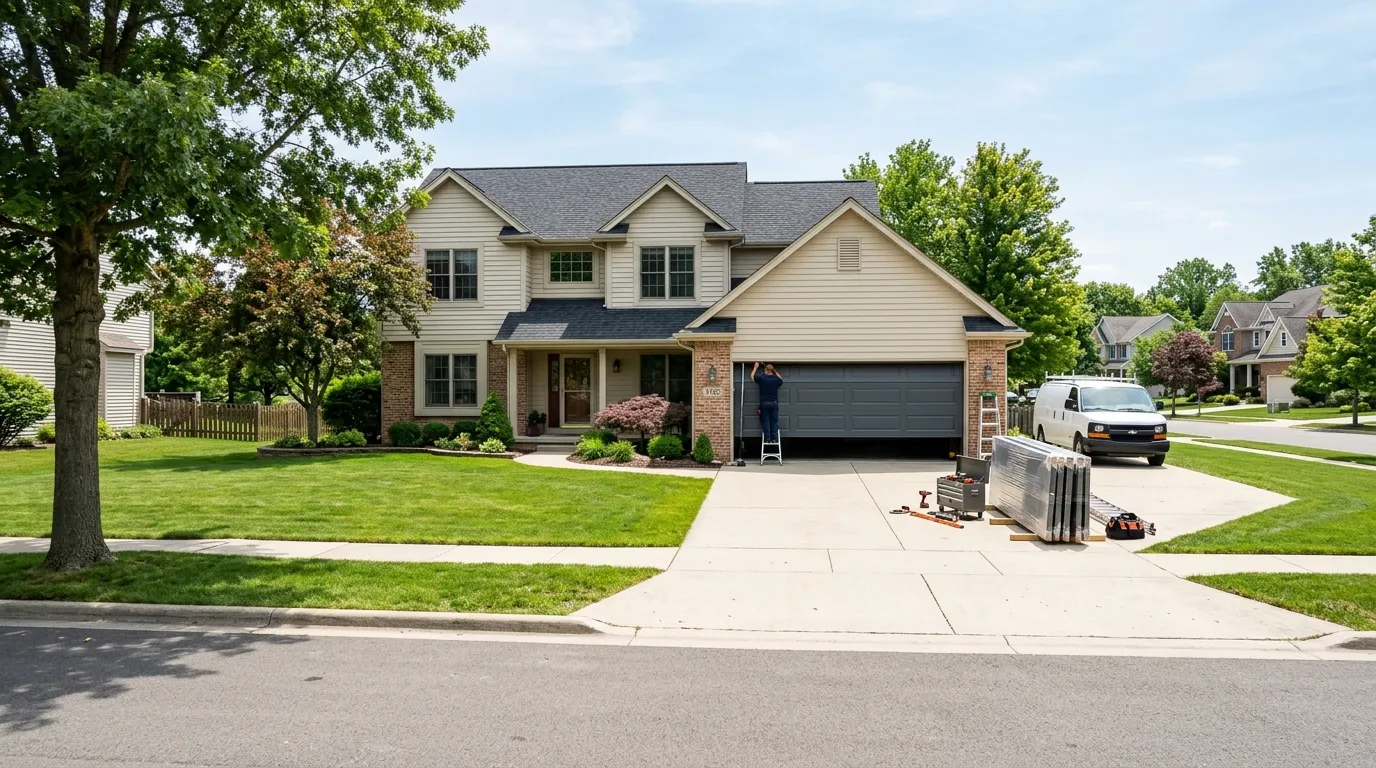
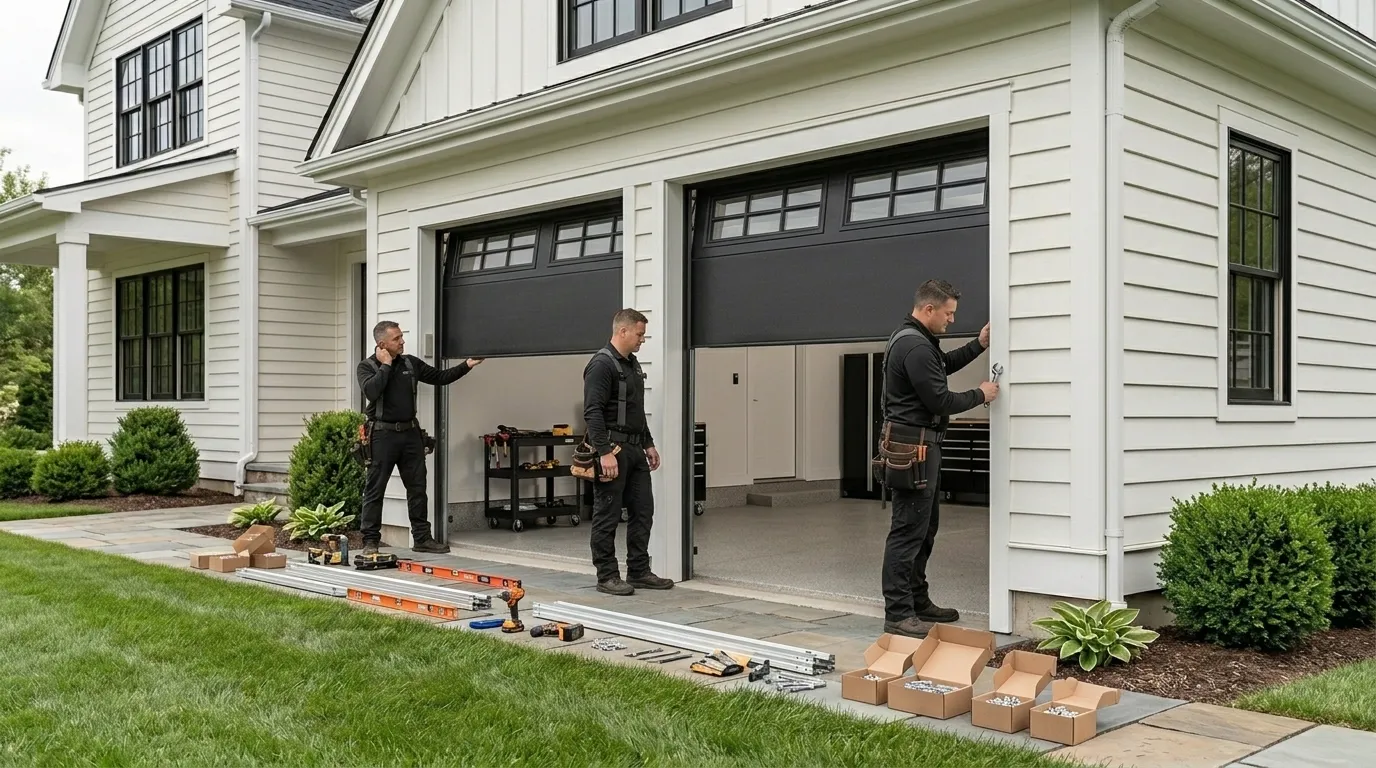
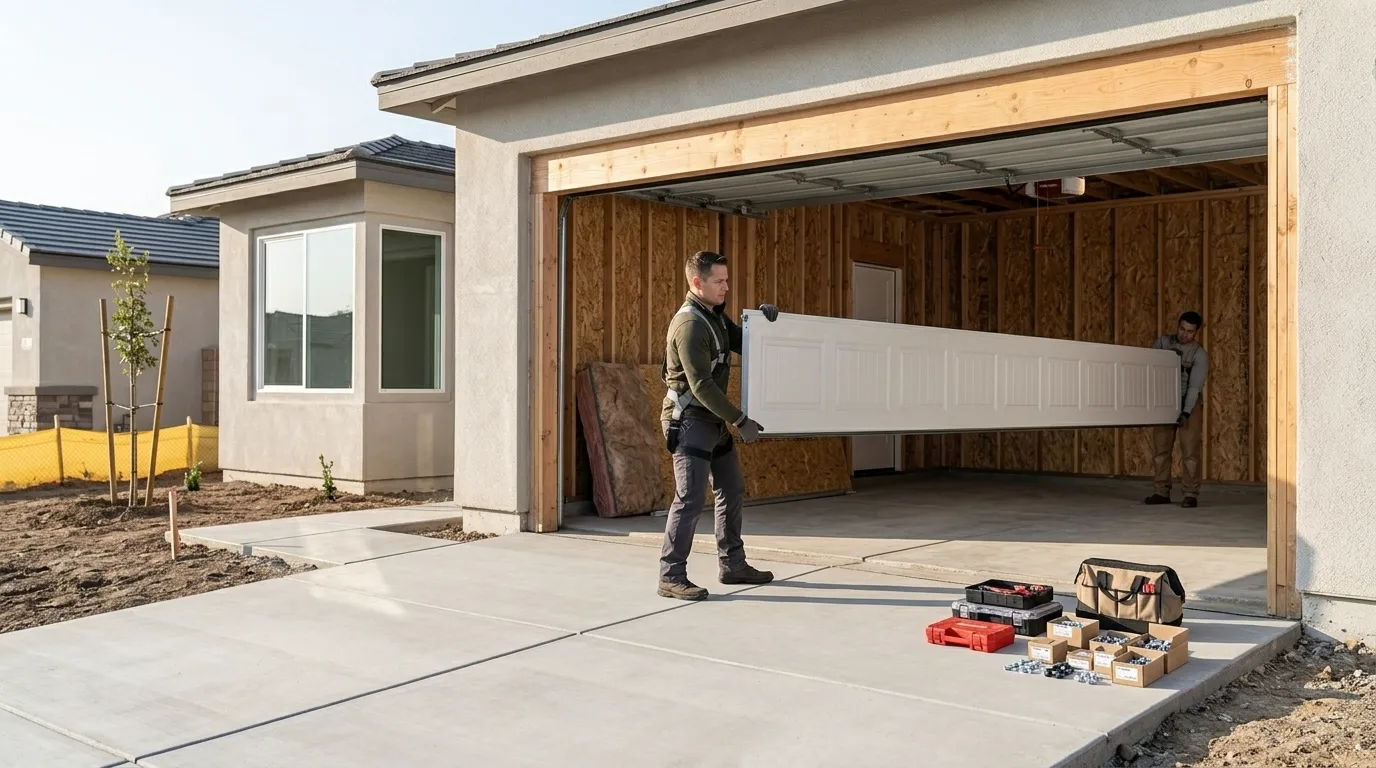
A standard single or double garage door installation is typically a one-day job once the door is on site and measurements are confirmed. The bulk of the time goes into removing the old door and track, checking the opening for square (common on homes from the 1950-2002 era where framing has settled over the decades), and setting new track and hardware to match.
What we can't promise is a same-week install on every order. Some door styles and sizes are special order, and lead time depends on the manufacturer, not on us - we'll give you a real number once we know which door you're choosing, not a guess to make the sale easier. If your household is planning around a specific date, tell us up front and we'll be straight about whether we can hit it.
Winter installs take a bit longer than a summer job simply because cold-stiffened seals and hardware need extra care to seat correctly, which matters in a climate where the door needs to hold its seal at well below freezing, not just on a mild fall day.
What the Fix Involves
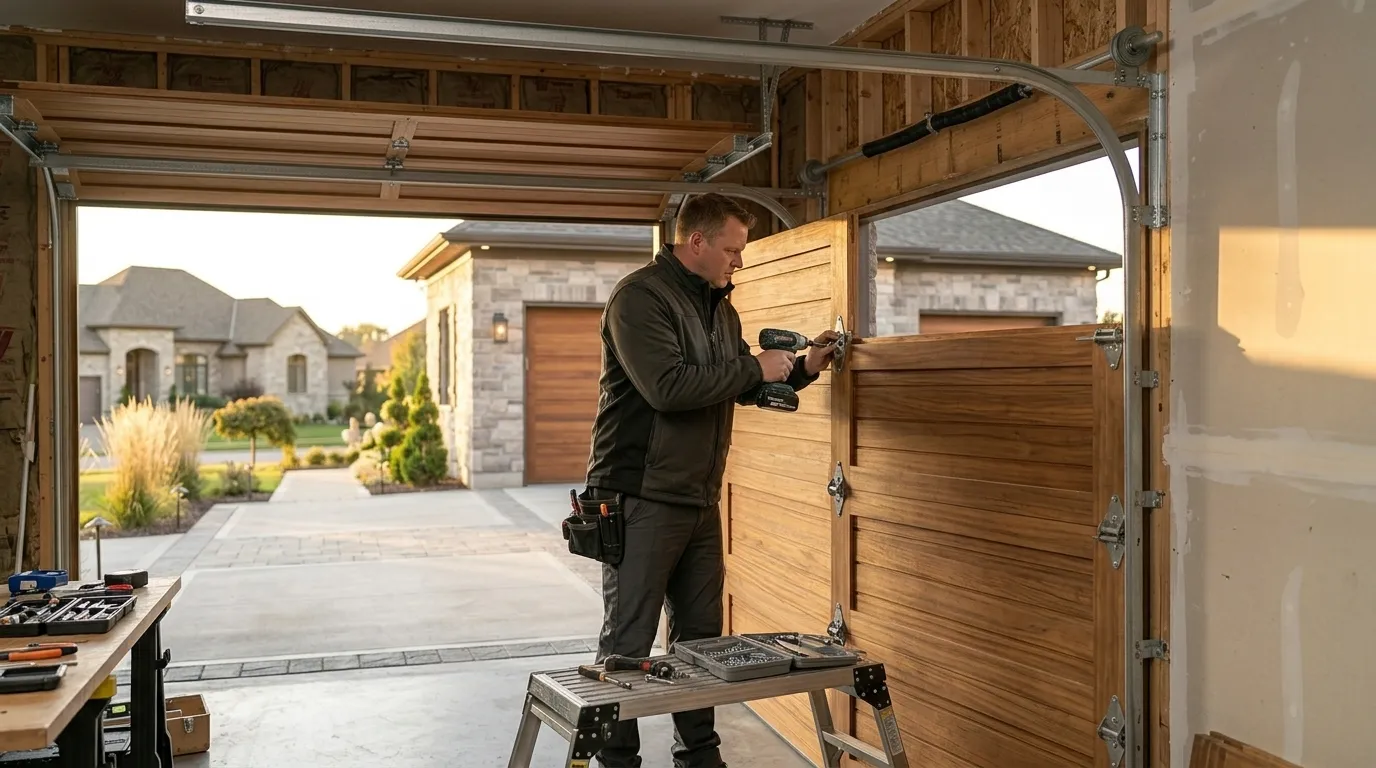
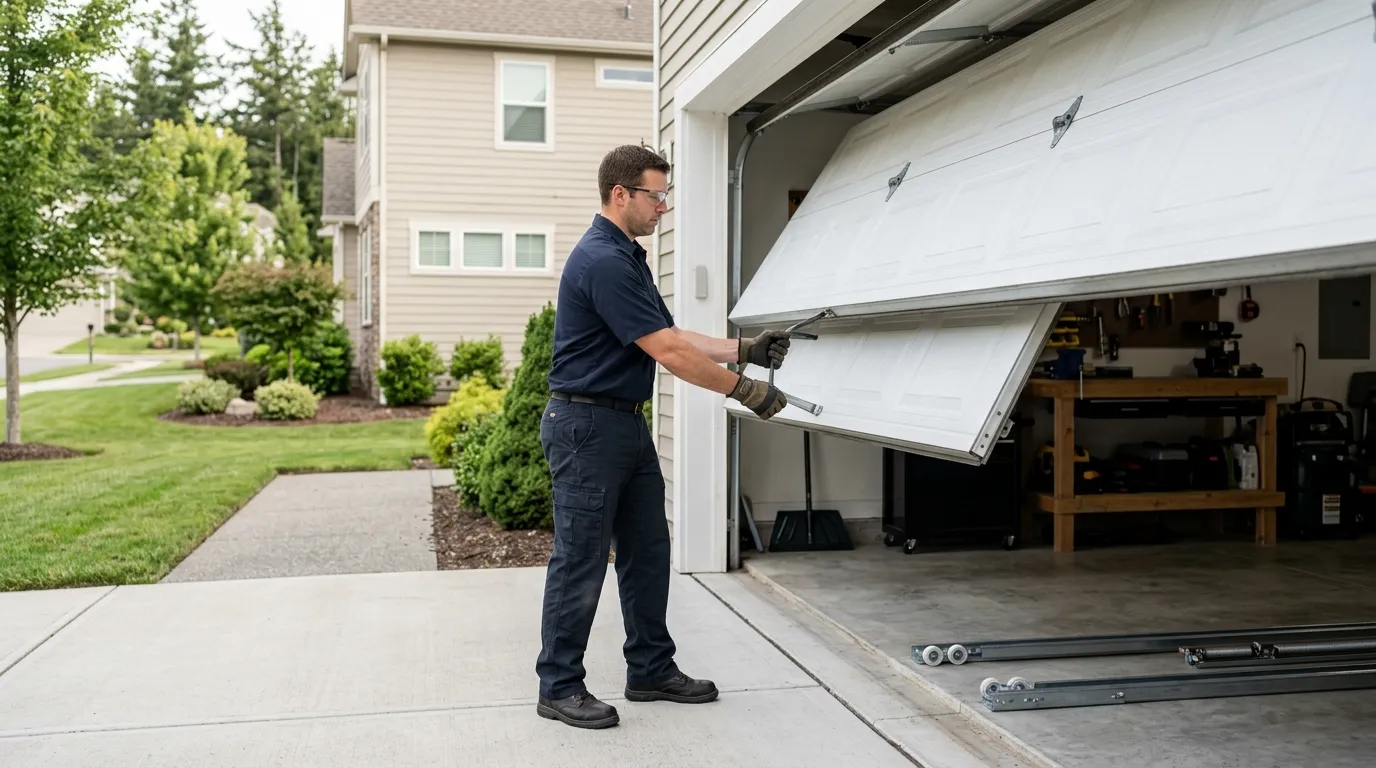
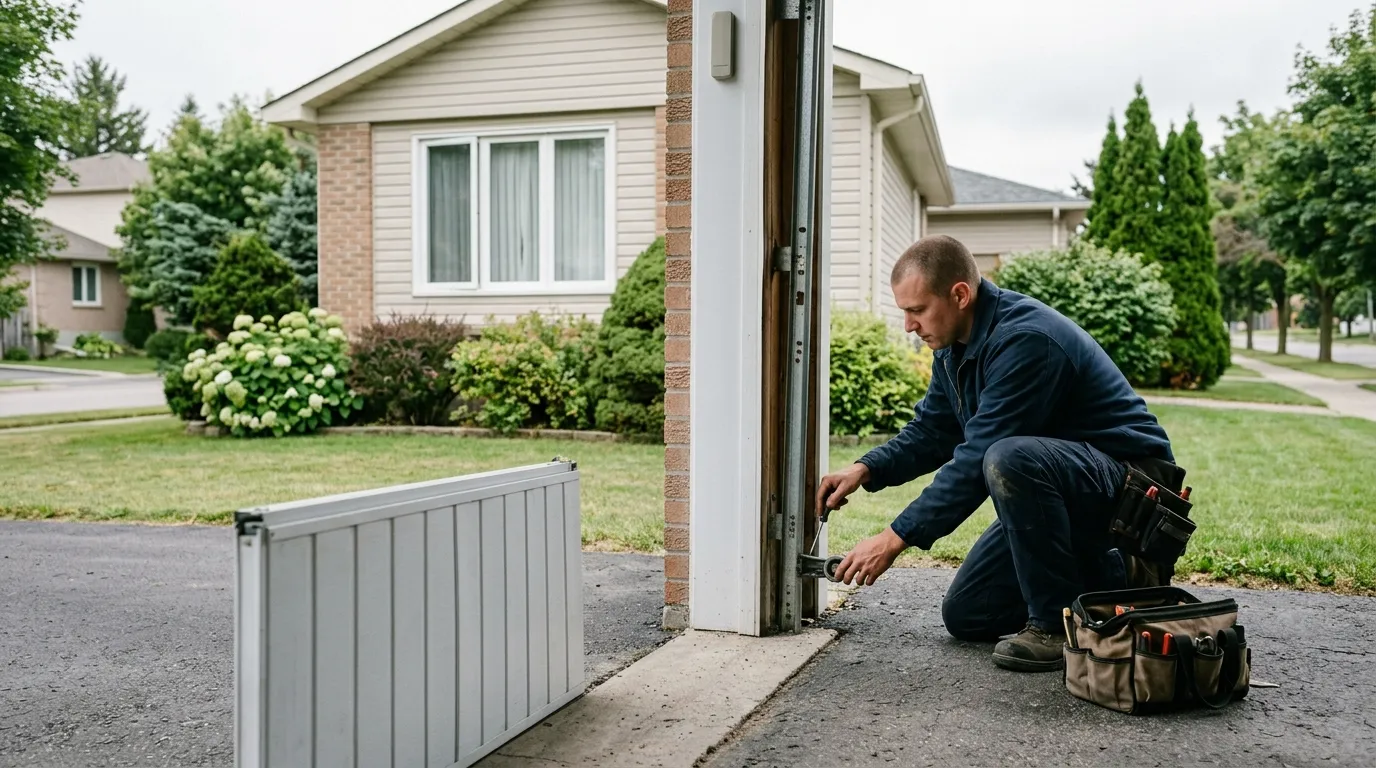
A full installation starts with pulling the old door, track, and often the springs and cables, since reusing worn hardware on a new door is a false economy. We check the opening itself - on older Hugo-area homes this is where we sometimes find the frame has shifted slightly out of square over the decades, which needs shimming before a new door will seal properly.
From there it's new track, new rollers, springs sized to the actual weight of the new door (not the old one), and weatherstripping rated to hold up under a severe cold climate rather than the builder-grade strip that came with a house from the 1980s. If you're keeping your existing opener, we test it against the new door's weight and tell you honestly if it's underpowered - a mismatch there is one of the most common comebacks in this trade.
We don't push the most expensive door on the shelf. If a mid-grade steel door with good insulation solves the problem, that's what we install. The honest limitation here: we don't do custom architectural doors or anything requiring specialty fabrication - for a standard residential opening, though, this is the full job, start to finish.
How it works
From “it’s stuck” to “it’s fixed”
1
Tell us what’s wrong
Describe the symptom - won’t open, loud bang, opener runs but the door won’t move.
2
On-site diagnosis
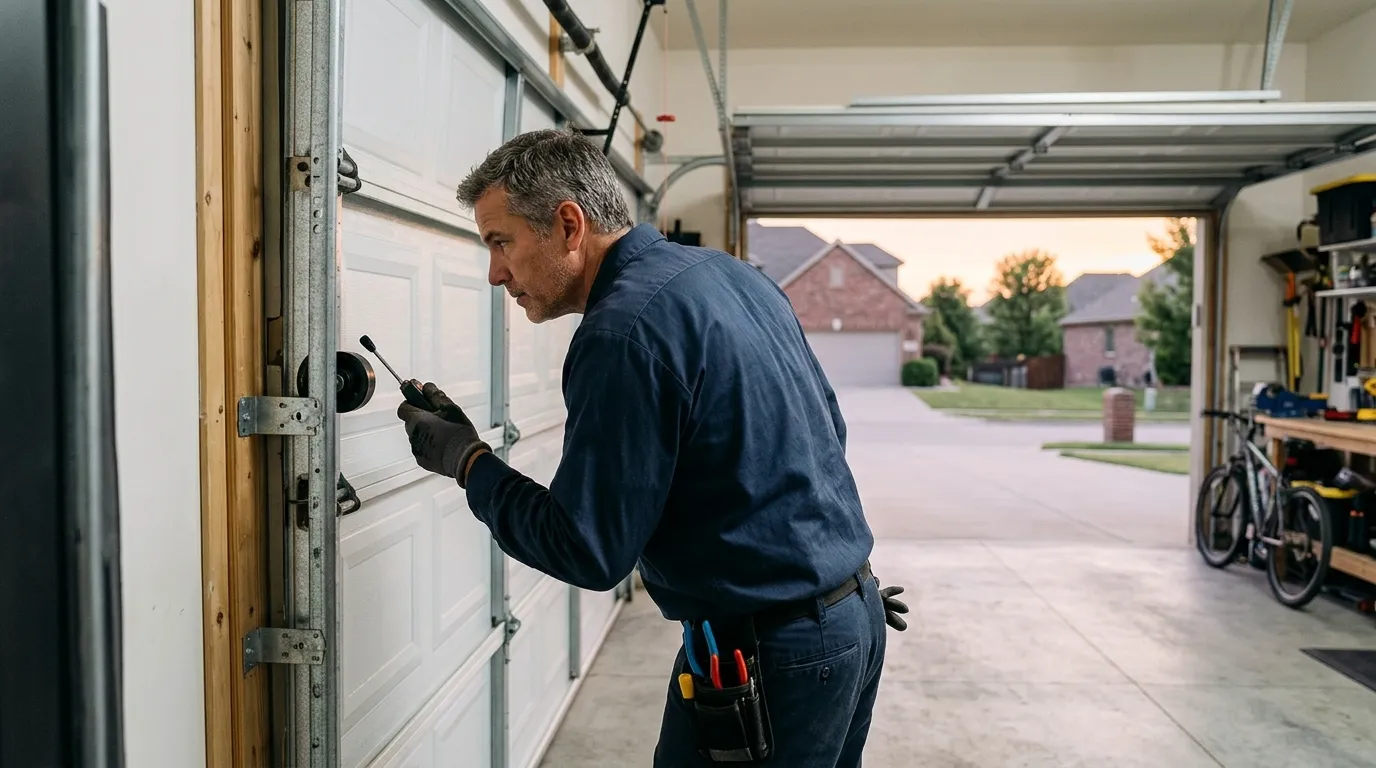
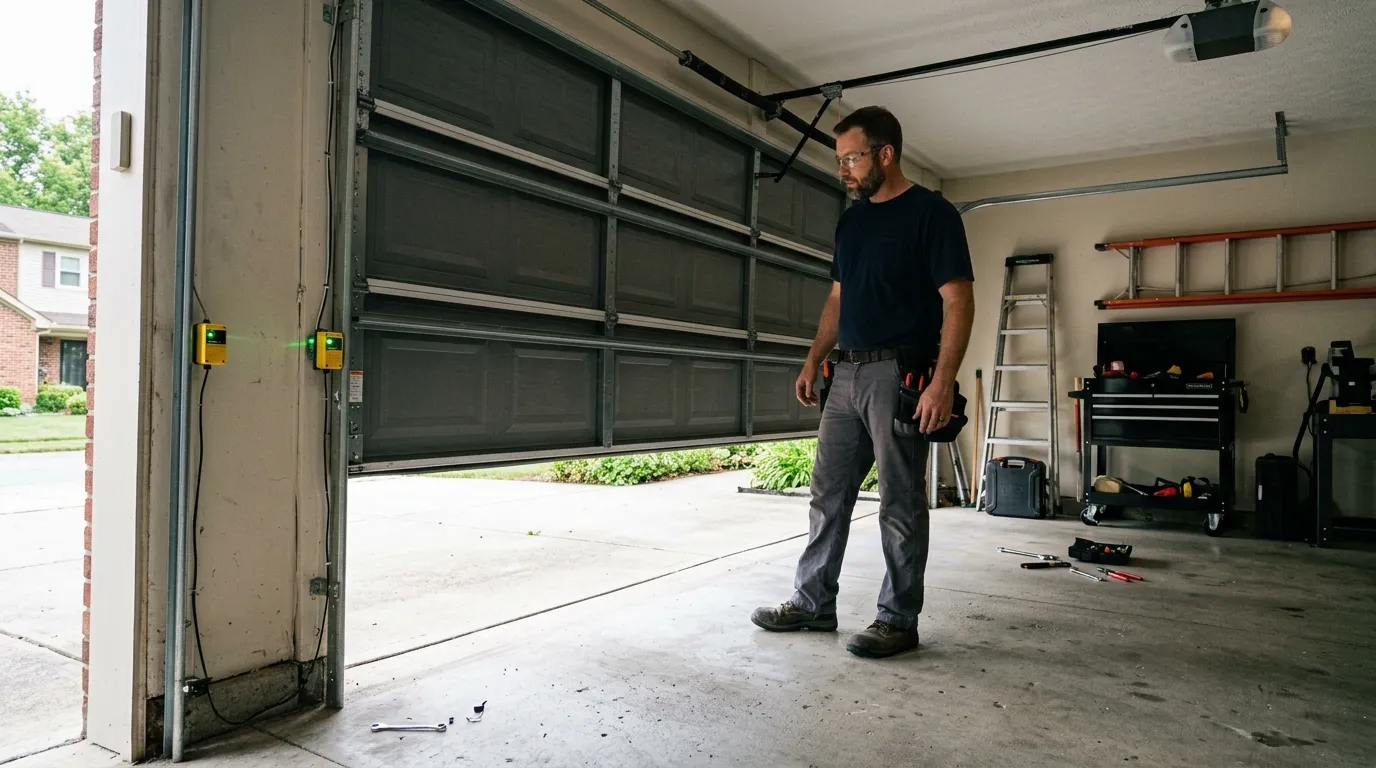
A technician tests the door under power and by hand and finds what actually failed.
3
Clear, up-front plan
You get the fix that’s needed and what drives the cost - before any work starts.
4
Repaired & tested
The repair is done, the door is set true and tested, and the work area left clean.
Serving Hugo, MN - tell us what your door’s doing and we’ll take it from there.
Do you install garage doors on older Hugo homes, not just new construction?
Yes. Most of what we install is replacement work on homes built in the 1950-2002 range that make up the bulk of housing in this area. Older openings sometimes need extra squaring or framing adjustment before a new door goes in, which we check as part of the job.
Will a new door actually help with the cold?
A door with intact insulation and fresh weatherstripping seals far better than a decades-old one whose seals have hardened and cracked from repeated freeze-thaw cycles. In a severe cold climate like this, that seal quality is the difference between a garage that stays workable in winter and one that doesn't.
Can you match the timeline if I need the door installed by a certain date?
Tell us the date up front. Standard doors usually install in a day, but some styles are special order from the manufacturer and lead times aren't something we control. We'll give you a real estimate once you've picked a door rather than promise a date we can't back up.
Do you serve areas outside Hugo itself?
We work across the surrounding area, including places like Dellwood, Centerville, and Mahtomedi. If you're farther out, ask us directly and we'll tell you straight whether your address is in range.
Ready to get your garage door sorted?
Tell us what it’s doing and where you are in Hugo - we’ll take it from there.