24/7 Emergency Service Open 7 days · 7am–8pm Serving Hugo, MN & nearby
(651) 317-3941
Hugo, MN

Replacing a Garage Door in Hugo: What the Housing Stock Tells You

Most Hugo garage doors date to the 1980s and sit in a severe-cold band. Here's what that means for what to check, what fails first, and what a replacement runs.

Replacing a Garage Door in Hugo: What the Housing Stock Tells You

What Local Conditions Do

Hugo sits in a climate band the federal data marks as severe cold, and that shapes what a garage door has to do here that it wouldn't have to do somewhere milder. A door isn't just a moving panel - it's the biggest uninsulated gap in most houses' exterior walls, and in a severe-cold zone that gap either has enough R-value to hold heat or it doesn't. Most of the houses we go into were built between 1950 and 2002, with the median landing right around 1980, and the doors that shipped with those houses were built to a lower standard than what's sold today. Steel doors from that era were often single-layer, no polystyrene or polyurethane core, no thermal break at the bottom seal. That was fine when they were installed. Forty-some winters later, the foam gaskets are brittle, the panels have thinned, and the door is doing almost nothing to stop cold air from rolling across the garage ceiling into the house above it. Across the wider area - Dellwood, Centerville, Mahtomedi, and the rest of the 28 communities out to Afton - the stock skews the same way, mostly 1980s and 90s construction. That consistency is why replacement, not just repair, comes up so often on this side of the metro.

What to Check

Start with the build date if you know it. If your house went up anywhere in the 1980-2002 window that covers most of this area, assume the door is original until you've confirmed otherwise - a lot of owners are surprised to learn theirs never got swapped. Look at the bottom panel for rust bloom where snowmelt sits against it; that's the first place a non-galvanized door from that era gives out. Push on the panels - if they flex more than a finger's width, the steel gauge is thinner than what's standard now. Check the weatherstrip at the sides and bottom: if it's cracked or shrunk away from the frame, you're losing sealed air right there, which matters more in a severe-cold zone than it would somewhere temperate. Open the door and look at the back of a panel if you can access it - a door with visible foam backing has some insulation value; bare ribbed steel with nothing behind it does not. Last, check the track width against the header - some of the older openings in this area were framed a few inches narrower than what current standard doors assume, and that changes what you can drop in without carpentry.

The Problem

The core issue in Hugo isn't damage, most of the time - it's age catching up with a design standard the industry has moved past. A door installed when your house was built in, say, 1980 has now outlasted its expected service life by a decade or two, and it was never built with the insulation values a severe-cold climate calls for today. That combination - old hardware plus a thermal envelope that no longer meets the job - is what pushes people from repair to replacement. Springs and rollers on a door that age are also usually original, and torsion springs are rated in cycles, not years; a 40-year-old spring on a door used twice a day has likely already exceeded its rated life even if it hasn't broken yet. One honest limitation here: if the only issue is a worn spring or a bent roller, replacing the whole door is overkill, and we'd rather fix the failed part than sell a full unit that isn't needed. The full-replacement conversation only makes sense once the panel, the seals, and the insulation are all working against you at the same time - which, given how much of this area's housing dates to that same 1980-2002 stretch, is a common combination.
What It Costs

We can't post a flat number here, because cost depends on the size of the opening, the insulation level you pick for a severe-cold climate, and whether the existing track and header need any work to fit a modern door - and we don't have a fixed price on file to quote you sight unseen. What we can tell you is what drives the number up or down: single versus double width, the R-value of the panel, and whether the old track can be reused or needs replacing along with the door. Median household income across this service area runs $100,759, and in practice that means a fair number of owners here choose a mid-to-upper insulation grade rather than the base option, since the difference shows up on the heating bill every winter in a climate this cold. With 38,505 owner-occupied houses across the area and most of them built in that same 1950-2002 stretch, a lot of these jobs look similar: standard double-car opening, original door, upgrade to an insulated steel replacement. The only way to get you a real number is to look at your opening and your existing hardware.

How it works

From “it’s stuck” to “it’s fixed”

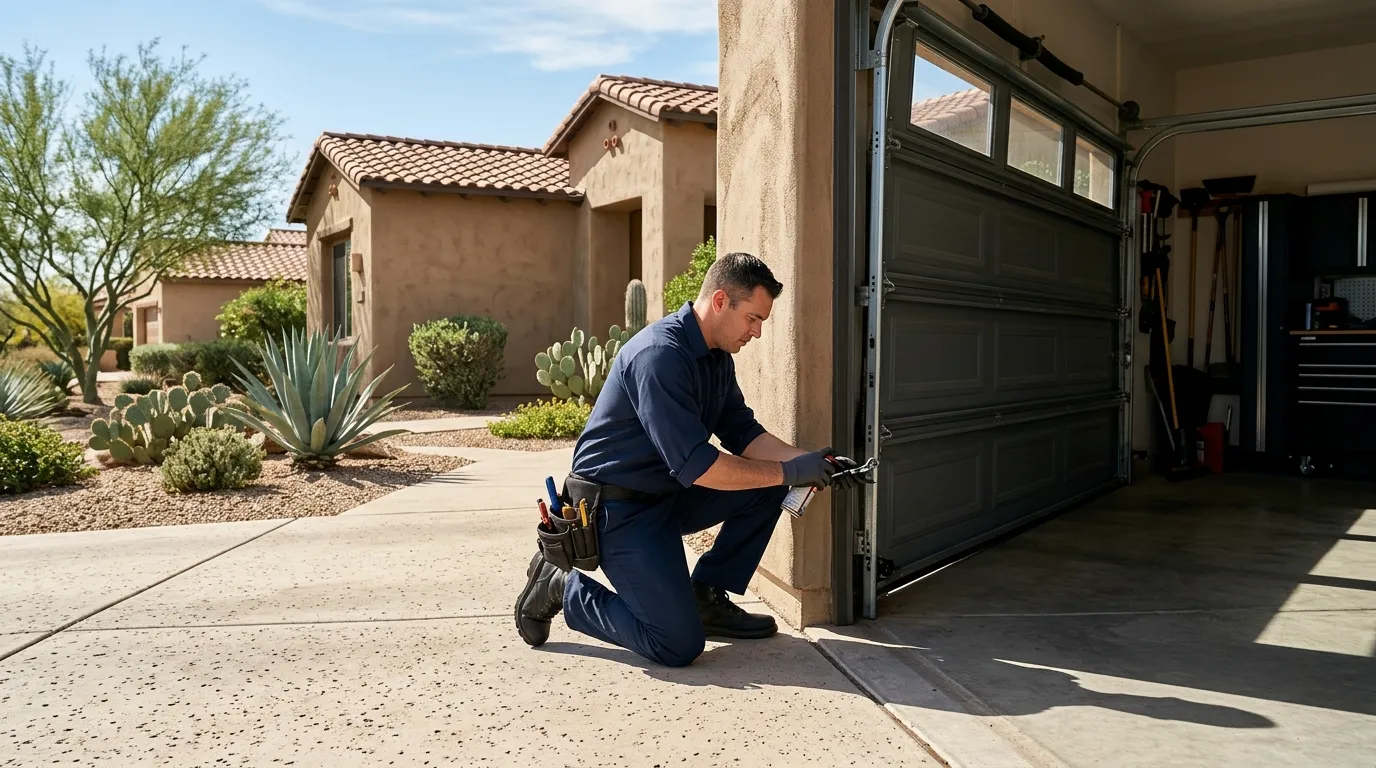
Tell us what’s wrong - Hugo garage door service
1

Tell us what’s wrong

Describe the symptom - won’t open, loud bang, opener runs but the door won’t move.

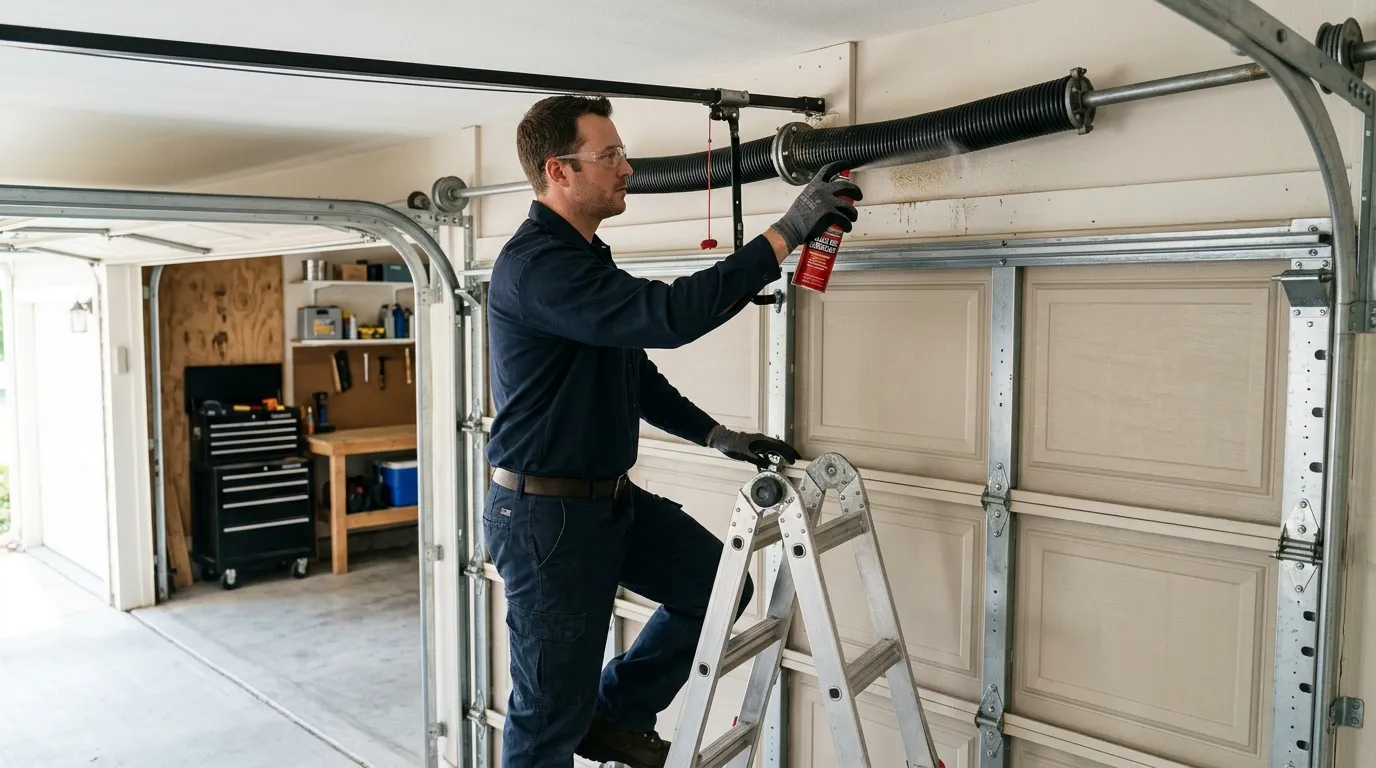
On-site diagnosis - Hugo garage door service
2

On-site diagnosis

A technician tests the door under power and by hand and finds what actually failed.

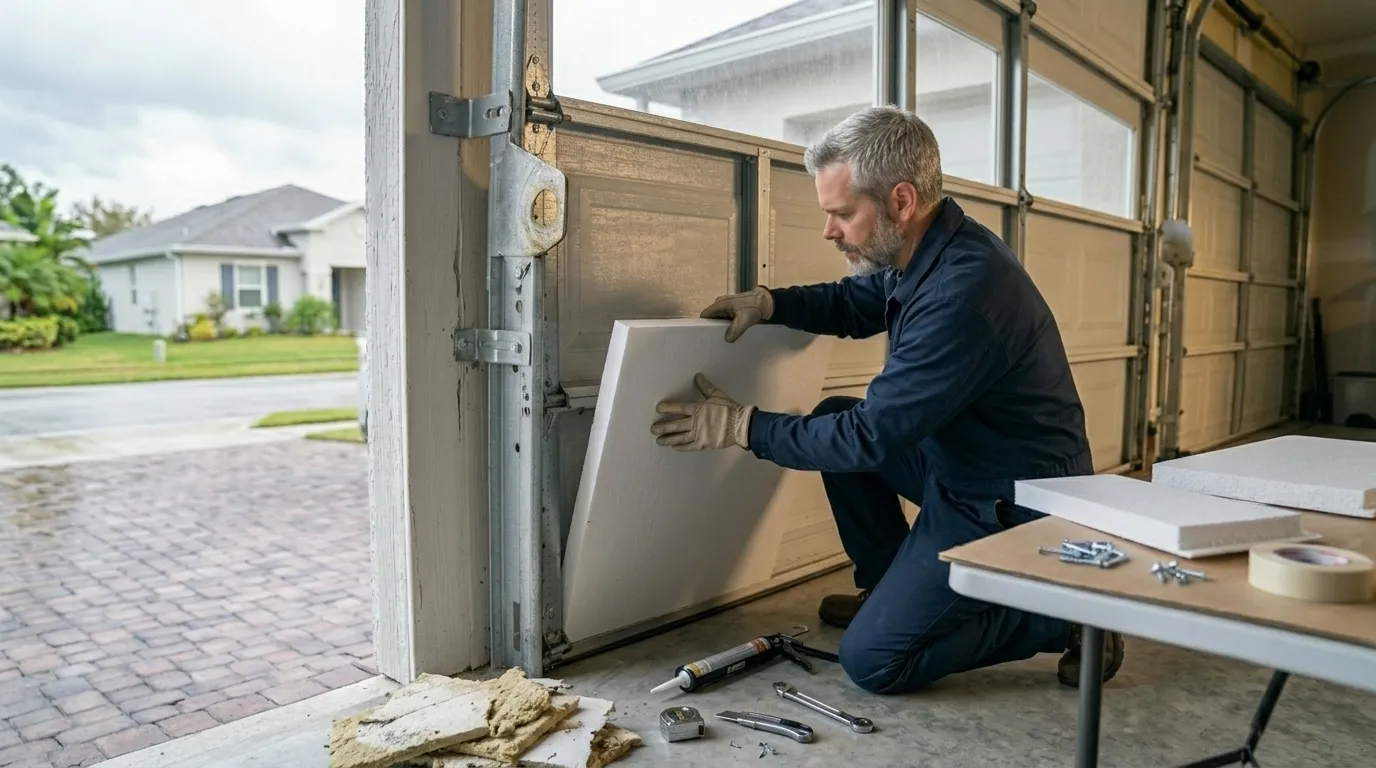
Clear, up-front plan - Hugo garage door service
3

Clear, up-front plan

You get the fix that’s needed and what drives the cost - before any work starts.

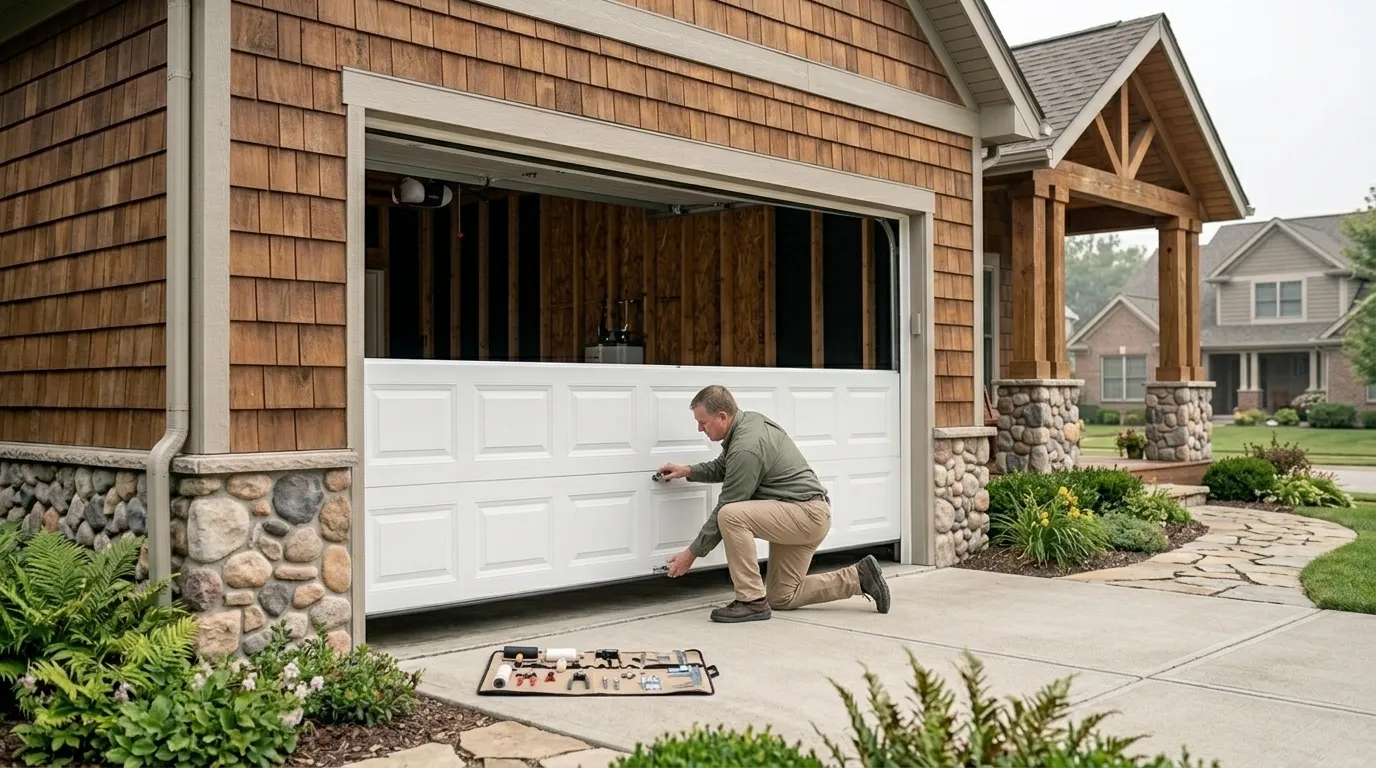
Repaired & tested - Hugo garage door service
4

Repaired & tested

The repair is done, the door is set true and tested, and the work area left clean.

Serving Hugo, MN - tell us what your door’s doing and we’ll take it from there.

How we work

What to expect

Diagnosis firstEvery visit starts by finding what actually failed - not a pre-written parts list.
The right part for the doorSprings and openers matched to the door’s weight and age, so the fix holds up.
Straight answersWhen a repair makes more sense than a replacement - or the reverse - you hear it plainly.
Clean, careful workTension released safely, hardware set true, the door tested under power before we leave.
Questions

Frequently asked

Straight answers about garage door repair in Hugo. Still unsure? Ask us directly.

Is my garage door original to the house if it was built in the 1980s?

Often, yes. A large share of the homes in this area were built in the 1980-2002 window, and a lot of those still have their original door. Check the label inside the frame or on the back of a panel for a manufacture date - if there isn't one, the age of the weatherstripping and spring wear are usually a good clue.

Do I need an insulated door in Hugo specifically?

This area sits in a climate band rated severe cold, so an insulated door does more work here than it would in a milder zone. It won't heat the garage, but it cuts the cold-air transfer through what's usually the largest uninsulated opening in the house.

How much does a new garage door cost in Hugo?

We don't have a set price to quote without seeing the opening - size, insulation grade, and whether the existing track can be reused all move the number. What we can say is that opening width and insulation level are the two biggest cost drivers for houses in this area.

My door still opens fine - why would I replace it instead of repairing it?

If the only problem is a spring or a roller, repair is the right call and we'd tell you that. Replacement starts to make sense once the panel is thin, the seals are shot, and the door has no real insulation - common on original doors from the 1980-2002 era common in this area.

Ready to get your garage door sorted?

Tell us what it’s doing and where you are in Hugo - we’ll take it from there.

Request a QuoteCall