Where This Job Goes Sideways
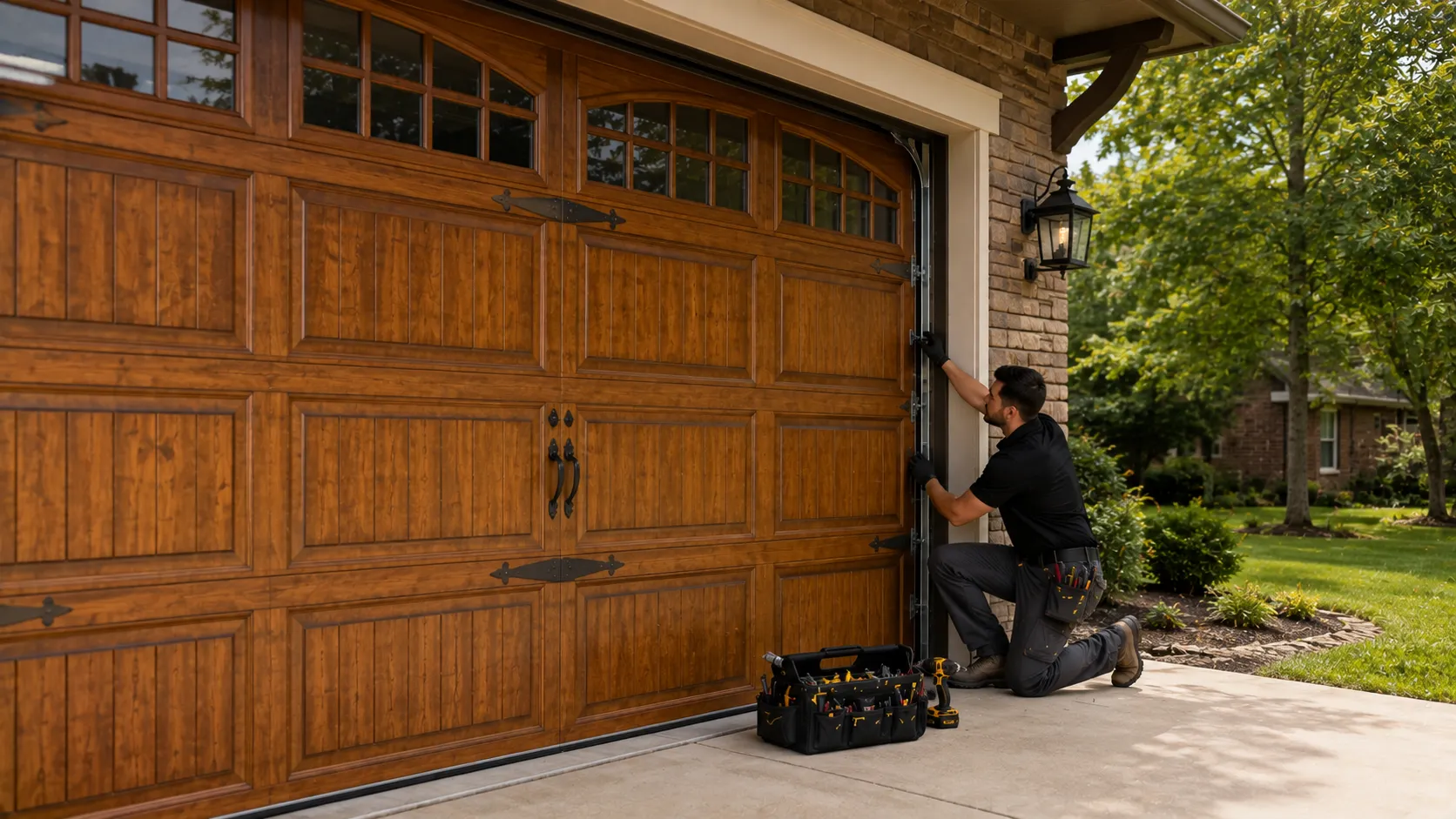
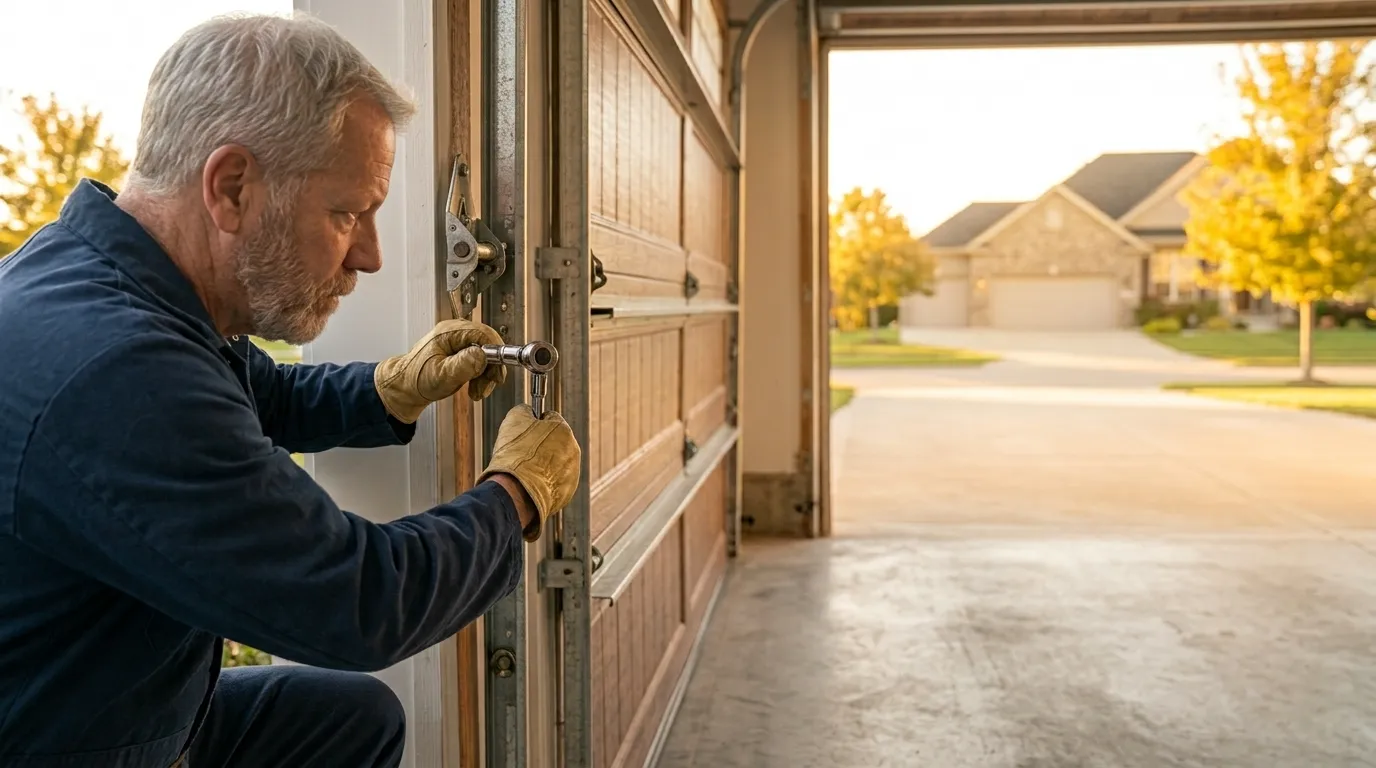
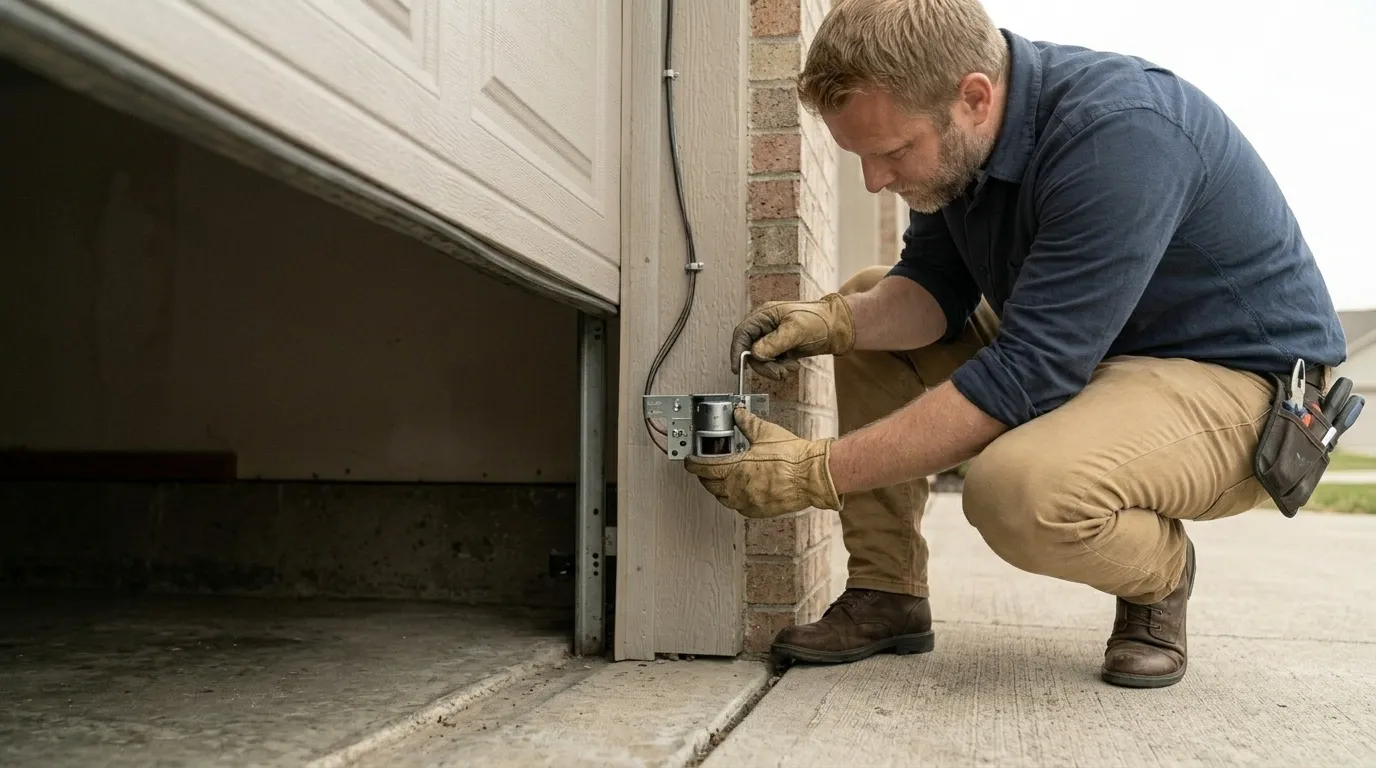
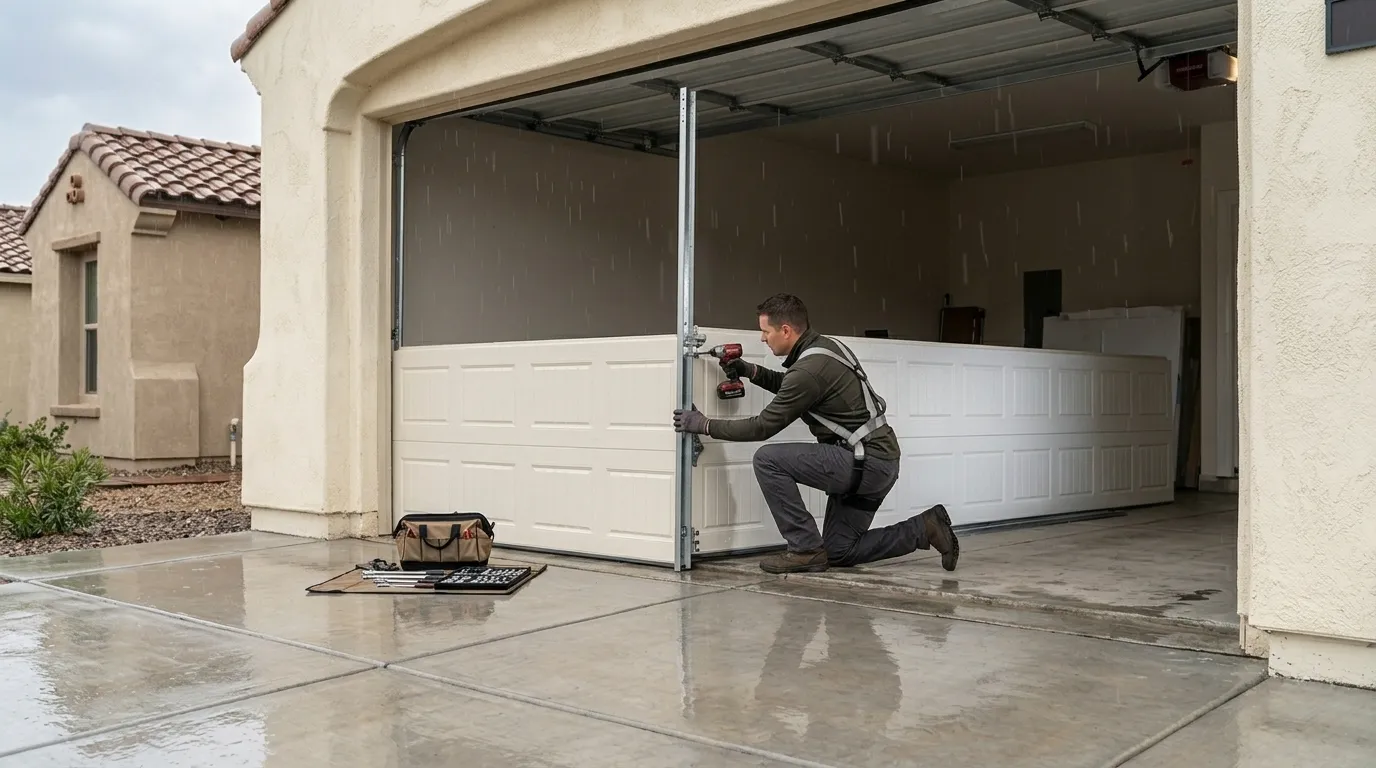
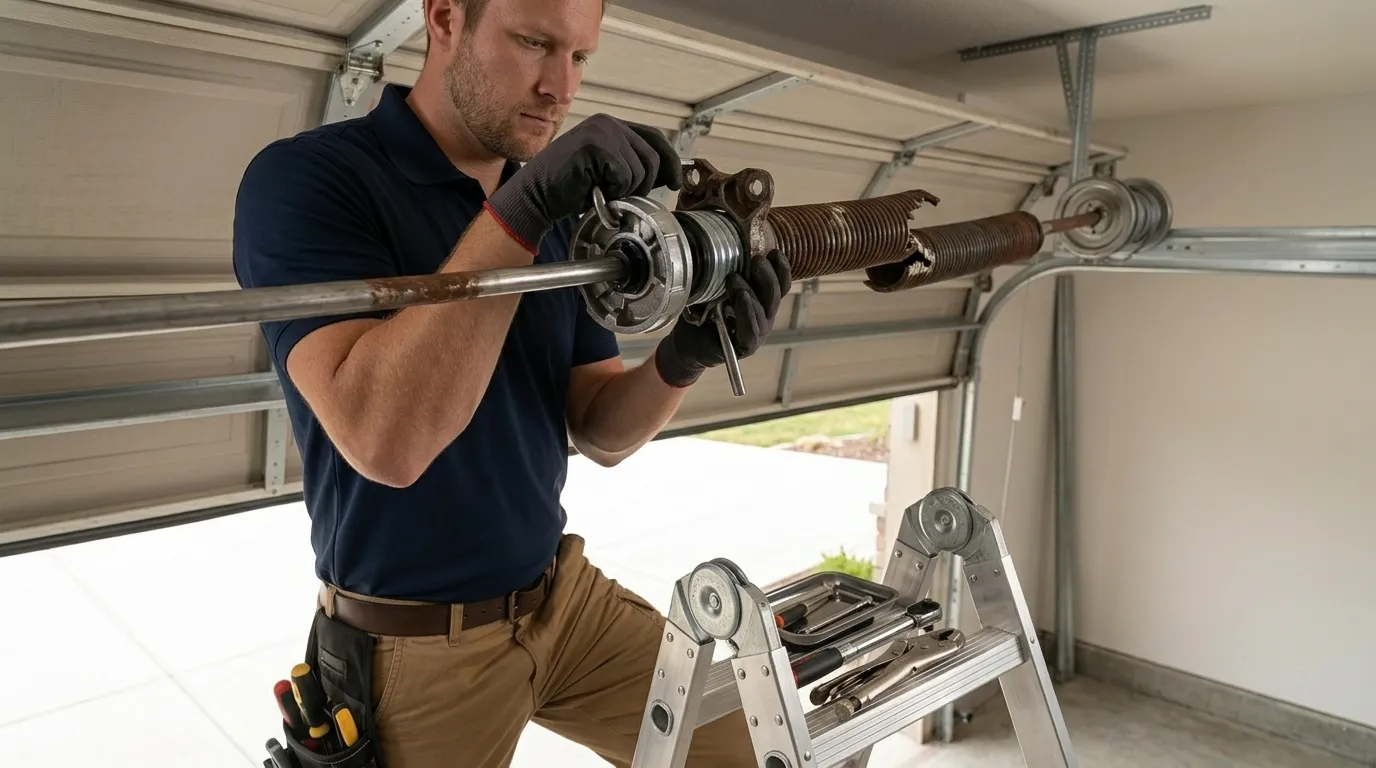
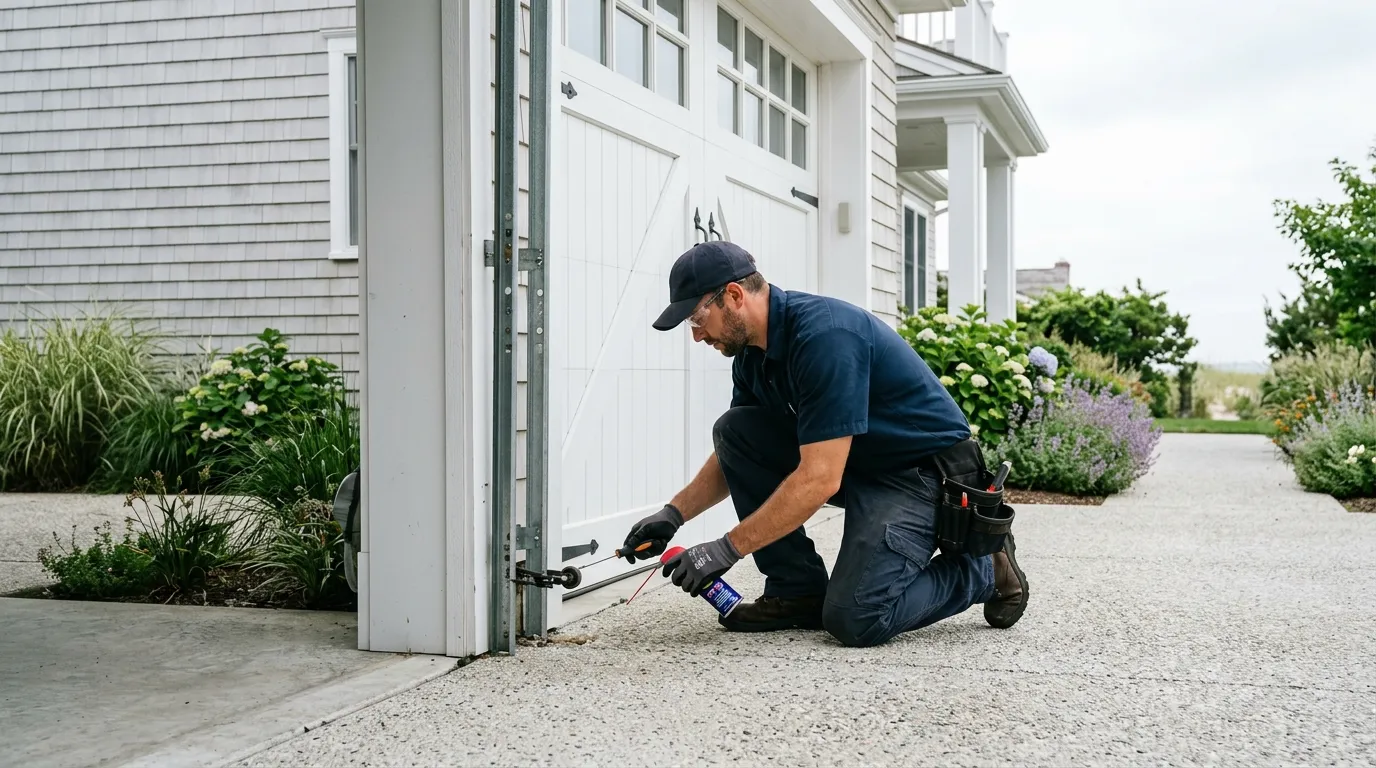
On a door this age, the roller almost never fails alone. The bracket holding it has usually flexed a little over four and a half decades of use, and the track it rides in has picked up a slight bow from a car bumper tap or just settling. Swap the roller without checking the track and you'll be back out in six months for the same complaint. The other place this goes sideways is the bottom bracket - on 1977-era doors that bracket is often riveted, not bolted, and under spring tension it is not a part to open casually. If we find a bottom roller worn down to the stem, we're opening a bracket under load, and that's a different job than the top rollers, which come off with the door supported and no tension involved.
How to Book
Call and describe what you're hearing - a grinding or a wobble is usually rollers, a bang on open or close is usually something else. We ask what the door looks like (steel, single or double, roughly how old the house is) so we load the right stem length and roller type before we leave Hugo. Since we're not based in Arden Hills, we schedule the drive into the visit rather than promising a same-hour arrival; a rough window on the phone is what we can give you. Have someone able to open and close the door once when we're there, since a live demonstration under load tells us more than a description.
What Causes It Around Here
With roughly 2,881 households in Arden Hills and a median income near $128,668, we see a fair number of these original steel doors still in service rather than replaced early - they were built solid and homeowners here have kept them maintained rather than swapping to a newer door before it was necessary. That means rollers running on the same track for over four decades, well past any lubrication schedule, and steel-on-steel wear that eventually chews a groove into the track wall. Cold-climate swings do their part too - Minnesota's freeze-thaw cycle stiffens old grease and makes a marginal roller seize rather than roll, which is often the day someone hears the grinding start.
The DIY Question
Top rollers on a door like this are a reasonable weekend job if you're comfortable on a stepladder and the door is down and unplugged - no spring tension involved. Bottom rollers are where we tell people to stop and call, because on a 1977-era door the bottom bracket is often riveted and sits right where the cable anchors, and working it loose without knowing what's under tension is how people get hurt. If your track is visibly bent rather than just worn, that's also not a roller job - replacing the track is a different repair, and putting a new roller into a bent channel just wears the new part out fast.