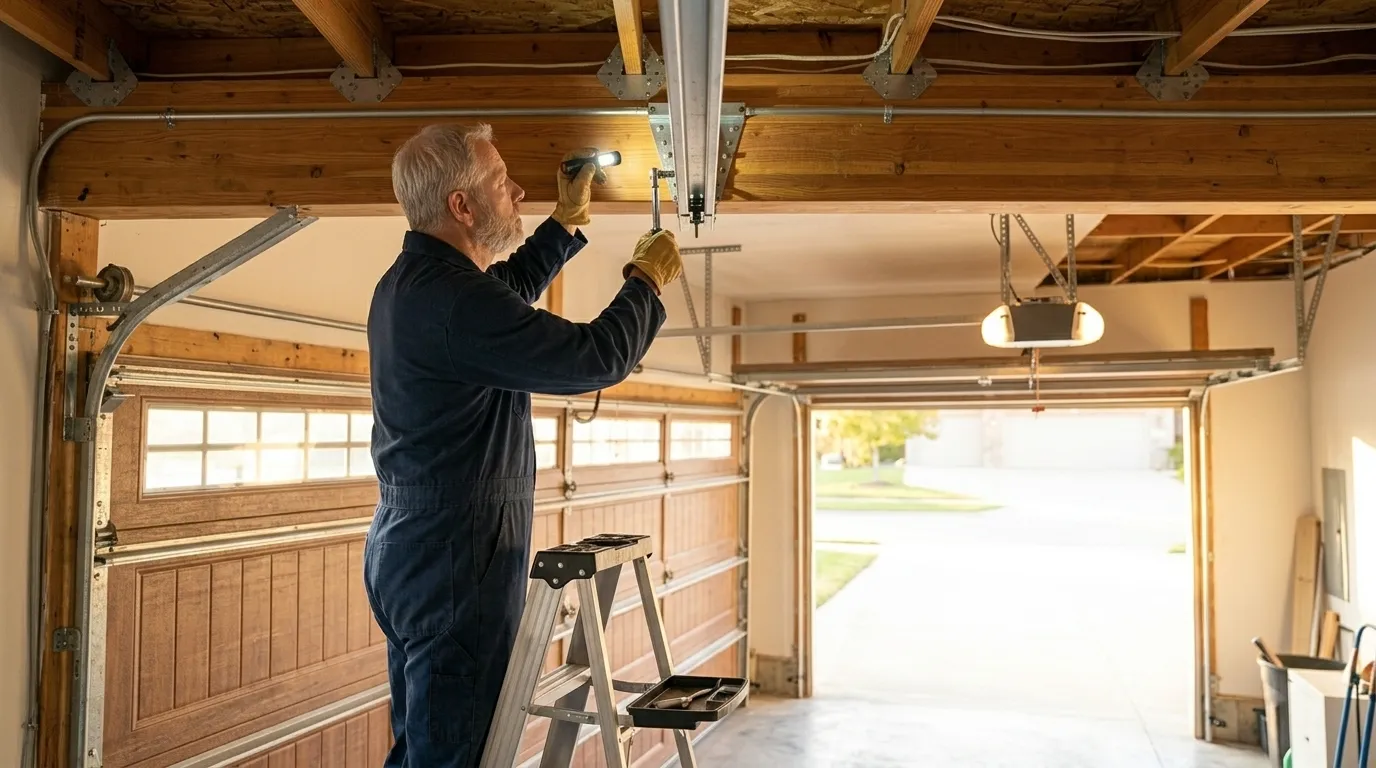
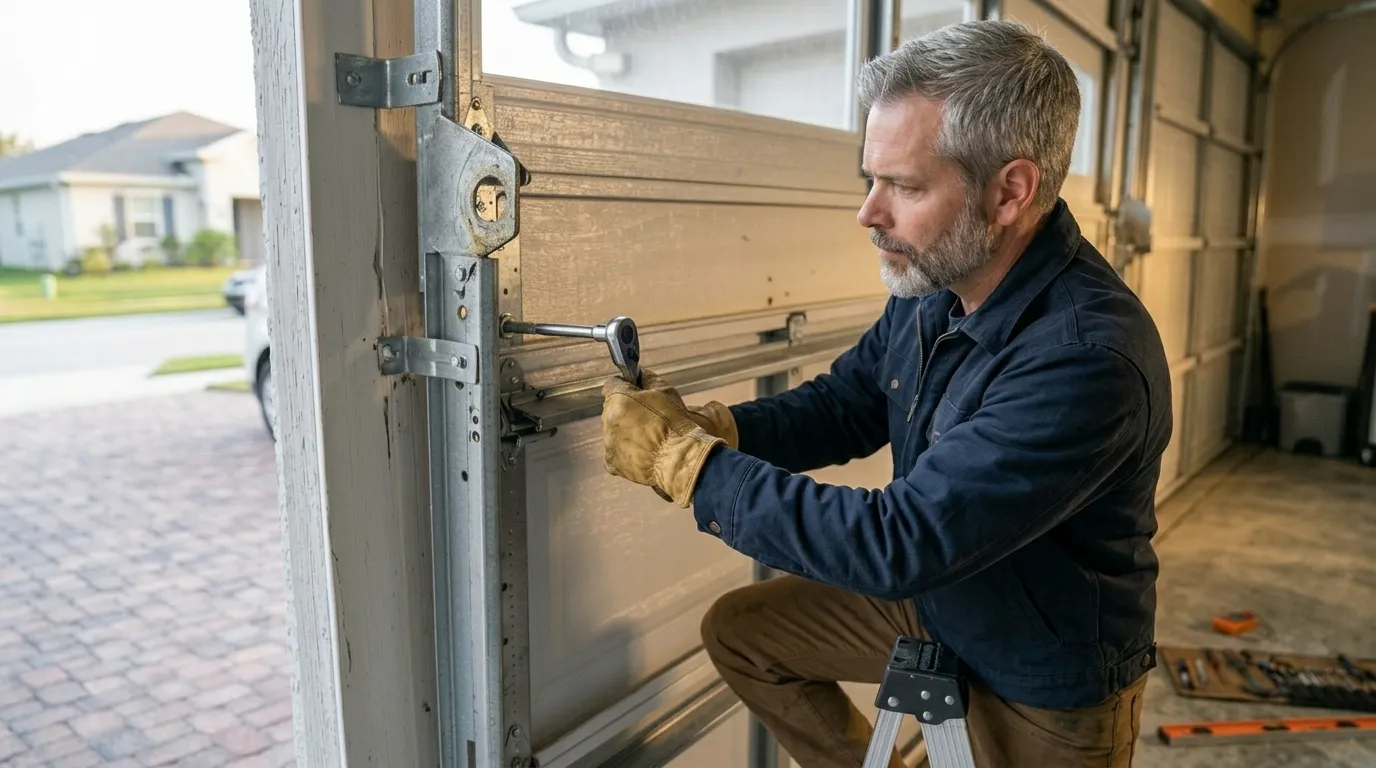
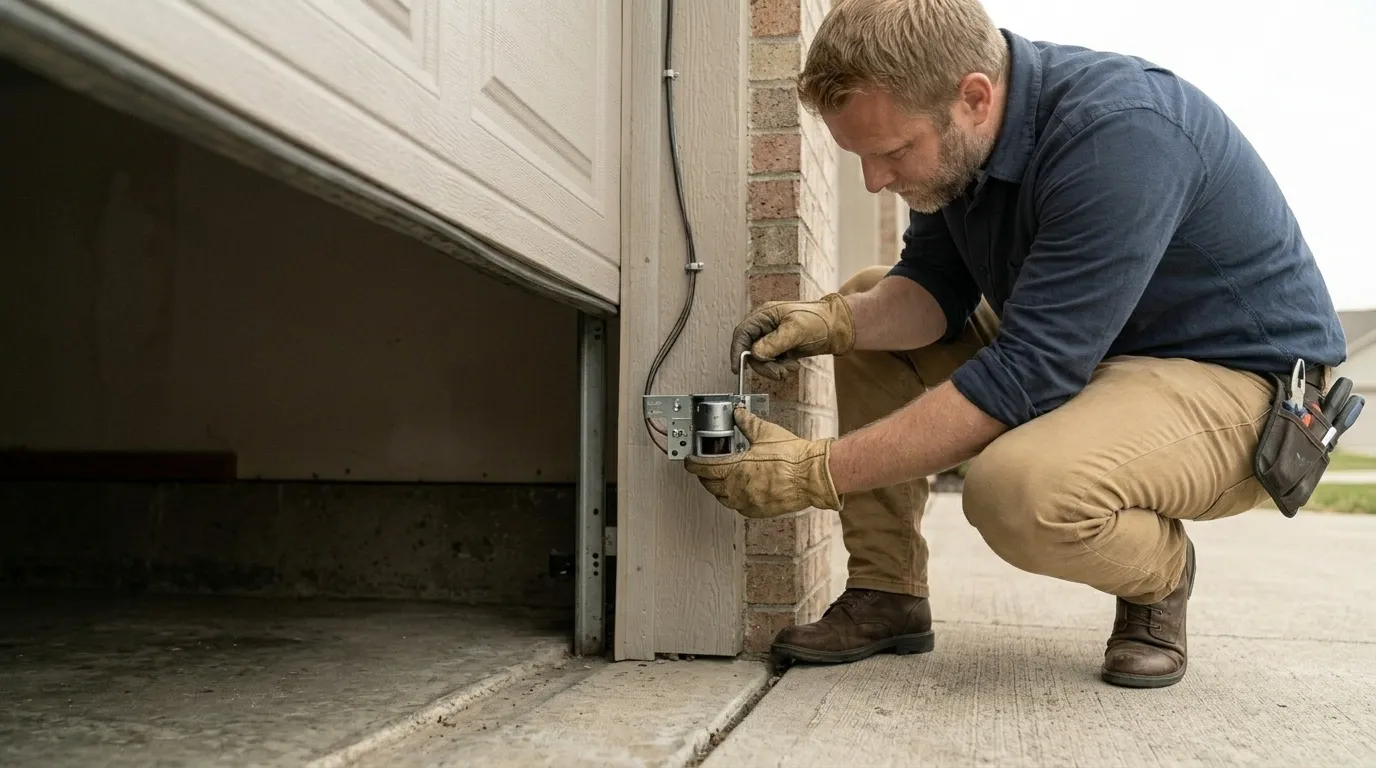
Hugo Garage Door Pros installs openers matched to Hugo's 1950-2002 housing stock and severe winters, with chain, belt, and battery-backup options that hold up in real cold.
Most houses in this part of Minnesota went up between 1950 and 2002, with the bulk of that stock built through the 1980s and 90s. That means a huge share of openers on the road right now are original chain-drive units from that era, or a first replacement installed sometime in the 90s or early 2000s - either way, they're at or past the age where the gearing wears out and the logic board starts skipping signals. On top of the age issue, this area sits in a severe cold climate band, and cold is hard on openers in ways owners don't expect: grease in the drive gear thickens and strains the motor, plastic drive gears crack in deep cold snaps, and older openers without a heated-garage-rated motor just work harder every winter until something gives. We're not saying every opener failure here is climate-driven - plenty are just plain old - but the combination of 1980s-vintage units and a real Minnesota winter is why opener installation calls cluster the way they do across this service area rather than being spread evenly. A newer opener rated for cold garages, paired with the right drive type for your door weight, holds up better than a straight swap of what's already there.
What You Are Seeing
The opener runs but the door doesn't move, or it moves a few inches and stops. The motor hums and nothing happens. The remote works sometimes and not others, or only from inside the garage. A chain-drive opener from the 80s or 90s makes a grinding or clicking sound that wasn't there a year ago. The keypad has stopped responding, or the whole unit just goes dead mid-cycle. Some owners come to us not because anything failed outright, but because they want battery backup added - worth mentioning here since it's a real consideration for this climate, where a power outage during a storm and a garage door that won't open by hand at the same time is a bad combination. Others are replacing an opener that's simply reached the end of its working life; if yours is the original unit that came with a house built decades ago, intermittent failure now is the gearing telling you it's near the end, not a one-off glitch to chase down and patch.
How Long It Takes
A straight opener swap - same mounting position, same door, no rewiring surprises - is typically a same-day job start to finish, done in a couple hours on site. It takes longer when the existing bracket or rail doesn't match the new unit, when the door itself needs adjustment to run properly with a new motor, or when you're adding accessories like a battery backup unit or a keypad that wasn't there before. We won't quote you a time before we've seen the door and the opener it's replacing, because guessing on that is how jobs run long and customers get annoyed. If parts for your specific model need to be ordered rather than pulled off the truck, that adds a day or two - we'll tell you up front if that's the case rather than let you find out when the truck shows up.
What the Fix Involves
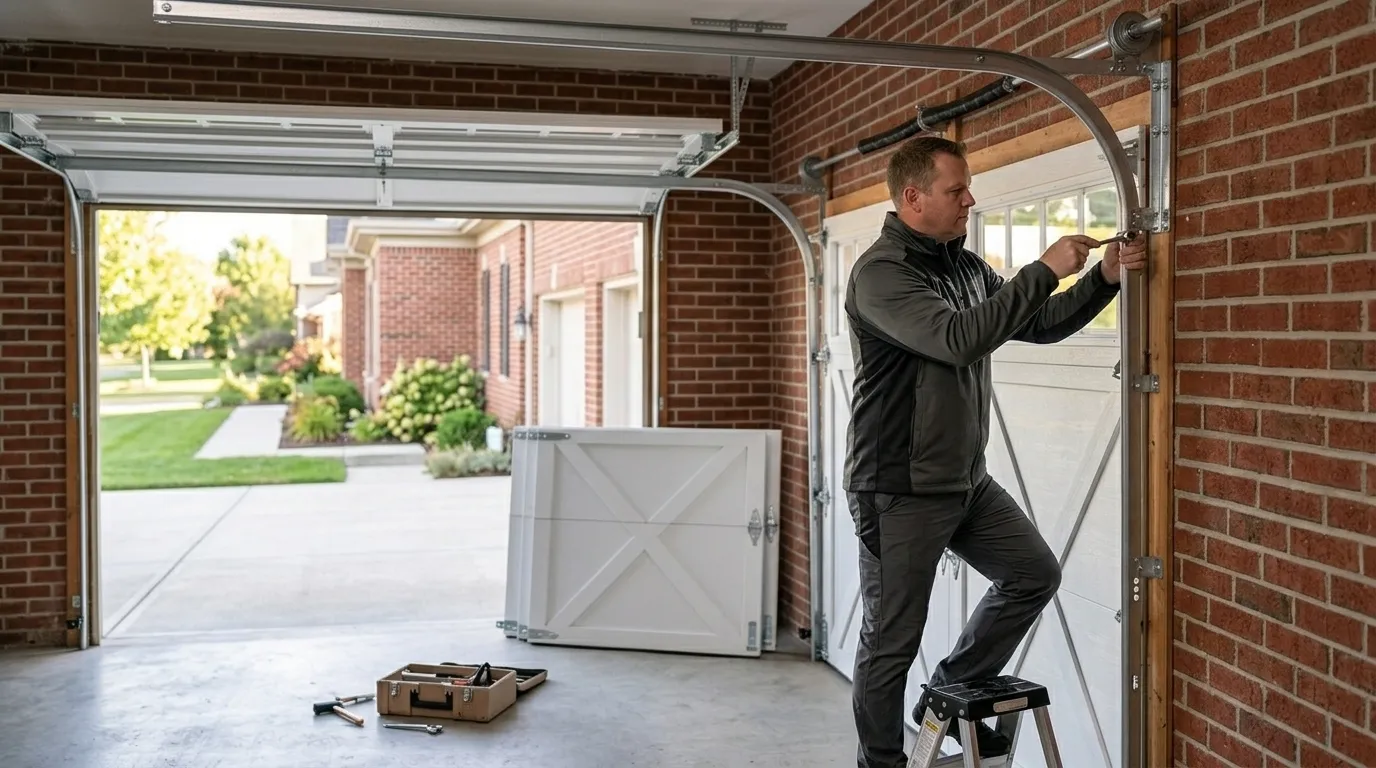
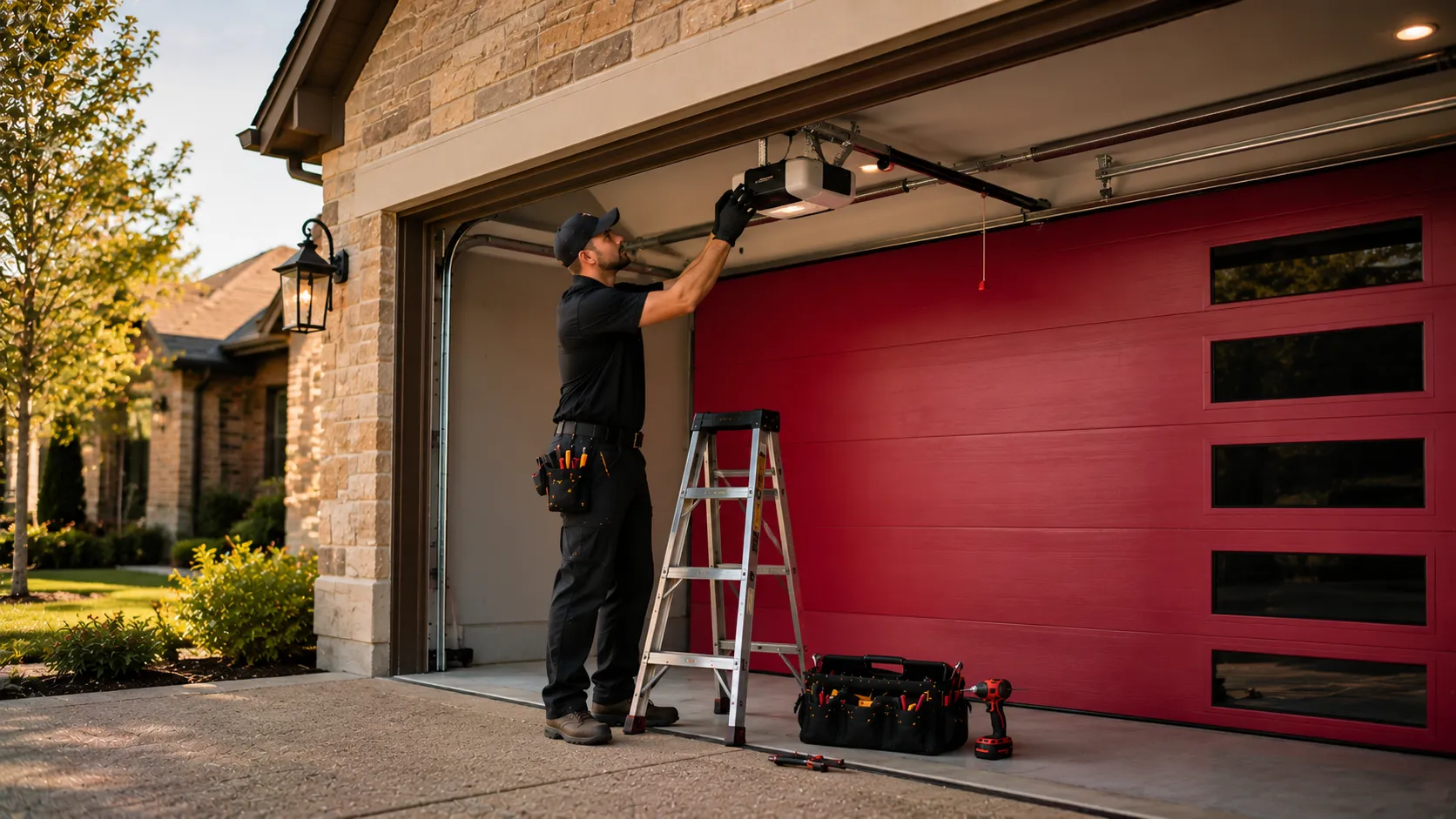
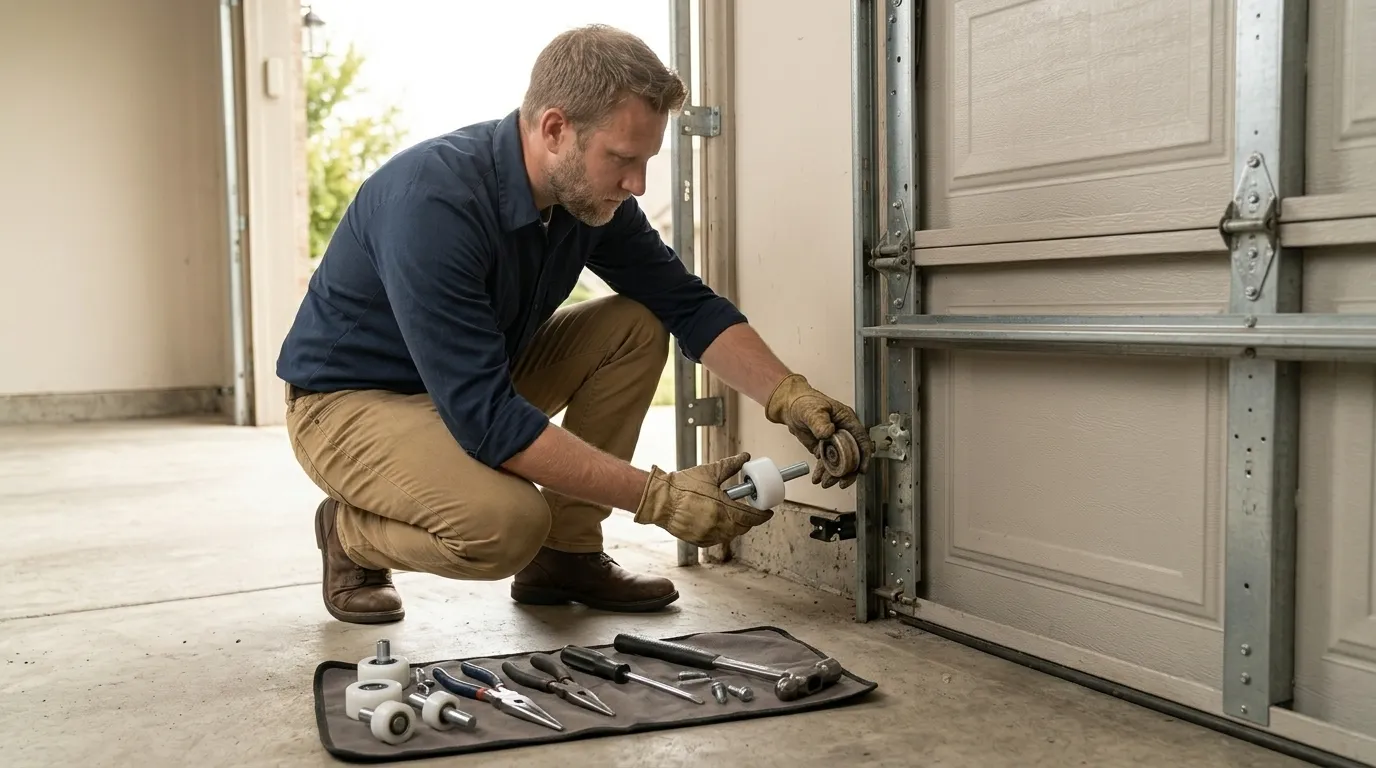
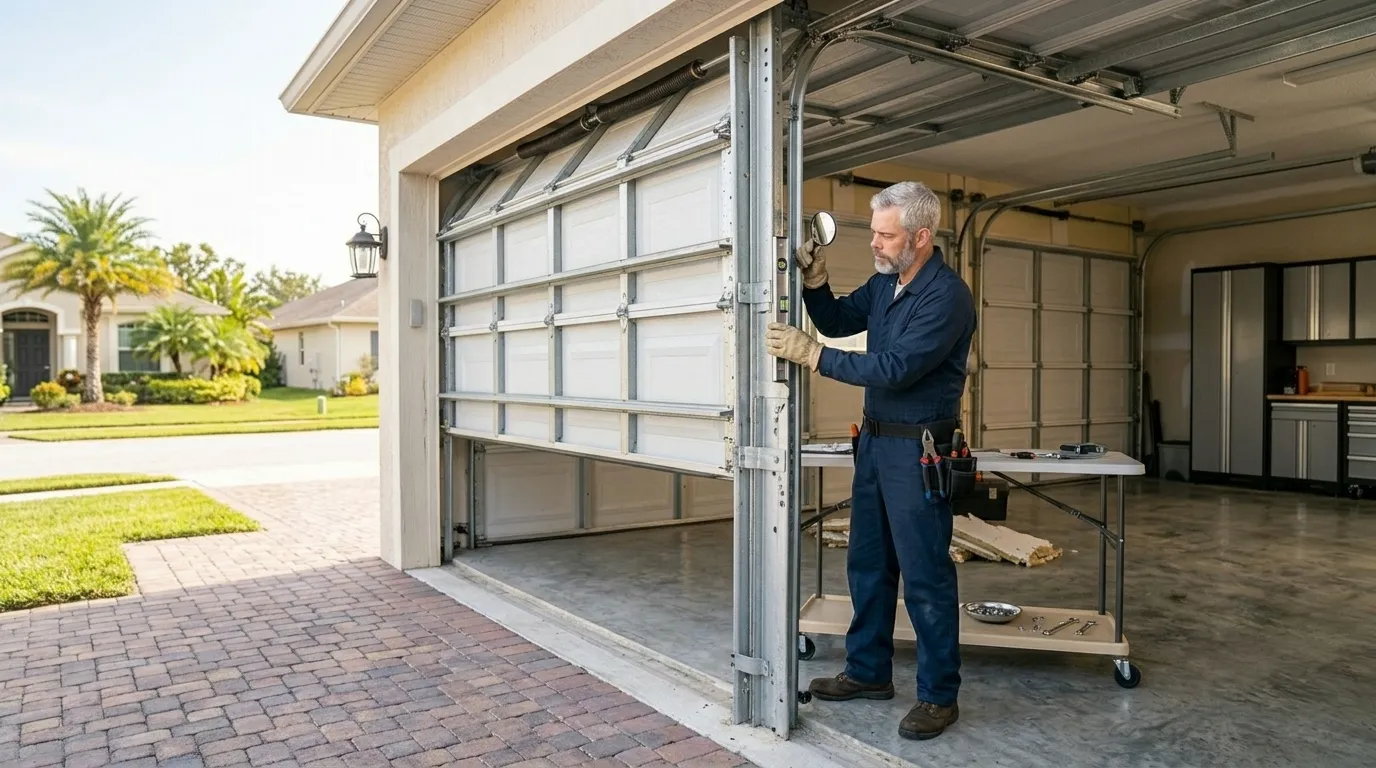
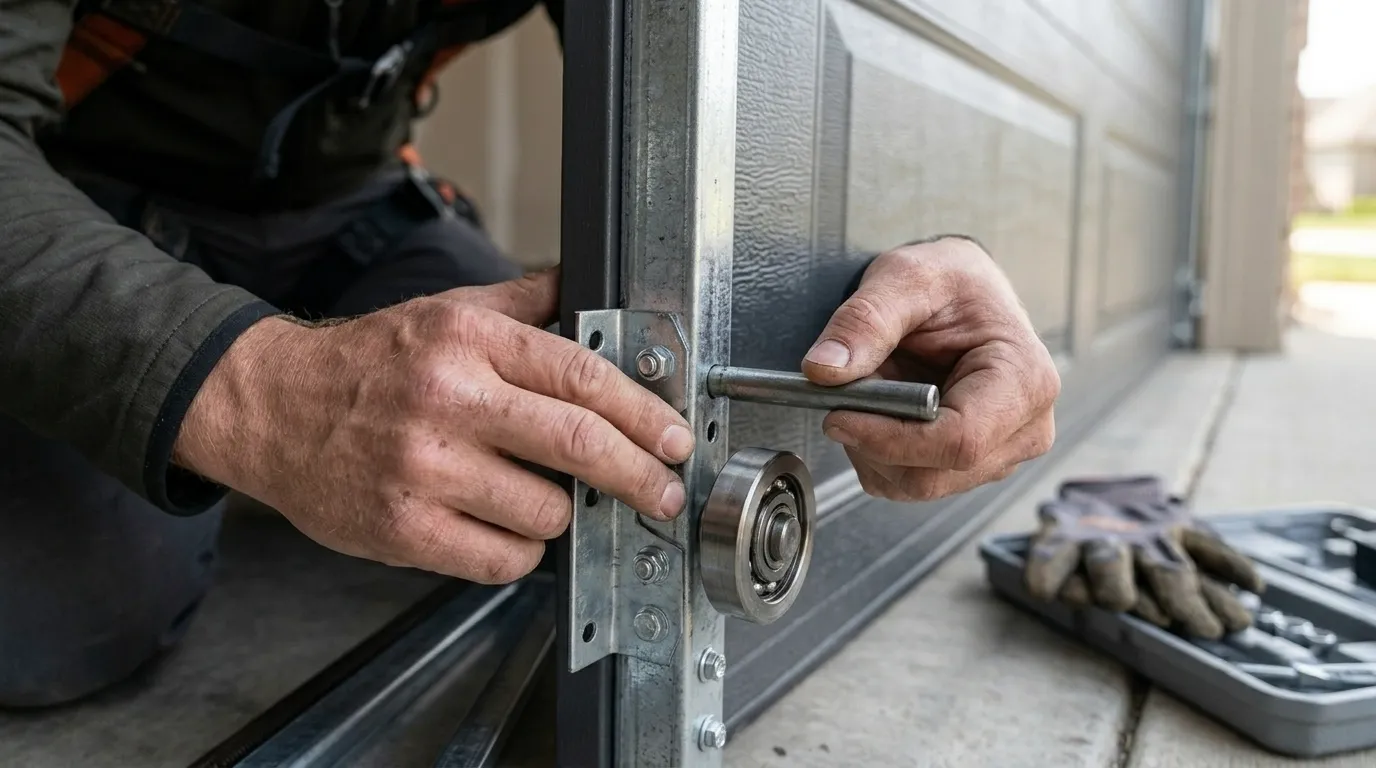
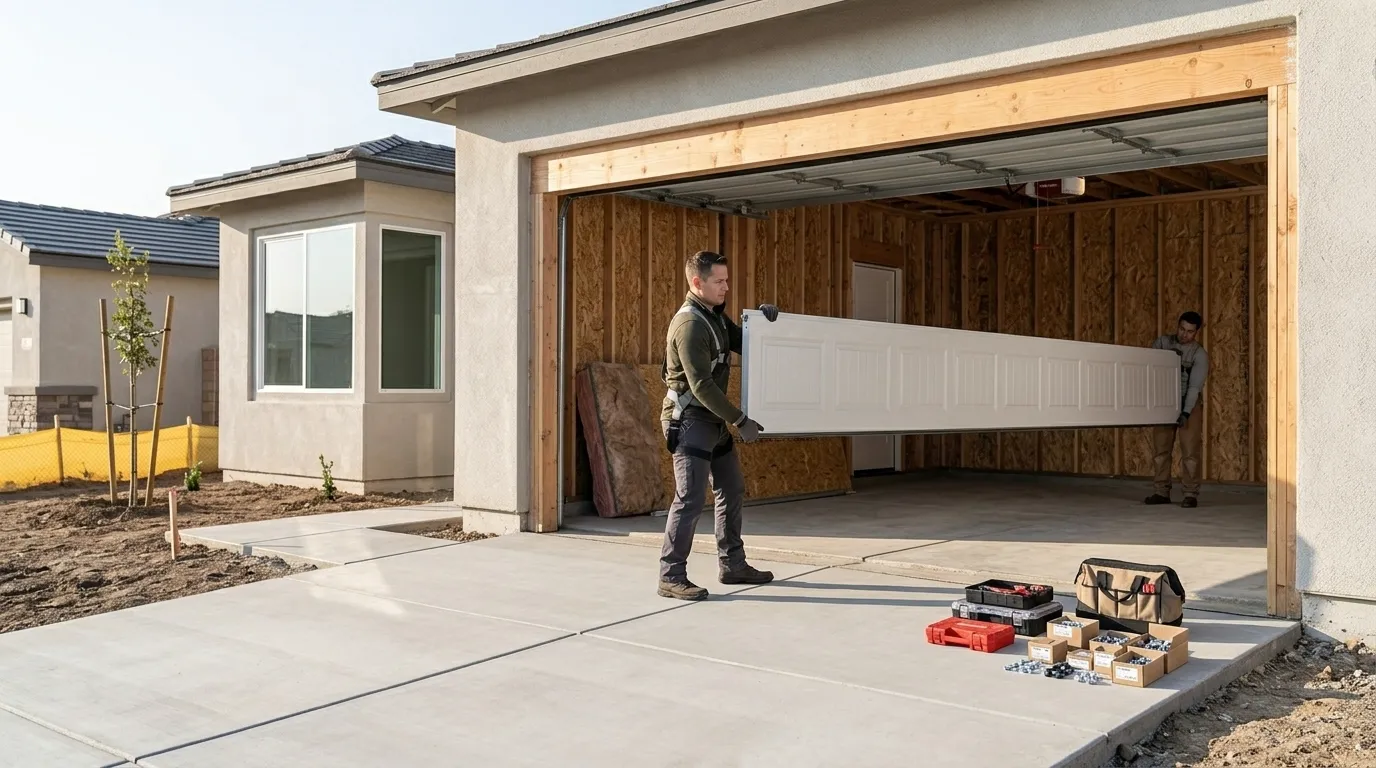
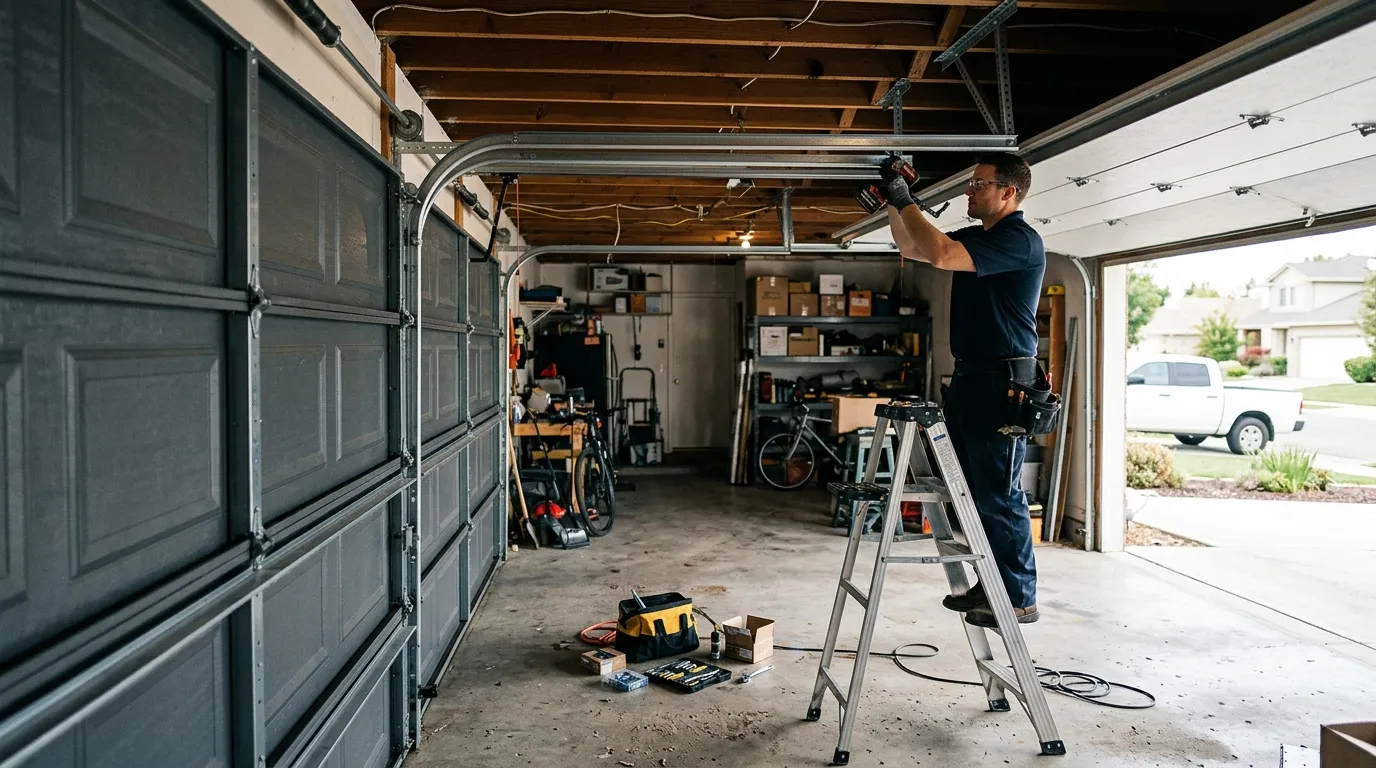
Installation starts with pulling the old opener down and checking the header bracket and rail mount, since a lot of older installs across this area used hardware that doesn't match modern openers and needs to be swapped or reinforced. From there it's mounting the new unit, running and tensioning the chain or belt, wiring in the wall control and any keypad or battery backup, then setting the travel limits and force settings so the door reverses properly on an obstruction - that safety setting matters more than people think and it's not something to eyeball. We test the door through a full cycle, check the sensors, and walk you through the remote and app setup if your unit has one. One honest limit: if your door itself is out of balance or the springs are undersized for the door weight, a new opener will not fix that, and running a new motor against a badly balanced door just wears it out faster. We'll flag that before we install anything, not after.
How it works
From “it’s stuck” to “it’s fixed”
1
Tell us what’s wrong
Describe the symptom - won’t open, loud bang, opener runs but the door won’t move.
2
On-site diagnosis
A technician tests the door under power and by hand and finds what actually failed.
3
Clear, up-front plan
You get the fix that’s needed and what drives the cost - before any work starts.
4
Repaired & tested
The repair is done, the door is set true and tested, and the work area left clean.
Serving Hugo, MN - tell us what your door’s doing and we’ll take it from there.
If the motor runs but the door won't move consistently, or the unit is original to a house built decades ago, replacement usually makes more sense than chasing parts for an old model. We'll look at the specific unit and tell you honestly if a repair would hold, since not every job needs a new opener.
Will a new opener work better in winter?
A newer opener rated for a cold, unheated garage handles this area's severe winters better than an older unit - the motor and drive components are built for the temperature swings rather than straining through them. It won't fix a door that's out of balance, though.
Can you add battery backup to my opener?
Yes, most current openers support a battery backup option, and it's a reasonable add for this area given how winter storms and power outages can line up. We can install it alongside a new opener or, in some cases, add it to an existing compatible unit.
How old is too old for my current opener?
There's no single cutoff, but a chain-drive unit original to a house from the 1980s or 90s is well past typical service life. Intermittent failure at that age is usually the gearing wearing out rather than something worth repeatedly patching.
Ready to get your garage door sorted?
Tell us what it’s doing and where you are in Hugo - we’ll take it from there.