Where This Job Goes Sideways
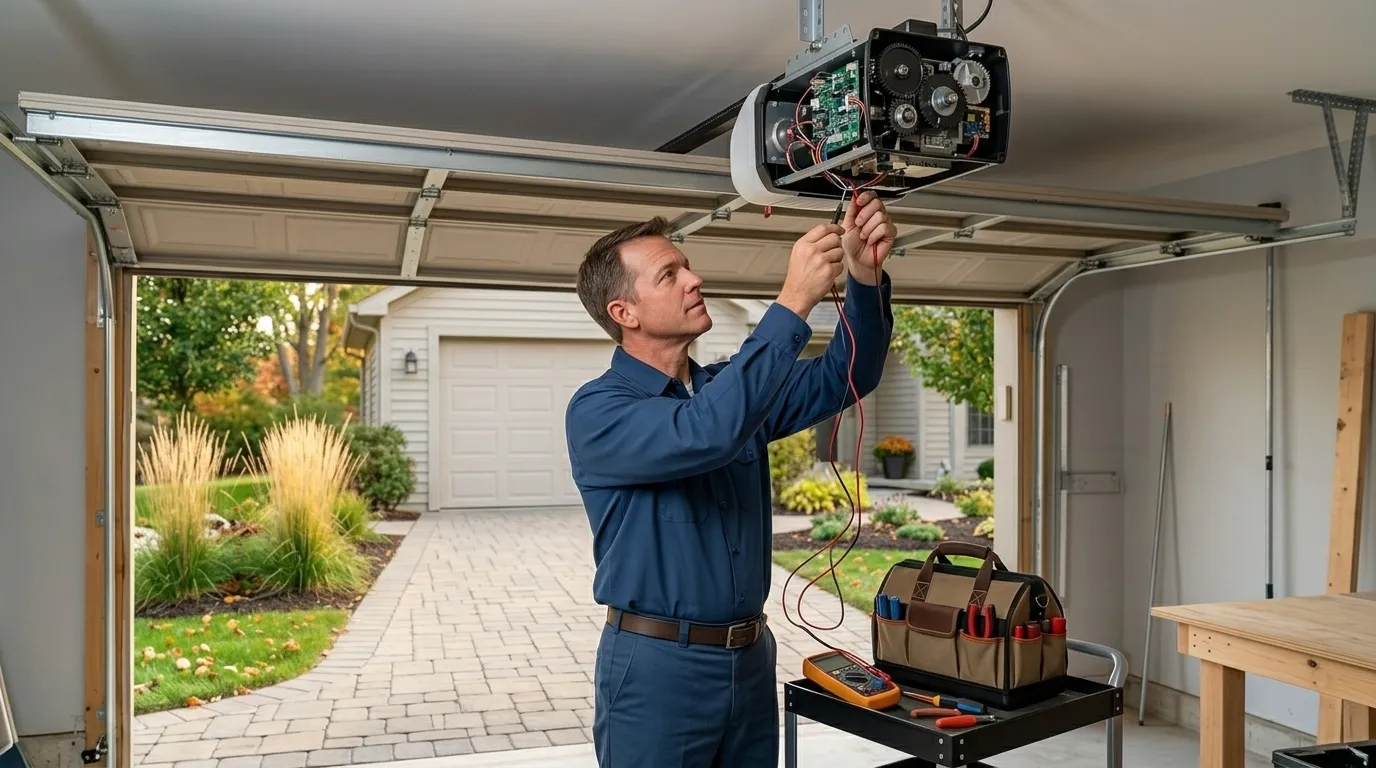
The failure point on a house from this era is almost never the opener itself - it's what the opener is bolted to. A 1977-built garage header was framed for a manual door and a lighter one-piece panel, not for the pull and vibration of a modern chain or belt drive running daily. We've opened up ceilings in this bracket-year range and found the header already cracked from a prior owner's DIY install, which means the new opener would just repeat the same failure in a few years if we don't reinforce first. The other spot this goes wrong: safety sensors. Older Arden Hills garages that never had an opener retrofit sometimes have no sensor wiring run at all, which means it's not a swap-in job, it's a new run of low-voltage wire across the header and down both jambs.
How to Book
Call and tell us the door size, whether you currently have an opener or are adding one for the first time, and roughly how old the house is - that last detail matters more here than most towns, because Arden Hills' housing sits mostly in a narrower build window than the wider service area. We travel the 12 miles out from Hugo for the job, so we schedule Arden Hills installs as a block rather than a same-hour dispatch. If your door itself is also sticking, dragging, or off-track, mention that up front - see our Arden Hills garage door repair page - because an opener won't fix a door that's already binding on bad rollers or a bent track.
What Causes It Around Here
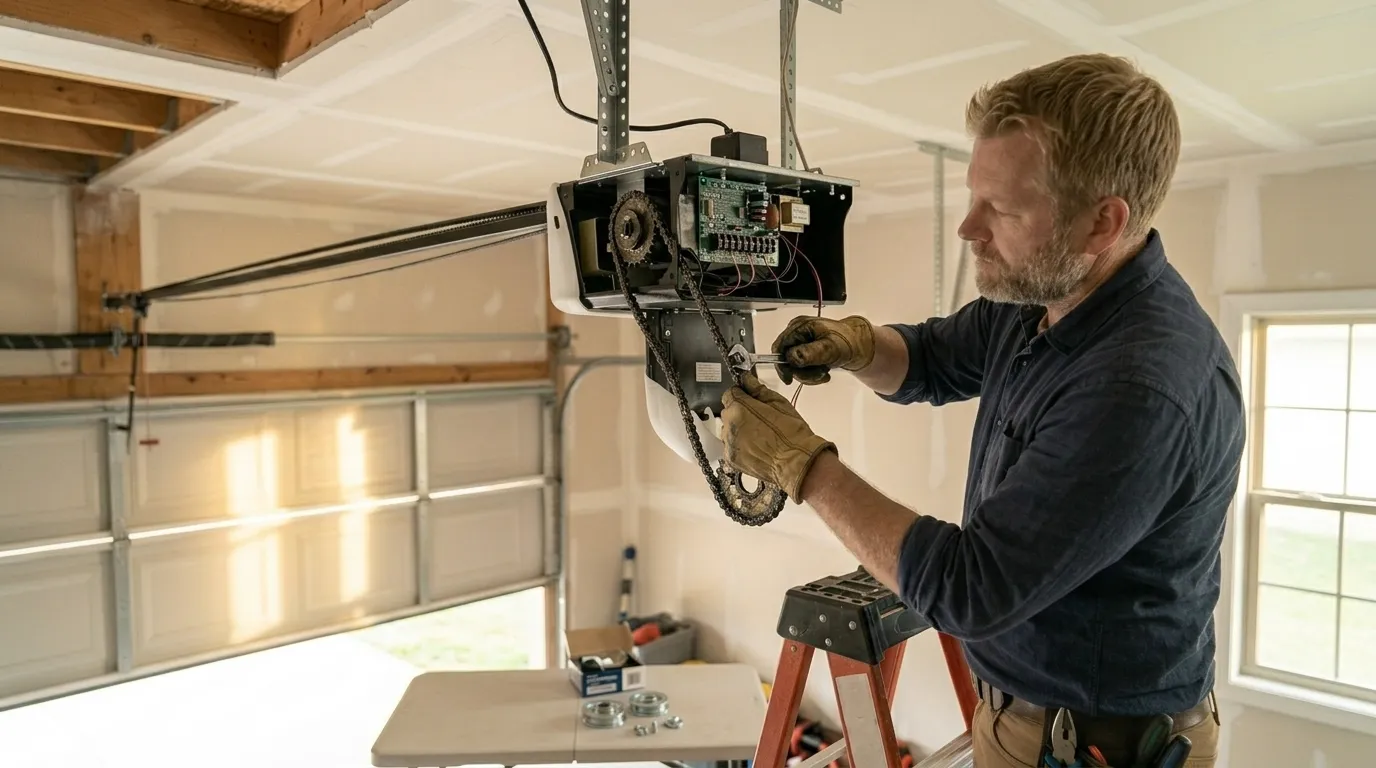
This area sits in a climate zone rated cold and severe, and that shows up in opener failure two ways. First, cold makes grease in an old chain-drive gearbox stiffen up, so the opener strains against resistance it wasn't straining against in July - that's the call we get every winter from houses running original 1970s-era hardware. Second, a garage that isn't heated sees enough temperature swing across a Minnesota winter that plastic gears in a budget opener crack faster than they would in a milder climate. Neither of those is a defect in your specific unit - it's what this weather does to any opener running unheated garage duty for years on end.
The DIY Question
Mounting an opener bracket yourself is doable if your header is sound and you're comfortable on a ladder with a torque wrench. What's not a good DIY candidate is the safety sensor alignment and the travel-limit setting - get those wrong and you've got a door that either won't close on its own weight or reverses on nothing, and neither is a fix you want to troubleshoot at 6am before work. Our honest limit here: we don't install openers on doors that are structurally shot - warped panels, snapped cables, a door that's already off its track. In that case the opener is a wasted purchase until the door itself is sound, and we'll tell you that instead of selling you a unit that has nothing good to mount on.