How Long It Takes
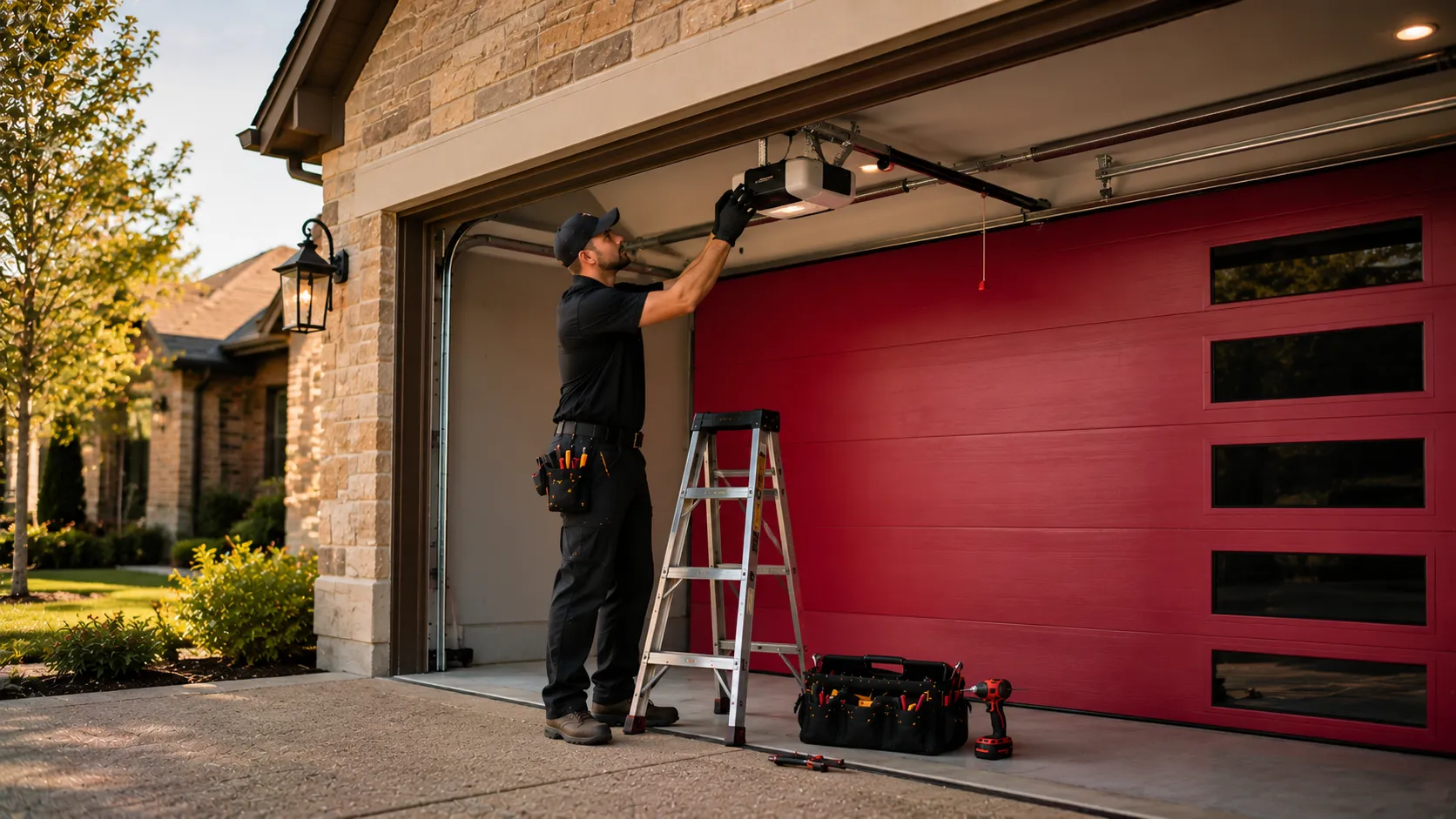
Five miles keeps the drive itself out of the equation - it's not a factor that stretches the visit the way a 20-mile run would. The time on site depends on what's actually wrong. A dead capacitor or a stripped drive gear on a chain-drive unit from the early 90s is usually a same-visit fix once we've confirmed the part. A failed logic board is a different story: those units aren't stocked on shelves the way current models are, and if the opener predates the mid-90s safety-sensor mandate, we may be sourcing a part rather than pulling one off the truck.
Centerville's median household income, at $119,361, runs well above the wider service area's $100,759, and that shows up in the calls - more owners here ask about replacing an aging opener with a battery-backup or Wi-Fi-enabled unit rather than patching the old one. That's a fair question, and it's one we answer honestly: sometimes a $40 part fixes a $30-year-old opener for another five years, and sometimes the smarter money is a new unit.
We won't stretch a simple job to fill a visit, and we won't quote a same-day fix on a part we don't have in hand.
The DIY Question
A remote that's stopped syncing, or an opener that runs but won't reverse on the safety sensors, is often something an owner can chase down before calling anyone - checking the sensor alignment, cleaning the eyes, or reprogramming the remote. Those are legitimate first steps and they solve a real share of complaints.
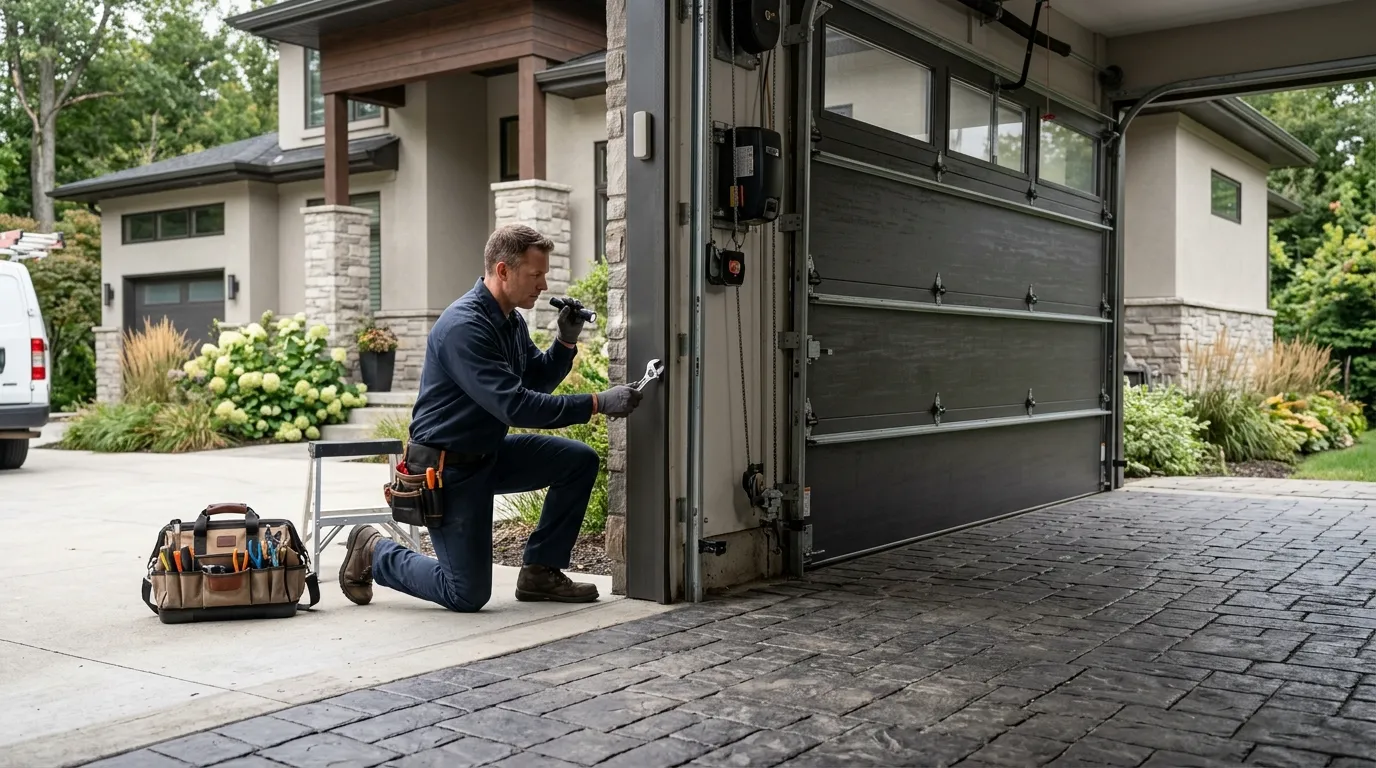
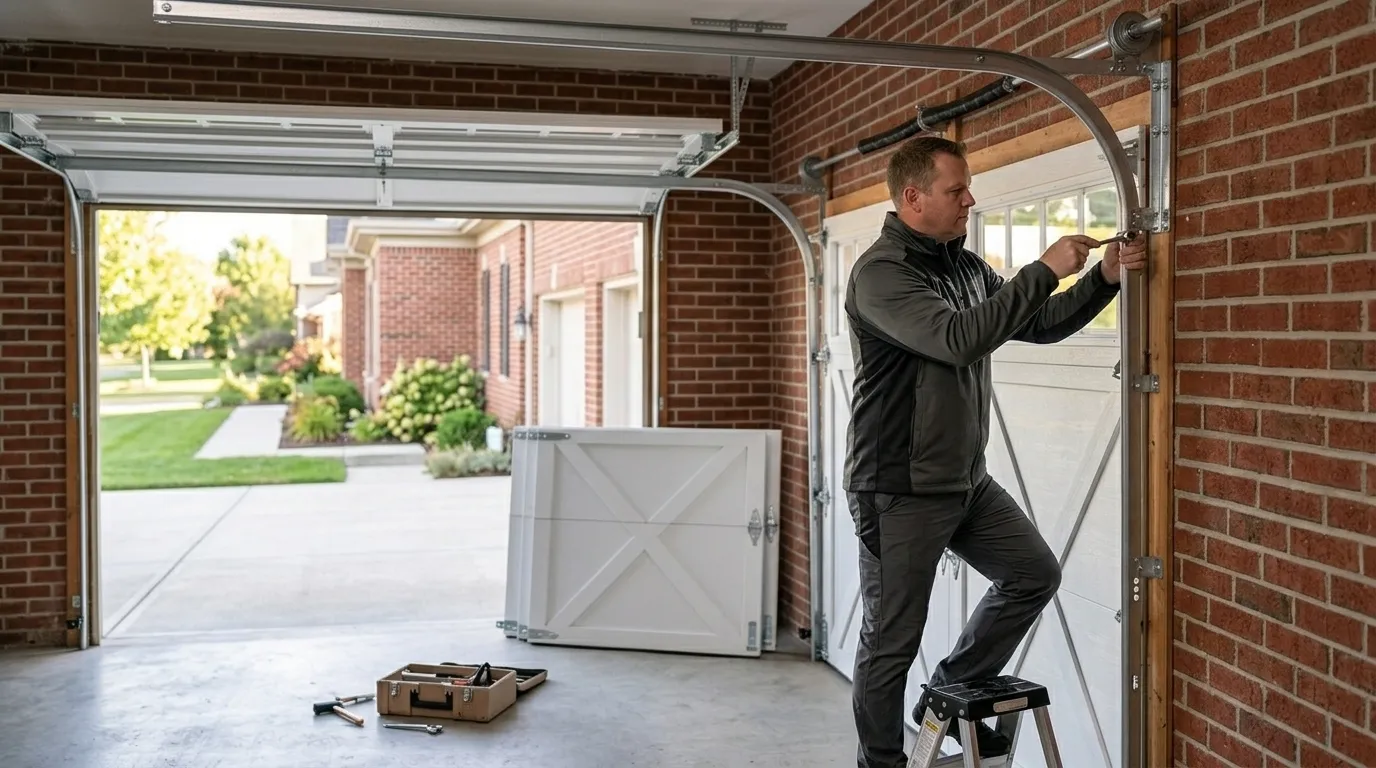
Where it stops being a weekend project is the drive mechanism itself. On the chain-drive units common to Centerville's early-90s builds, a worn drive gear or a failed capacitor means opening the unit housing, and those housings on 30-year-old motors are often brittle enough that forcing a cover can crack the mounting points. Torsion spring tension anywhere near the opener rail is not a DIY repair - that's true everywhere, on every era of door, and it's the one absolute in this business.
Our honest limitation: we don't stock every logic board for units this old, and if yours has a proprietary control board no longer manufactured, we'll tell you that up front rather than promise a repair we can't source parts for.
Where This Job Goes Sideways
The calls that turn into longer jobs are usually the ones where the opener fault was a symptom, not the cause. A motor straining and burning out its capacitor early is sometimes doing that because the door itself is out of balance - worn springs or bent track making the opener do work it wasn't built for. On Centerville's stock of early-90s doors, we see this pairing often enough that we check spring tension and track alignment before we call an opener repair finished.
The other place it goes sideways is parts availability. A logic board or control module for a unit installed in 1993 isn't something every supplier carries, and if the manufacturer has discontinued the model line, we're looking at a universal replacement board or, in some cases, recommending the owner replace the opener outright rather than chase a part that may not exist anymore. We'd rather say that on the first visit than string out a repair that isn't coming.