What the Fix Involves
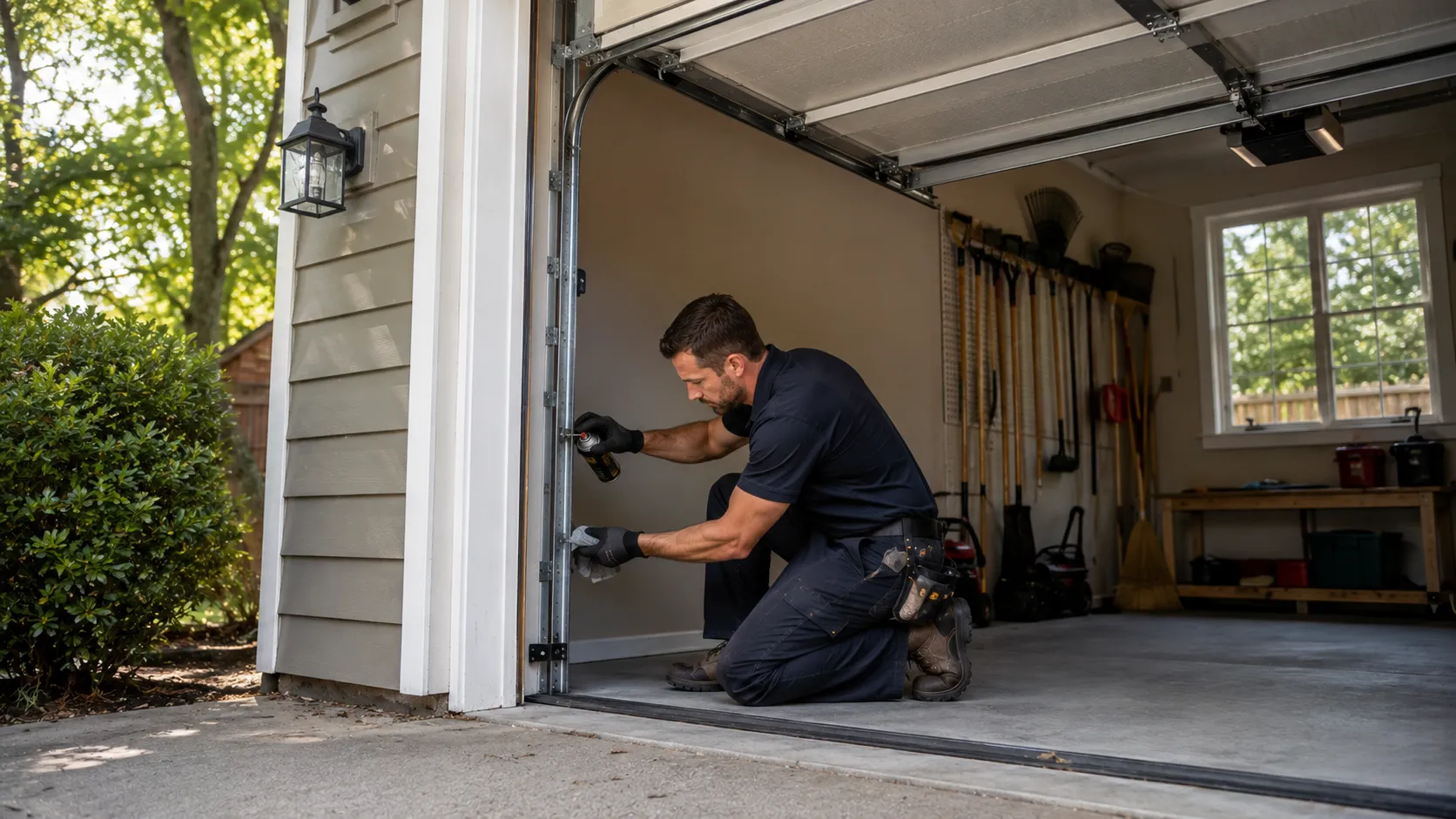
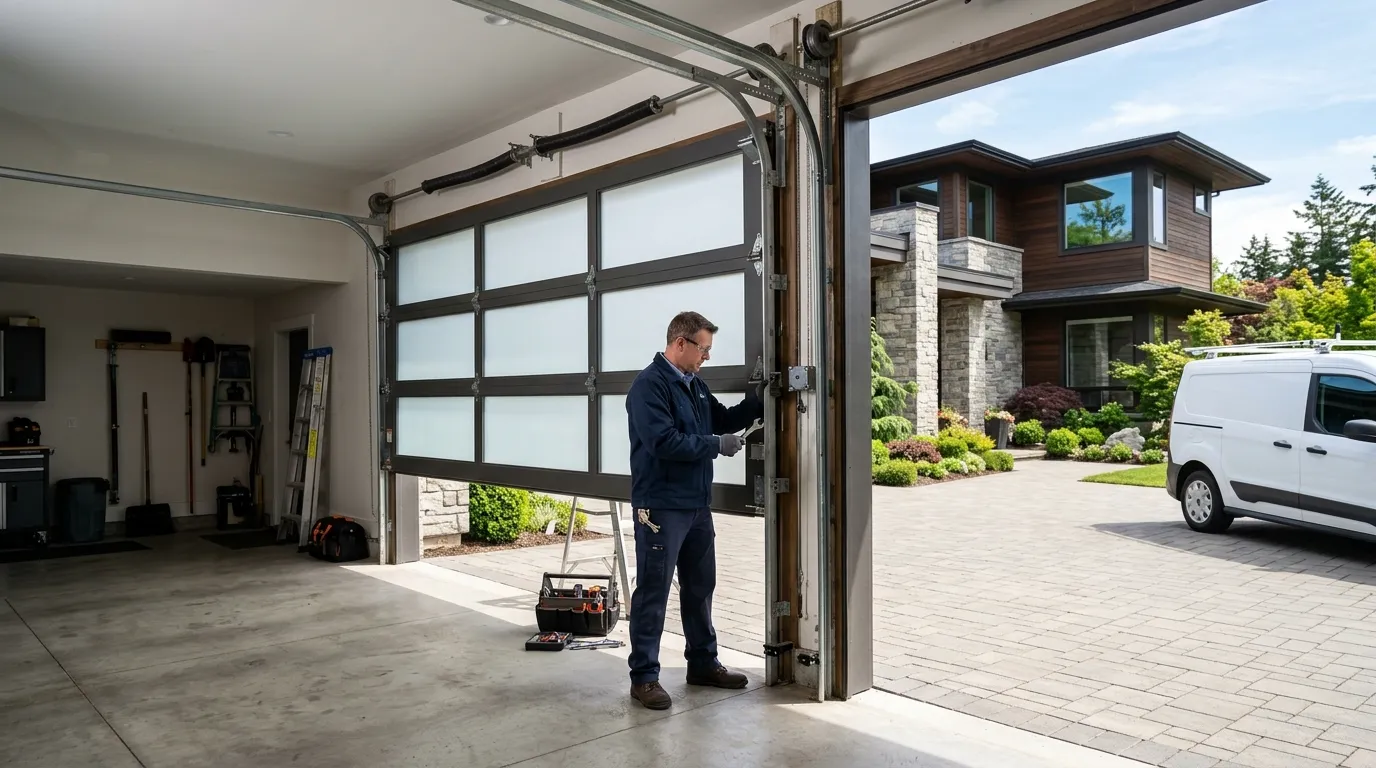
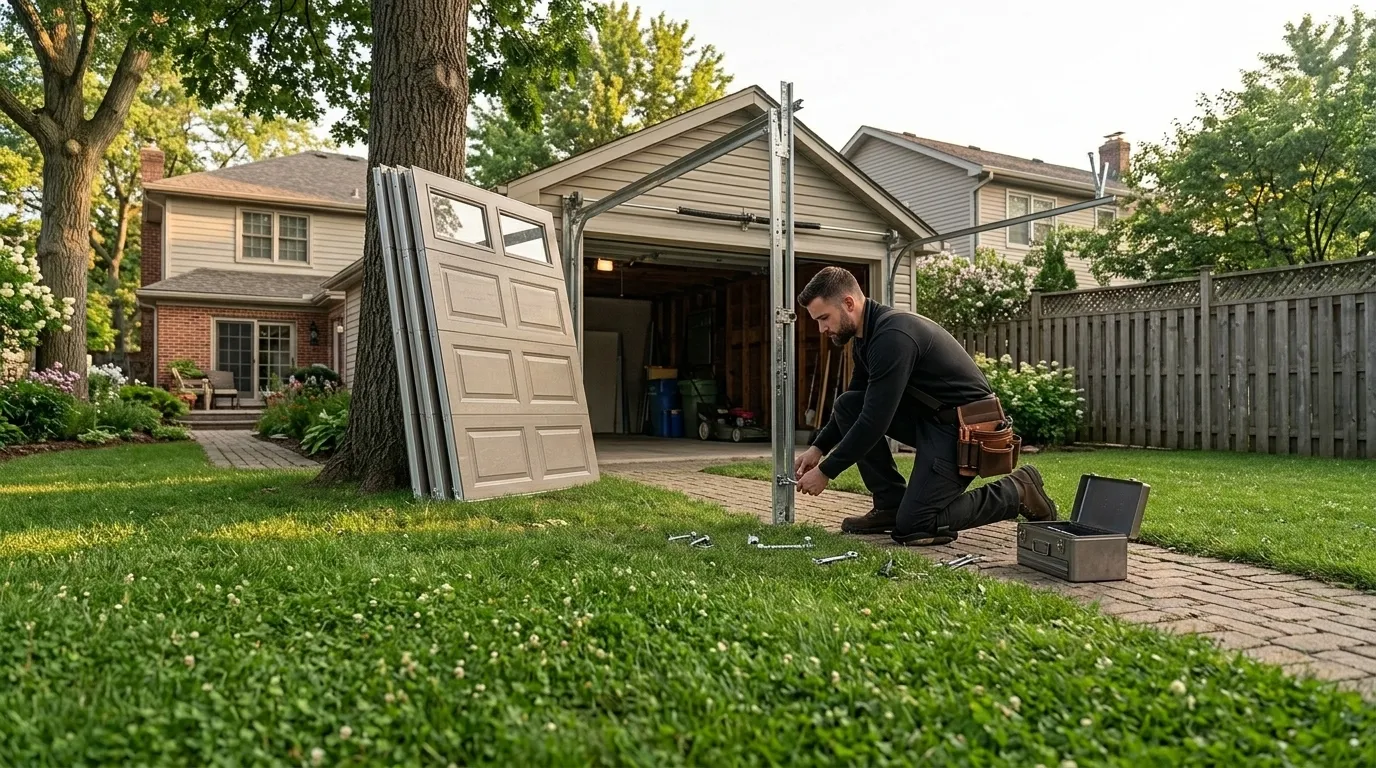
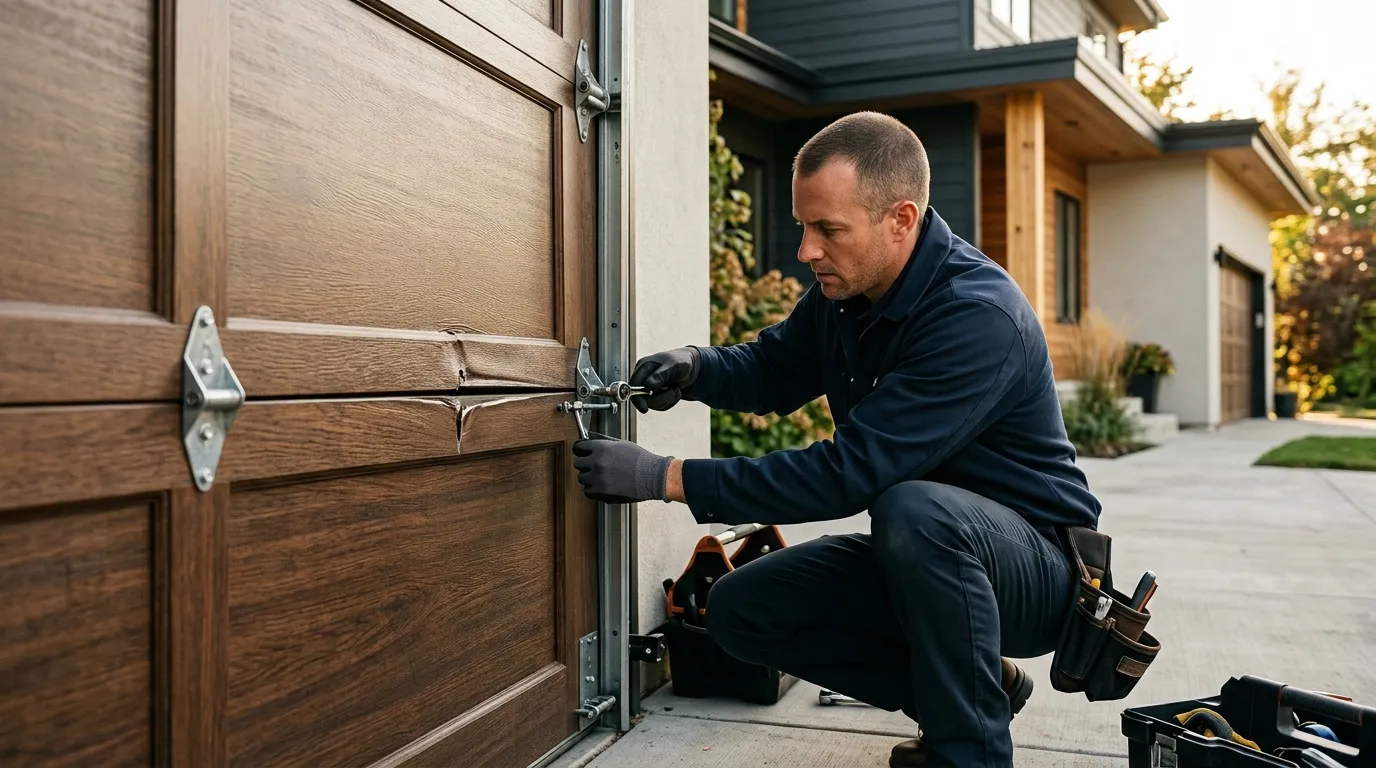
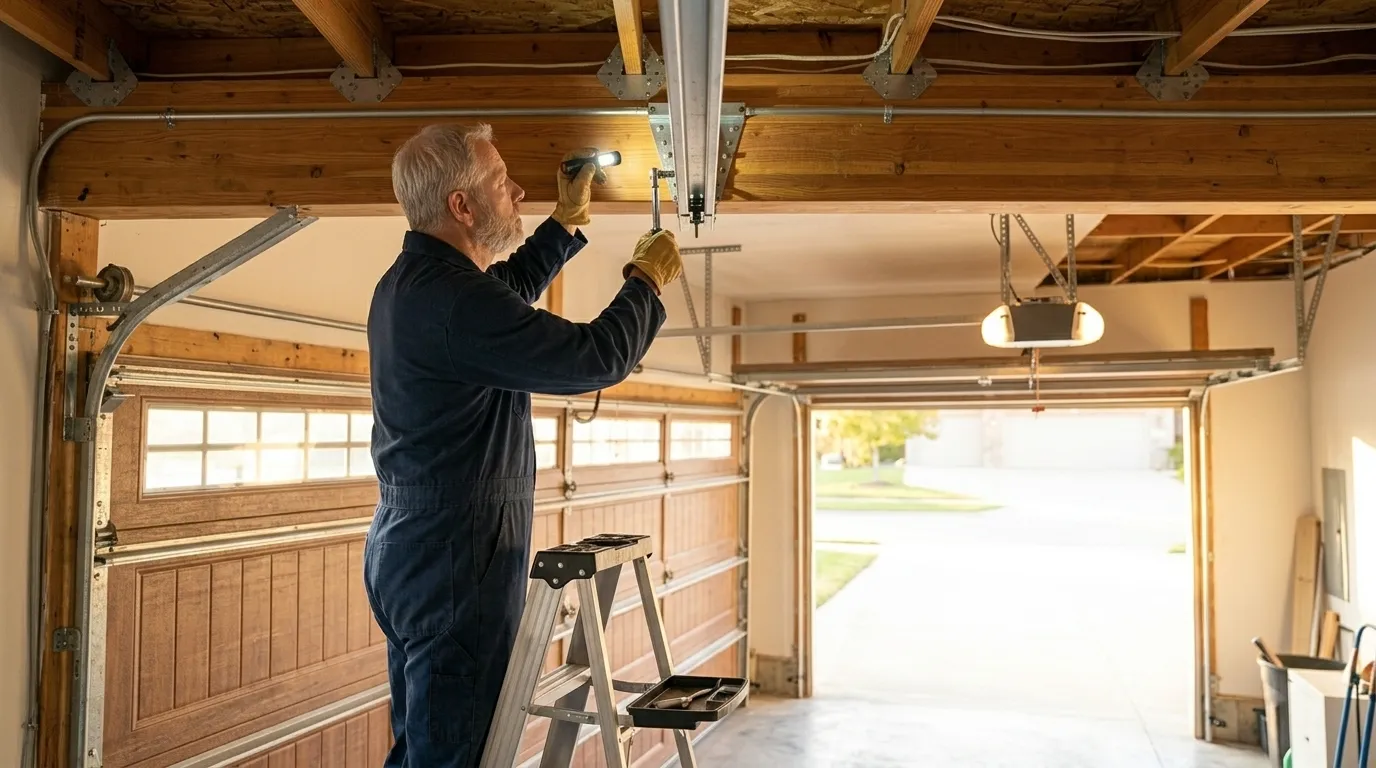
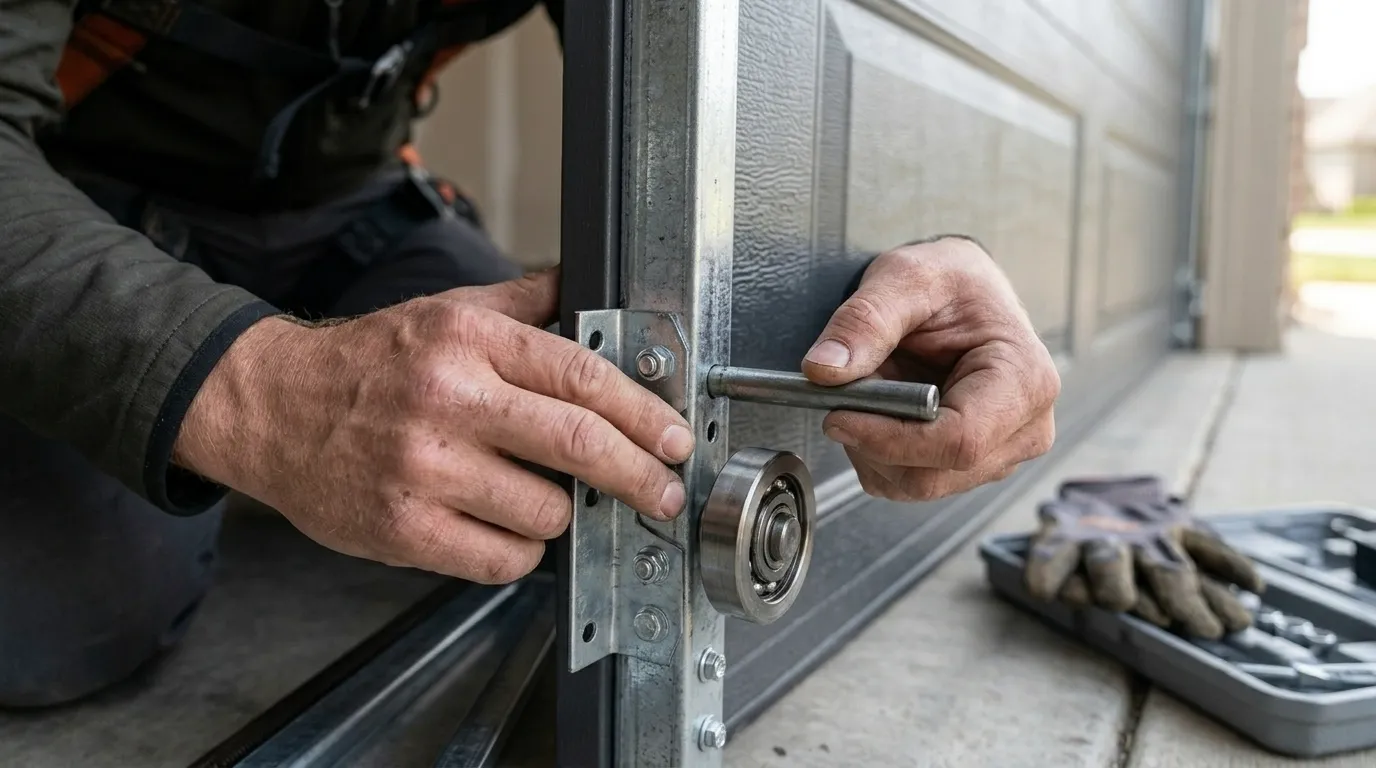
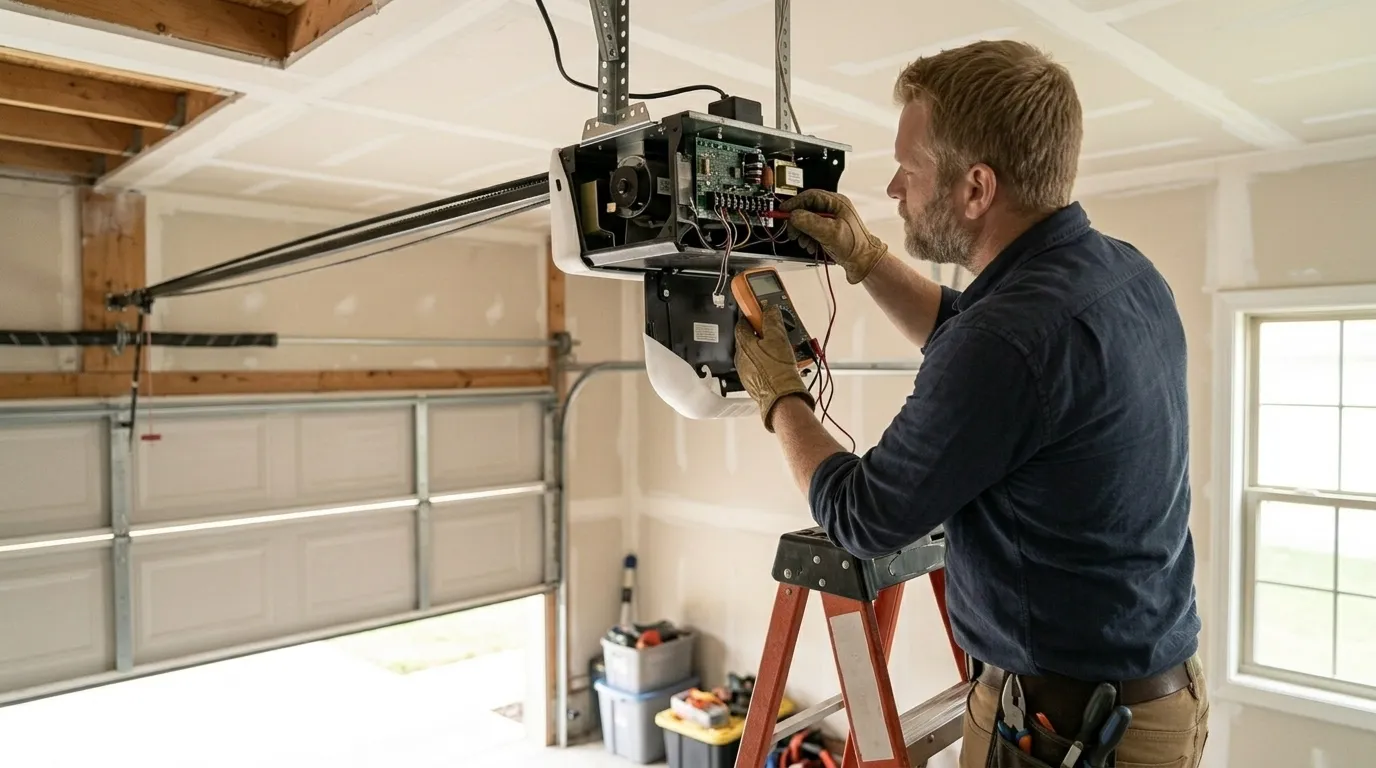
For a torsion spring on a door from this era, we unload the opposite spring's tension safely, pull the old spring off the shaft, and match wire size and wind direction to what's already on the header - guessing wrong on wind direction on a double door means the new spring fights the old one. Steel rollers from the early 90s often ride in a track that's worn a groove on one edge; if the groove's shallow we can true up the track, but if it's cut deep we replace that section rather than patch it. On openers, a stripped gear means the whole drive gear and sprocket assembly comes out - we don't just grease it and send you off, because a half-fixed gear fails again within months. Cables on a 30-year door usually show fraying at the bottom bracket first, and we replace both cables even if only one looks bad, since they carry equal load and age together. We check hinges too - the ones between panels loosen at the same rate the rollers wear, and a loose hinge on a heavy steel panel is what causes off-track doors more than anything else. None of this needs new studs or framing on a house from this era; it's hardware swap-outs on an existing header and track, which keeps the job to parts and labor rather than carpentry.
What Is on the Truck
We stock torsion springs in the wire sizes and wind directions that match 1990s-era garage doors, since that's most of what we see coming out of Wyoming and the towns around it. We also carry steel rollers - both the nylon-bearing kind to match what's original and the sealed ball-bearing upgrade if you want less noise going forward. Cables, bottom brackets, and the drive gear kits for chain-drive openers of that generation ride along too, because a stripped gear is common enough on a 30-year opener that we don't want to make a second trip for it. What we don't carry is anything for wood-panel doors older than this stock or full opener replacements with smart-home wiring built in - that's a different job we'd schedule separately, not something we improvise from the truck. If a part turns out to be a size we don't carry, we say so on-site rather than force a mismatch, and we'll tell you what the wait looks like before we start.