What Causes It Around Here
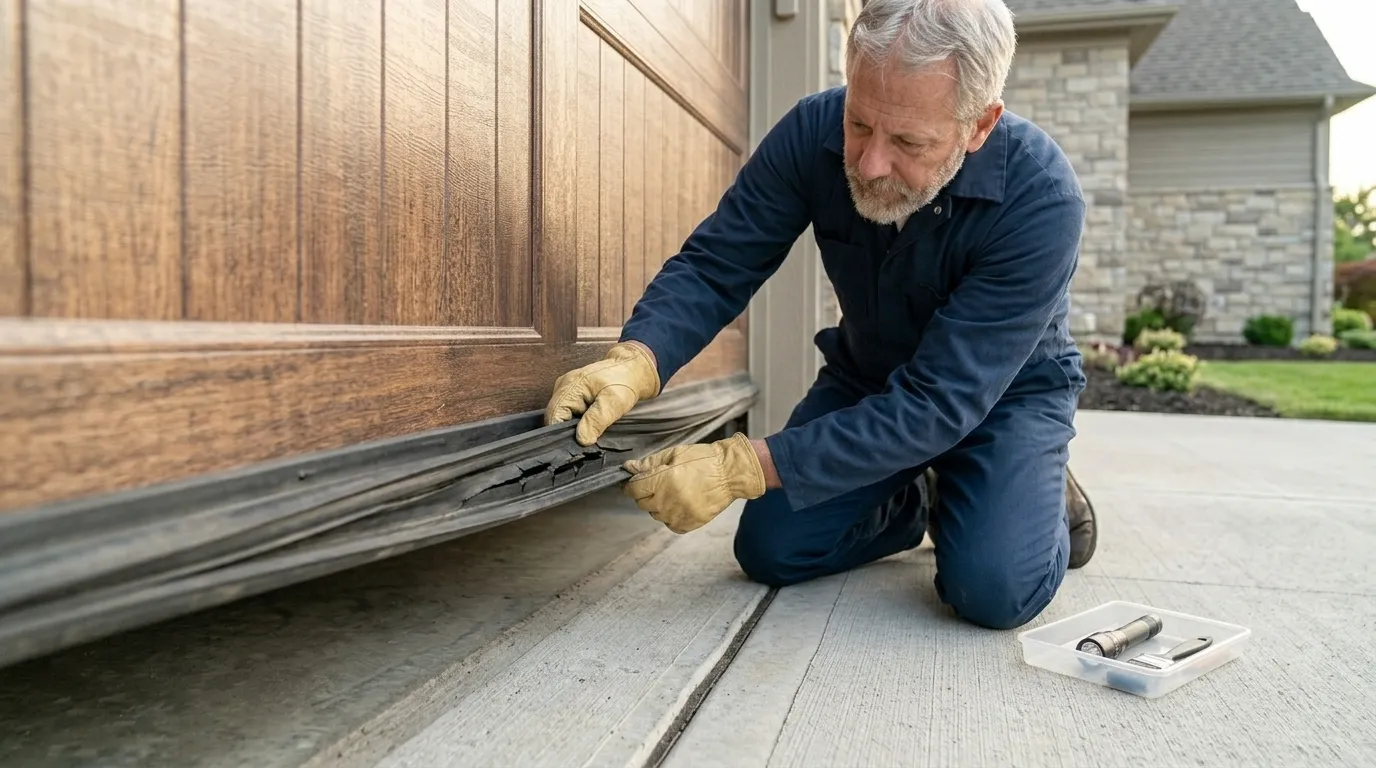
The push to replace isn't usually a broken door. It's a door that's still working but no longer worth patching. With a median build year of 1985, a lot of Vadnais Heights garages are on their second opener and maybe a second spring set, but the door panel itself is original steel, thin-gauge, and dented from thirty-plus years of use. Winters here fall in the severe-cold band, and steel doors of that vintage have no thermal break, so the garage runs cold enough to matter if it's attached to living space. That's the real trigger we see: not failure, but a homeowner tired of a door that rattles, doesn't seal, and costs more to heat around than it should. We also see replacement driven by opener mismatch, where a newer opener was bolted onto an old door with sagging panels, and the combination is fighting itself every cycle. None of that is unique to any one house, but it's consistent across a housing stock built in a fifteen-year window, which is most of what's here.
How Long It Takes
A standard single or double door swap on an opening that doesn't need framing work is usually a one-day job, start to finish, including haul-away of the old door. Where it stretches past a day is exactly the scenario above: original 1985-era track and jamb hardware that needs to be pulled and rebuilt to fit a new door's dimensions, or a header that's shifted enough over the decades that it needs shimming before the new unit will hang square. We won't know which one your house is until we're standing in front of it. If you're ordering a non-standard size or a specific insulation package, add lead time on the door itself before we can even schedule the install. We travel the 9 miles out from Hugo for the job, and we'll give you a install-day window when we quote it, not a vague range.
What the Fix Involves
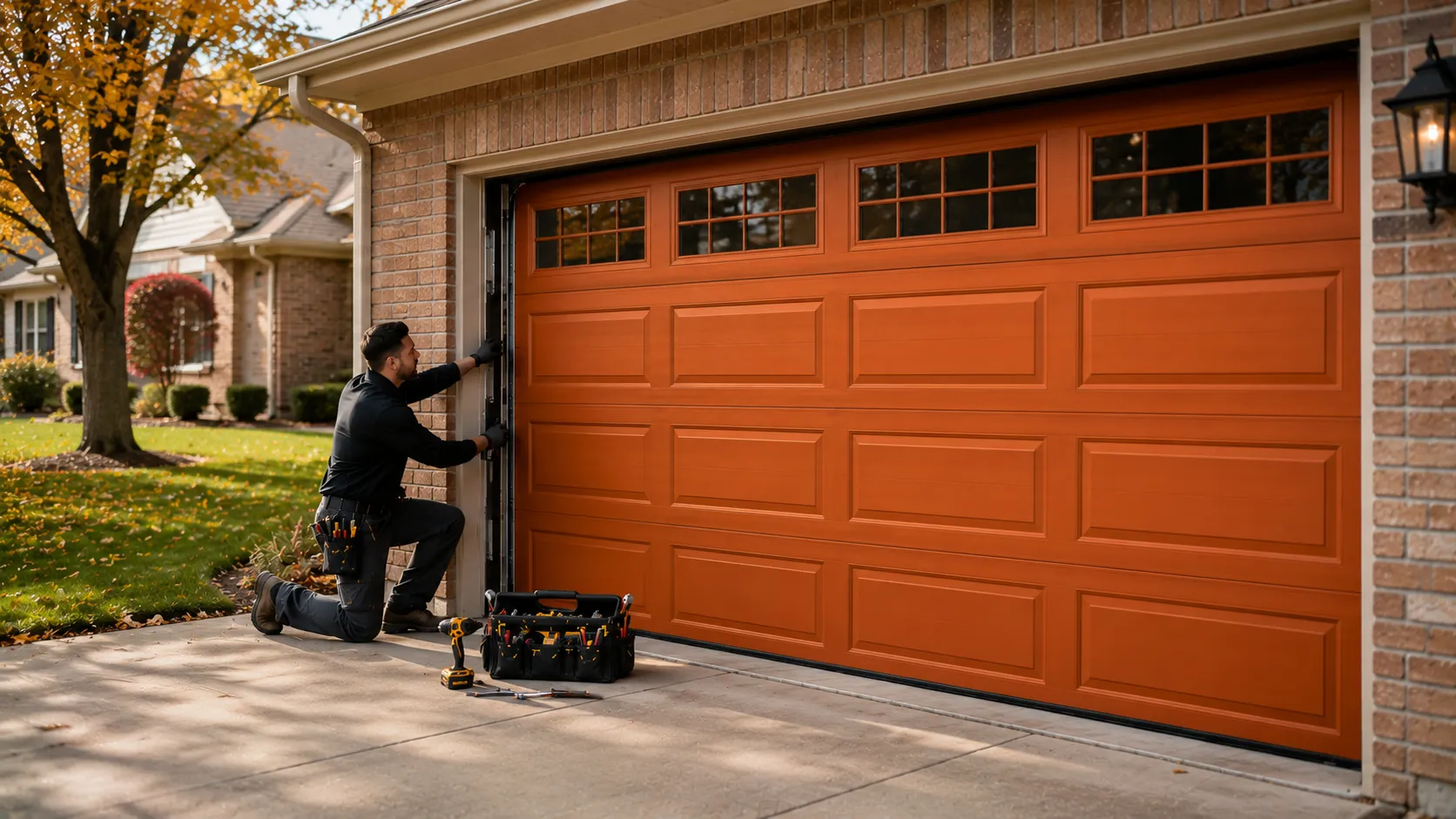
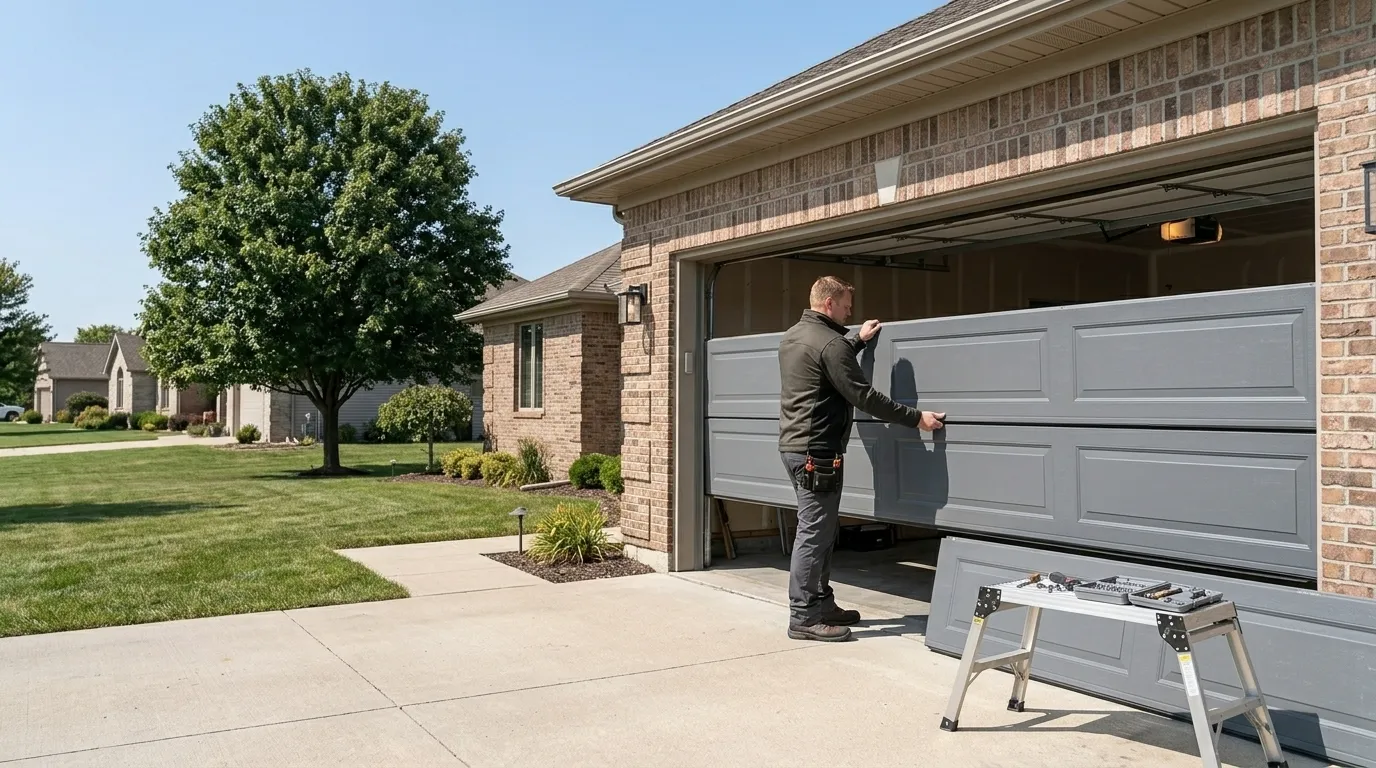
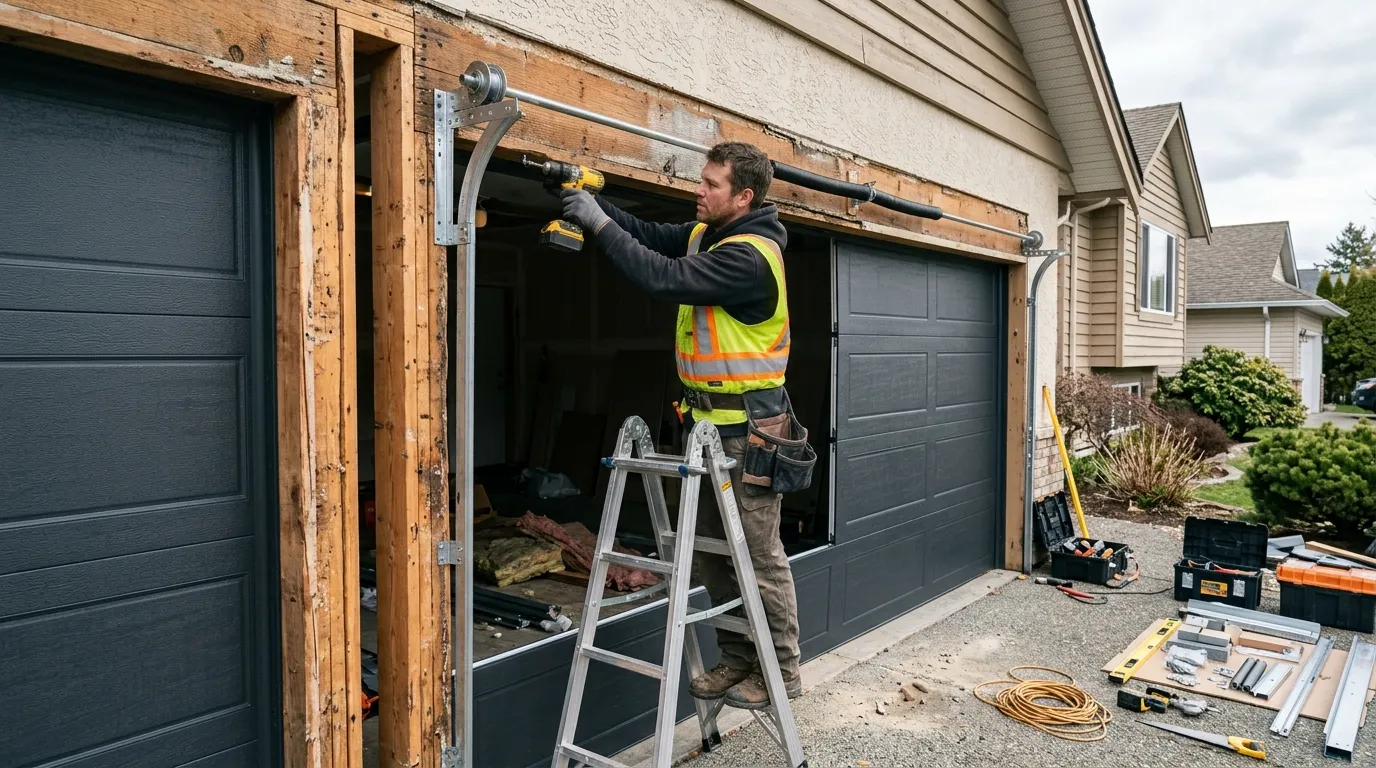
Once we've confirmed the opening and hardware, the swap itself is mechanical: pull the old door and track, inspect and reset or replace the jamb brackets, set new vertical track plumb, hang the new panels, balance the spring to the door's actual weight, and reattach or replace the opener depending on its age and condition. On a house with original 1985 hardware, we usually end up replacing the roller brackets even when the customer only asked for a door, because reusing brackets that old on a heavier insulated door is asking for an early failure. We test the balance by hand before the opener ever touches it, and we won't hand a door back that doesn't hold position on its own with the opener disconnected. That's a baseline, not an upsell.
What Is on the Truck
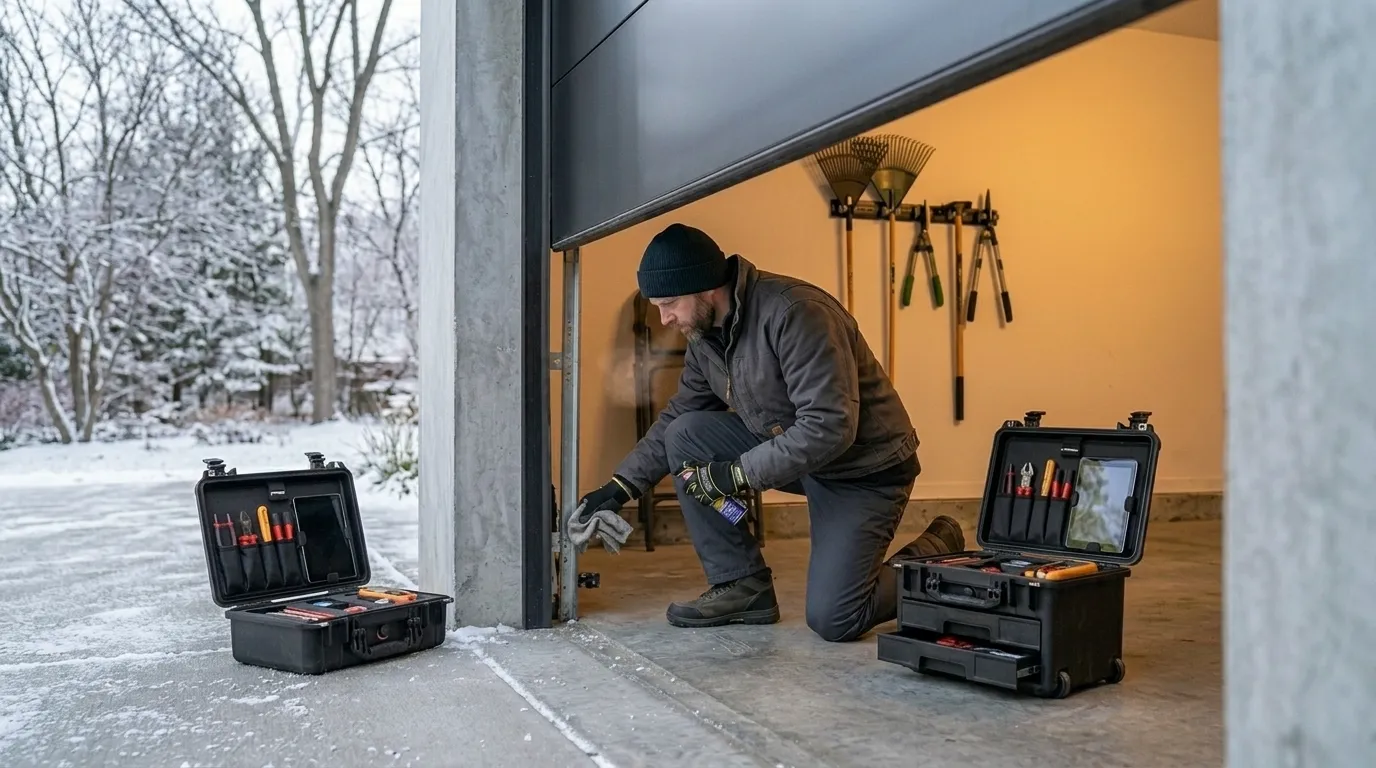
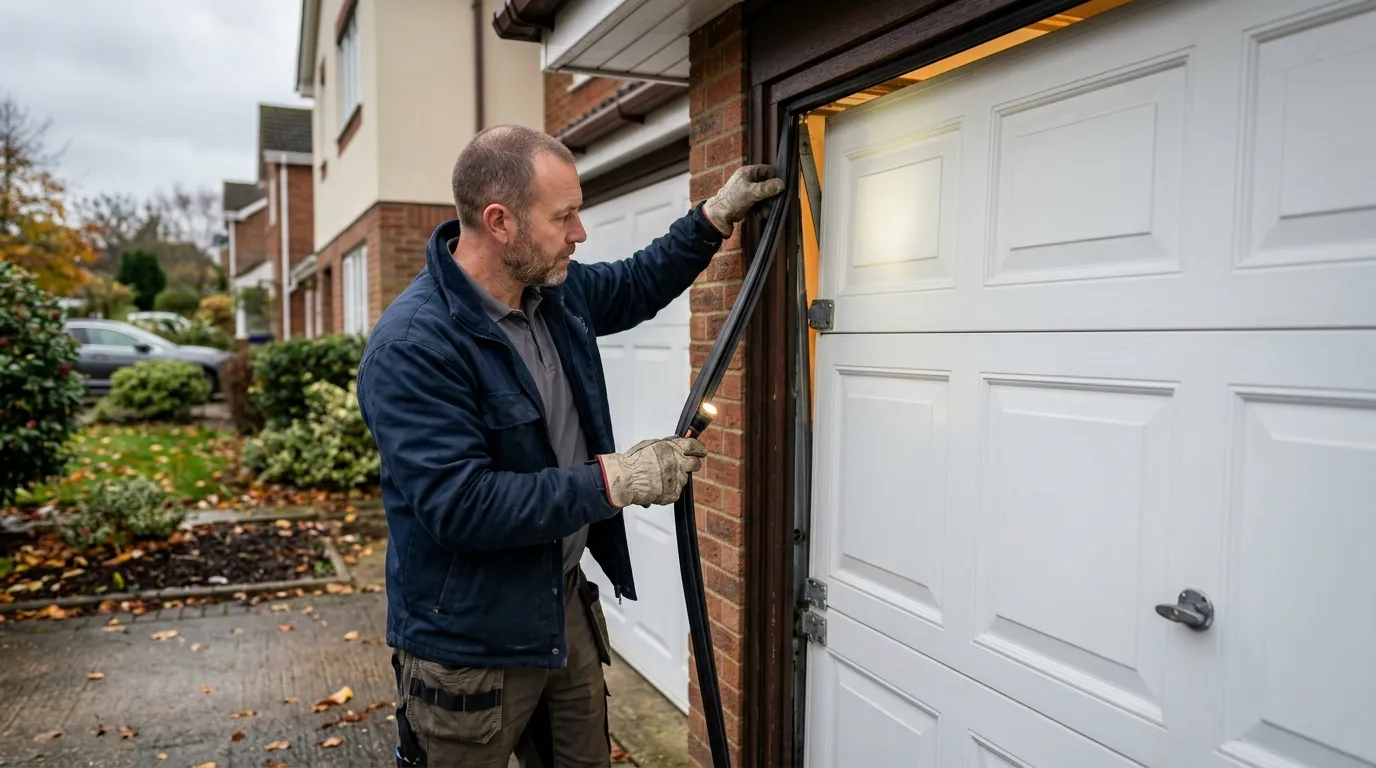
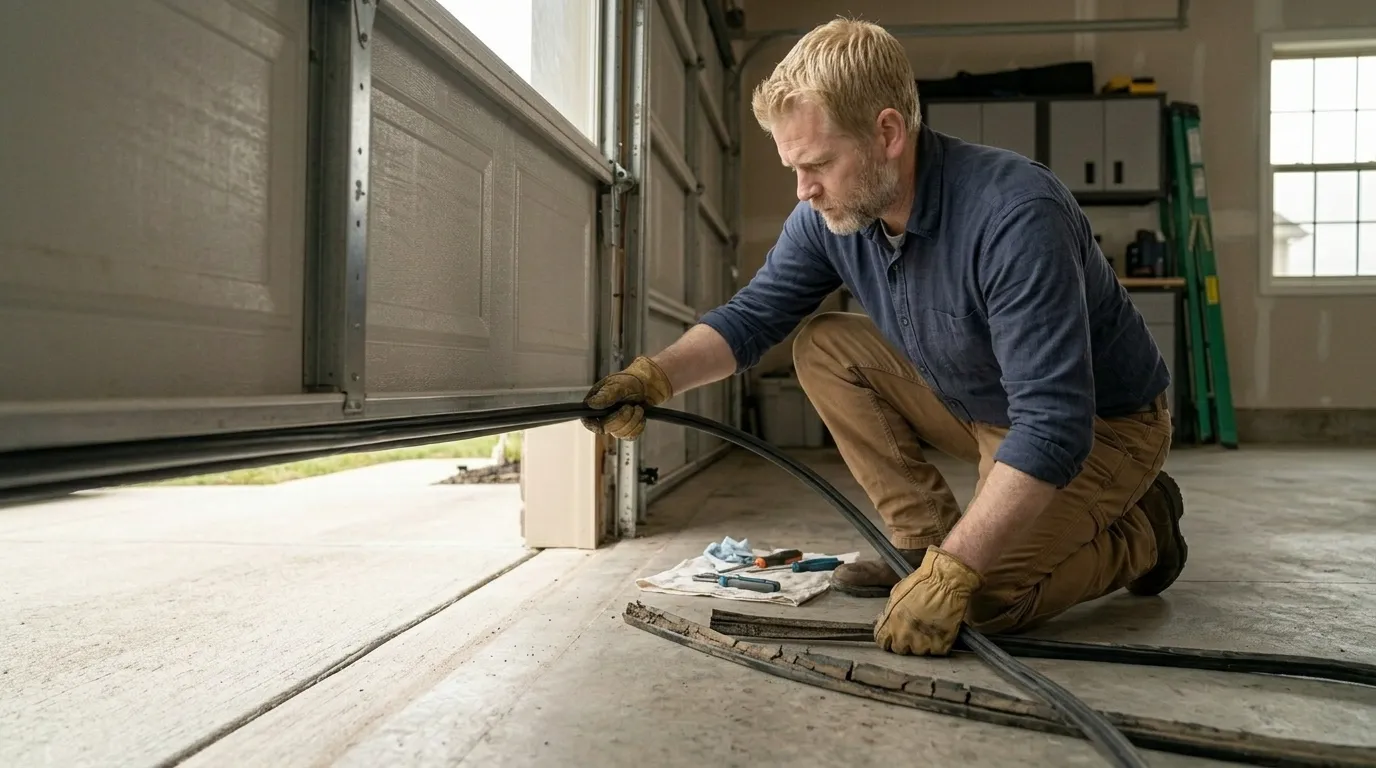
For a Vadnais Heights install we stock what fits a cold-climate job on housing stock from this era: torsion springs sized for insulated steel doors, standard and heavy-duty roller brackets to cover both original and previously-upgraded hardware, weatherstrip rated for the severe-cold band we're working in, and the fasteners and shims that come with squaring a jamb that's moved over thirty-plus years. What we don't carry on the truck is a wide range of custom door sizes or specialty finishes; those get special-ordered and that adds the lead time we mentioned above. If your door is a common size in a standard steel or insulated steel option, we can often complete the job the same week we quote it.